


Trap Bar Deadlift Over 40: The Hinge Desk Workers Should Prefer
The trap bar (hex bar) deadlift keeps more lifters over 40 training the hinge without conventional-bar fear. Camara- and Swinton-era mechanics, a 22-minute protocol for busy parents and desk workers, and how Chiron swaps it when the low back vetoes the straight bar.
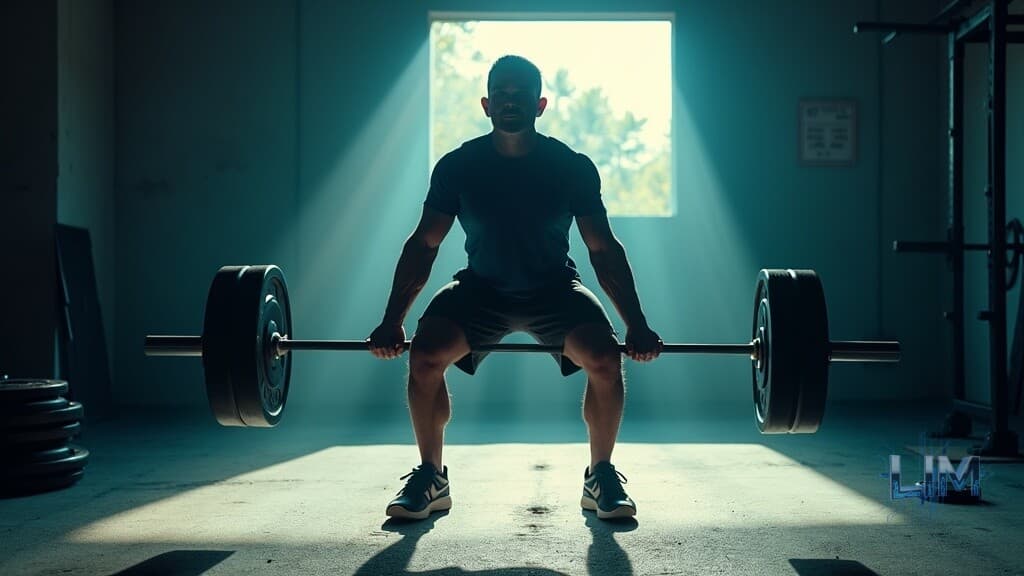
Marcus is 45. Saturday, 10:10 a.m. The big-box gym is loud and the only open platform has a straight bar already chalked like a shrine. He knows the Instagram cue stack. He also knows what happened last time he ground a conventional pull after eight desk hours on Friday: low back that felt fine under the bar and loud walking to the car.
He opens the training app. It wants conventional deadlift 5×5. He closes it. The hinge dies first when his spine has already spent the week in a chair and his kids spent the morning as human kettlebells.
A static plan does not know his lumbar is the veto, not his work ethic. Chiron would — if he logged the skipped pull and the Friday sitting block. That is the gap: not more motivation. A coach that rewrites the hinge he can actually own.
He is not too old to deadlift. He is under a bar pattern that keeps quitting on him.
Related Read
If You Sit 4 Hours, Swap 30 Minutes Off the CouchHuang 2026: 41,733 adults, 11.9 years. Sit 8 hours and death risk jumps. Sit 4-plus, swap 30 minutes. Week Zero couches, this is your file.
If that scene is yours — busy parent, desk worker, over-40 restart — stop treating the straight bar like a loyalty test. Start the trap bar deadlift (hex bar) when the tool is there.
The bar shape is not your identity. You can train the hinge without cosplaying a powerlifter. A quieter spine under load beats a louder PR you cannot walk away from. Desk hips plus straight-bar ego is how Saturday becomes Monday pain. Pick the tool that lets progressive overload survive the week you actually live.
Quick take - Trap bar / hex bar deadlift = stand inside a hexagonal bar, grab the handles, stand tall. High handles = more squat-like start. Low handles = deeper hinge. - Camara et al., 2016, Journal of Strength and Conditioning Research and Swinton et al., 2011, JSCR: hexagonal-bar deadlifts often show a more upright trunk, different joint contributions, and favorable power characteristics versus straight-bar deadlifts at comparable loads for many lifters — mechanics, not magic immunity. - Distinct from squat alternatives (knee pattern swaps), loaded carries (walk under load), power / RFD (intent to accelerate), unilateral (one-limb control), and isometric wall sits (BP holds). This is the pick-it-up hinge with a friendlier bar path for a lot of midlife bodies. - Default dose: 1–2 days/week, 3–5 sets of 3–6, brace hard, push the floor away, lock out tall, put it down like you mean it. Progress load when lockouts are boringly clean. - Chiron should swap trap-bar or hex-pattern work when conventional keeps getting deleted — not leave him staring at a frozen 5×5 PDF.
The Saturday Marcus actually lives
Desk workers sit in flexion all week, then try to hinge like a competitive deadlifter on Saturday morning with cold hips and a nervous system still half in email. The straight bar rewards a start position many of them never own cleanly after forty hours of chair.
Busy parents already deadlift life: car seats, laundry baskets, sleeping toddlers transferred to beds. The pattern is not foreign. The bar that forces a forward reach past the shins is what turns a useful pattern into a fear pattern.
Over-40 adults can still pull heavy. What they cannot afford is a hinge variation that keeps producing next-day regret while the app pretends loyalty to conventional form is the same thing as strength.
2026 fitness culture will sell him micro-workouts, another ab finisher, and a viral "deadlift is dying" hot take. Fine. What it rarely sells: the hex bar sitting unused next to the platform while he argues with a cue stack that does not fit his torso or his week.
Marcus does not need a new personality. He needs a hinge he will still do in week six — and a system that inserts it when the straight bar becomes the first skip. In Legacy In Motion, that is the job: log the veto, log the short window, let the daily AI program update rebuild a trap-bar block instead of shaming him for "not wanting it enough."
What the research actually says (without the bro translation)
Swinton et al. (2011) in JSCR compared straight and hexagonal barbell deadlifts with submaximal loads and mapped the mechanical differences — joint moments and bar path that do not pretend the two lifts are identical twins with different Instagram aesthetics.
Camara et al. (2016) in JSCR examined muscle activation and power characteristics with straight versus hexagonal bars. The practical neighborhood for Marcus: hex-bar pulls often allow a more upright trunk and a different knee-hip contribution mix, with power outputs that look attractive when the goal is training the pick-up hard without forcing a conventional start he does not own after a desk week.
Translation that does not sell snake oil:
- The trap bar is still a deadlift family movement. You can still mess up your back with bad bracing and ego plates.
- For many desk-stiff adults, standing inside the load reduces the "reach past the bar" problem that makes conventional feel like a negotiation with the lumbar spine.
- High handles raise the start and often feel more like a powerful stand-up. Low handles deepen the hinge. Neither is morally superior. Match the handle to mobility and goal.
- If the gym has no hex bar, you do not quit the hinge. You substitute: double dumbbell RDL to stand, kettlebell sumo deadlift, or landmine/hinge patterns Forge can progress.
- Power-oriented trap-bar pulls (moderate load, fast concentric, controlled eccentric) pair cleanly with the intent block on other days — different tool, same "be on time with force" idea.
The tool is not the religion. Quiet spine under progressive load is the religion. If conventional keeps getting deleted, the program failed first. A hex bar you use beats a straight bar you fear. Strength is the ceiling. Showing up is the floor.
Pain rules stay adult. Sharp lumbar pain, leg symptoms, dizziness, or a history that needs clinical clearance → get eyes on it before you chase plates. Mild muscular fatigue and honest breathing that settle after are normal. Yanking with a rounded, soft brace is not "grit." It is how Saturday becomes a week of careful sitting.
The morning he stops deleting the hinge
Next Saturday the app does not open on conventional 5×5. Marcus tags low-back sensitive + commercial gym + 25 minutes. Forge returns a trap-bar primary day instead of the platform shrine. HERMES already had the Camara/Swinton mechanics in the research layer — so the coaching copy does not sell him "deadlifts are unsafe after 40" or "only sumo is pure."
Twenty-two minutes. That is the whole bet.
- 90-second prep — cat-cow or hip airplanes light, then two empty-handle trap-bar rehearsals focusing on brace → push floor → tall lockout.
- Trap-bar deadlift — 4 sets of 4–5. Rest as needed so rep four still looks like rep one. High handles if hips feel glued; low handles only if depth is honest.
- Suitcase or farmer hold (or a short carry if space allows) — 2×20–30 seconds to own the torso after the pulls. Ties to the carry finisher without stealing the article.
- Optional accessory if time remains: single-leg RDL bodyweight or light DB — 2×6/side for the asymmetry life already bills (unilateral).
He logs handle height, heaviest clean set, and whether lockouts got ugly. Progressive overload for this lift is cleaner lockouts at the same load, then a small plate bump when boringly clean. Matching a straight-bar ego number on a hex bar is how people invent injuries and call it legacy.
Apple Health / HealthKit had already flagged a short-sleep Friday. HealthKit-driven deloads keep him from turning "friendlier hinge day" into "junk volume day." When recovery is wrecked, Chiron cuts a set or swaps to a lighter double-dumbbell hinge — without a human coach texting him during kid soccer.
If he only has a hotel gym: many travelers get a hex bar and nothing else useful. Tag the trip. Forge should already have a hotel trap-bar template (or DB substitute), not a commercial-powerlifting AI program PDF that assumes a competition bar and a platform coach.
> Mid-article path if your program never rewrites when the straight bar becomes the first skip: $29.99/mo, cancel anytime → pricing
Who finishes this (and who does not)
Busy parents already own the pick-up pattern. Practice tall posture on laundry baskets and car seats on purpose between gym days — not as a joke, as pattern rehearsal. A voice-note check-in after a clean trap-bar session — "high handles, 4×5, back quiet walking out" — is more useful to the coach than silence. Log the meal that turned into drive-through. The coach that rewrites needs the day he actually lived.
Desk workers invent "my back just went" after six weeks of skipping hinges and one heroic conventional PR attempt. Slot trap-bar work when the nervous system is warm — not as the first cold movement after eight hours of sitting if you can help it. A five-minute walk-in still counts as adult programming.
Over-40 restarts do not need to "earn" the hex bar by suffering through conventional first. They need a hinge that survives progressive overload. Start lighter than ego. Film a set from the side once. If the brace collapses, the load is not intensity — it is a bad decision with iron.
Travelers: lobby gyms love hex bars and hate coaching. That is fine. Two hard trap-bar sessions on the road beat seven bodyweight circuits you resent. If there is no hex bar, double-dumbbell pickups still train the pattern — log the tool so Forge does not pretend you had plates you did not.
If knees hate deep starts, raise the handles or elevate the plates slightly and keep the torso honest — related to the knee-friendly pattern swaps idea without turning this into another squat article. If the torso feels soft under life loads, keep carries on other days. Trap bar and suitcase carries are not rivals. They are different failures fixed with different tools.
Where Jake's story fits (without the fairy tale)
I did not get from 308 to 196 by cosplaying a powerlifting meet after hospital security overnights. I got there by keeping full-body pulls alive when the schedule was ugly — including nights when the "real" deadlift session collapsed to whatever bar path my back would still own after twelve hours on concrete. Long nights, gear, sudden lifts of things that were not bumper plates: the job already asked for hinge strength without a perfect warm-up. Training that only worshipped one bar shape left me strong on paper and hesitant in real time. Shift-aware programming is not a marketing phrase to me. It is the reason a static plan failed me and a system that rewrites still works.
If your program cannot swap the hinge tool the week conventional keeps getting deleted, you do not have a coach. You have a PDF with a logo.
How the coaching stack actually uses this
When Marcus logs "low back veto," "skipped conventional," "hotel hex bar," or a voice note about fear walking to the car after pulls, Chiron does not moralize about toughness. It inserts trap-bar or hex-pattern work: handle height matched to mobility, sets kept honest, progressive overload tracked on the tool he will actually use.
Forge rebuilds the block for a commercial hex bar, a hotel lobby bar, double dumbbells, or a kettlebell sumo stand — and keeps progressive overload on the substitute so the hinge does not freeze at the same light weights forever. When Apple Health / HealthKit shows a wrecked recovery night, Forge downshifts load or cuts a set instead of pretending he is still on a perfect Saturday program.
HERMES keeps the coaching layer honest: bar-path mechanics from the JSCR line, not TikTok "deadlift is dead" culture and not "trap bar is cheating" gym-bro theology. Log the meal, log the workout, flag the veto — the daily AI program update should move the same day.
That is the product promise, not a brochure paragraph: you log, we adapt. Static plans age out the day your lumbar vetoes the bar your PDF married.
The research and the coaching line up. Keep the hinge. Change the tool when the week demands it. Stay strong enough to pick life up without folding.
Join the people who train the pattern they already live: https://discord.gg/8QBuFFA5Pf
The hex bar is permission to keep progressive overload. A coach that rewrites beats a plan that only worships one bar. Fear is data. Deletion is data. Both should change tomorrow's session. Quiet lockouts beat loud egos. Marcus does not need a new identity. He needs a hinge that survives next Saturday.
Marcus locks out tall. Walks to the car without the careful limp. Logs the session. The straight-bar shrine still exists on the platform. It does not own the week. Next time the school run runs long and the only free tool is a hex bar in a hotel basement, the pull is already waiting — not because he got more disciplined, but because the program stopped pretending one bar shape was a moral test. That is the whole arc: same chaos, better tool, coach that rewrites.
---
Your plan should change the day your week does
Most programs die in the gap between the plan and your real week. Chiron, our AI head coach, reads what you log (meals, workouts, skipped sessions) and rewrites tomorrow instead of waiting for you to fall off. HERMES, our research engine, keeps the coaching current with new science the week it publishes.
$29.99/month · $249.99/year · 7-day free trial · cancel anytime · no enrollment fee · no contract
Start coaching → · See the full app →
Jake Long built it after losing 112 lbs working hospital overnights — when no human coach could keep up with his schedule. He wanted the system he wished he'd had at 308. Now you can use it too.
Questions Worth Asking
Is the trap bar deadlift safer than a conventional deadlift over 40?
Safer is the wrong word — technique, load, and recovery still rule. Biomechanics work (including Camara 2016 and Swinton 2011 in JSCR) generally shows a more upright trunk and greater knee contribution with a hexagonal bar versus a straight bar at matched loads for many lifters. That often feels friendlier after desk hours. It is not a free pass to ego-load.
What muscles does the trap bar deadlift work?
A full-body hinge-squat hybrid: quads, glutes, hamstrings, upper back, grip, and trunk bracing. High-handle setups tend to feel more squat-like; low handles push a deeper hinge. Both still train the pattern of picking something up without folding.
Can busy parents do trap bar deadlifts without a commercial gym?
If you have a hex bar and plates, yes. If not, use a double-dumbbell or suitcase-to-stand pickup with the same tall-torso rules, or a kettlebell sumo deadlift to tall posture. Log the tool. Chiron should keep progressive overload on the substitute — not freeze you on light dumbbells forever.
How often should people over 40 deadlift with a trap bar?
Most desk workers and busy parents do well with 1–2 hinge sessions per week, 3–5 work sets of 3–6 reps at a load they can move with a quiet spine and honest lockout. Progress load or clean reps — not both in one jump.
How does AI coaching use the trap bar?
When your log shows low-back vetoes on conventional pulls, hotel weeks with a hex bar in the lobby gym, or skipped hinges entirely, Chiron inserts trap-bar or hex-pattern work. Forge keeps handles, stance, and load honest. HealthKit recovery signals can cut volume the morning after a wrecked night.
Comments (0)
Comments are reserved for Legacy In Motion members.
$29.99/month. No contracts. Cancel anytime.
Get StartedAlready a member? Sign in
You read this far. Now do this.
Stop reading about it.
Start training around your real life.
I went from 308 to 196 lbs working 12-hour overnight shifts with two kids and zero personal trainer. The system I used is now an app that plans your training and meals around YOUR schedule — overnight, day shift, all of it.
Cancel anytime · No setup fee · No long contract
Free Assessment
What's Holding Your Fitness Back?
Take our 60-second quiz and get a personalized breakdown of what's stopping your progress — plus how AI coaching solves it.
Take the QuizFree PDF · No Credit Card
Your free Shift Worker AI Fitness Blueprint
If your training keeps dying by week two, start here: the 4-week shift-worker protocol behind Jake's 112 lb loss, with the sleep timing and post-shift macros that made it stick.
Built by someone who actually worked them. No fluff. Unsubscribe any time.
Keep Reading
2026-08-29
If You Sit 4 Hours, Swap 30 Minutes Off the Couch
Huang 2026: 41,733 adults, 11.9 years. Sit 8 hours and death risk jumps. Sit 4-plus, swap 30 minutes. Week Zero couches, this is your file.
2026-08-22
Six Stair Flights a Day Cut Heart-Death Risk 39%
Paddock 2026: regular stair climbers had 39% lower heart-death risk. One cohort pointed at about six flights a day.
2026-08-19
Sprints Hit 32 Protective Proteins Easy Cardio Misses
Olsen 2026: six 30-second sprints changed 32 protective blood proteins. Ninety easy minutes changed three.
Join our free fitness community — get coaching tips, share wins, and stay accountable.
JOIN THE DISCORD →