


Unilateral Training Over 40: Fix the Weak Side Life Actually Uses
Single-leg and single-arm work fixes the asymmetry bilateral-only programs hide. Speirs-era evidence, a 24-minute protocol for busy parents and desk workers, and how Chiron programs it when life is one-sided.
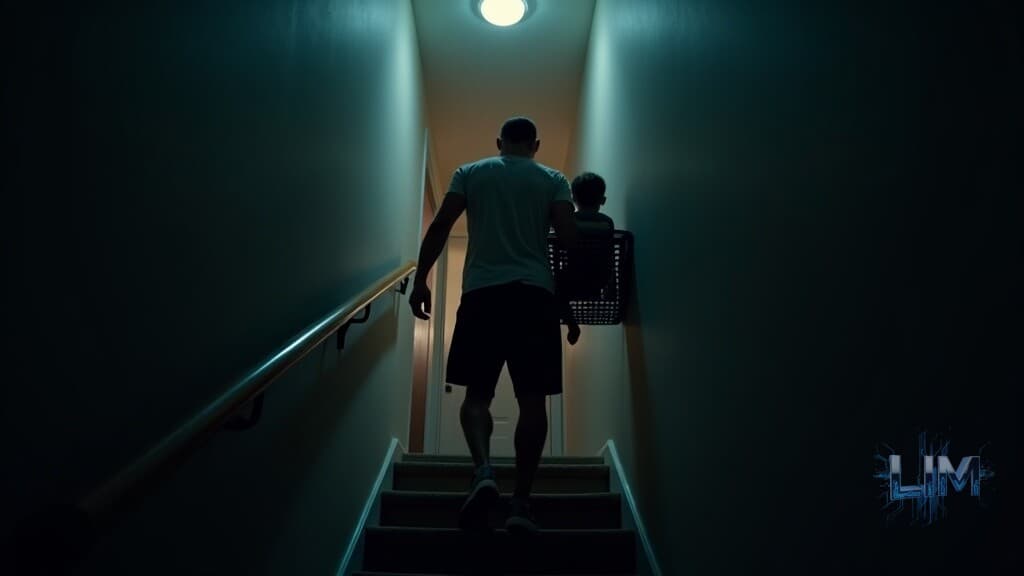
Marcus is 43. Tuesday, 5:19 p.m. Laundry basket on his right hip, daughter on his left, third stair from the top. The right hip does not negotiate. It just gives a half-inch — not a fall, just a wobble that makes her grab his collar and makes him grab the rail harder than a man who squats two plates should need to.
She is fine. His pride is not.
Later he sits on the low couch with the laundry still half-folded. The gym app wants back squat 5×5 and a heavy barbell row. He can grind those on a good week. What he cannot do is trust the weak side when life bills him one limb at a time — kid, bag, stair, suitcase — with no spotter and no second chance to re-rack.
A static plan does not know his right hip is a veto and his calendar is a knife. Chiron would — if he logged the stair wobble and the twenty-four minutes before pickup. That is the gap: not more motivation. A coach that turns one dumbbell into real unilateral training before the carpool line.
Related Read
If You Sit 4 Hours, Swap 30 Minutes Off the CouchHuang 2026: 41,733 adults, 11.9 years. Sit 8 hours and death risk jumps. Sit 4-plus, swap 30 minutes. Week Zero couches, this is your file.
He is not weak. He is strong on two legs and soft on the one that fails first.
If that scene is yours — busy parent, desk worker, over-40 restart — stop waiting for a perfect barbell week. Train the side life already uses.
The bar is bilateral. Your life is not. A two-leg PR can still lose a one-leg stair. Weak sides do not announce themselves in the rack. They announce themselves on the third step. Match the side that fails first.
Quick take - Unilateral training = one limb at a time — split squats, single-leg hinges, single-arm push/pull, step-ups, suitcase carries — so the strong side cannot steal the set. - Speirs et al. (2016, JSCR) and related RFESS work: rear-foot elevated split squat training can drive meaningful strength and speed outcomes without living under a back squat every session. - Distinct from power training / RFD (intent to accelerate), loaded carries (locomotion under load), BFR (occlusion + low load), HILIT (impact filter), MRT (density circuits), hybrid training (week-level concurrent programming), and squat alternatives (pattern swaps). This is one-limb strength and control. - Default dose: 2 sessions a week, 20–30 minutes, 3–5 moves, 3–4 sets of 6–12 controlled reps per side, weak side first, match the strong side. - Chiron should insert unilateral work when the log says hip grumble, hotel room, left-right gap, or school-run window — not leave you staring at a frozen 5×5 PDF.
The Tuesday Marcus already trained without calling it training
Marcus already lives unilateral. Car seat on one arm. Grocery bag cutting the other forearm. Kid mid-tantrum on one hip while the free leg braces on wet tile by the sink. The desk job is unilateral too — eight hours with one hip flexed toward a mouse, one shoulder shrugged at a laptop, a spine that never rotates until he pretends a back squat will redeem the day.
The bar goes up. The camera loves it. The strong side still did most of the work.
2026 fitness culture will sell him another ab finisher and a hotel bodyweight circuit that still treats both legs as identical. What it rarely sells cleanly: single-limb progressive overload as a programmed tool, not a rehab footnote he abandons the week he feels better.
Marcus does not need a Bulgarian split squat cult. He needs one dumbbell + a chair + honest balance + a system that inserts the block when bilateral is stupid or incomplete. In Legacy In Motion, that is the job: log the stair wobble, log the twenty-four minutes, let the daily AI program update rebuild a single-leg lower and single-arm upper block instead of shaming him for missing back squat day.
What Speirs actually changes for his living room
Marcus does not need a literature review. He needs to know whether the chair and the dumbbell are a real strength day or a consolation prize after the stair almost won.
Speirs and colleagues (2016) in the Journal of Strength and Conditioning Research compared back squat training to rear-foot elevated split squat (RFESS) training in academy rugby players. Both groups improved strength and sprint-related outcomes. The unilateral group did not need the same absolute bar load to get the job done. That is the sentence he can take into the living room: meaningful lower-body strength without living under a back squat every Tuesday.
McCurdy and colleagues (JSCR-era unilateral leg strength work on the Bulgarian / rear-foot elevated pattern) helped put numbers on what coaches already see — single-leg patterns demand more frontal-plane control and expose side-to-side gaps a bilateral bar can mask. For a desk worker with one loud hip, that exposure is the point.
Cross-education research in the Botton line shows training one limb can leave a neural footprint on the quieter side. It is not magic. It is a reason he keeps a signal alive when the right hip vetoes bilateral load instead of declaring the whole week dead.
Practical translation for a 43-year-old with kids and a desk:
- Keep bilateral work on good days if he owns it — trap bar, goblet squat, two-arm rows.
- Use unilateral work as a default midlife tool, not only as rehab after something breaks.
- Start the weaker side first. Match reps on the strong side.
- Prefer depth he owns over depth he steals.
- Stop for sharp joint pain or a knee that collapses inward every rep.
Bilateral ego is not balance training. If one side always leads the stairs, the bar already knows. Single-leg work is life practice with a dumbbell. Match the weak side. Do not average the lie. A chair and one bell beat a skipped session.
Pain rules stay adult. Unstable dizziness, recent surgeries, or clinician restrictions → get clearance before single-leg loading. Mild burn and balance shake that settle after are common. Depth-chasing with a collapsing knee is how a useful tool becomes a two-week limp.
The night he stops waiting for a perfect barbell day
Next Tuesday the heavy bilateral day dies on contact with the hip and the clock. The daughter's backpack is already by the door. Pasta water is starting to whisper on the stove. Marcus has one dumbbell, a dining chair that scrapes when he drags it onto the rug, and twenty-four minutes. He opens the iOS app, tags short window + right hip grumble + home only, and Forge returns a unilateral full-body block instead of the back squat he was going to skip and then spiral about. HERMES already had the Speirs-era unilateral literature in the research layer — so the coaching copy does not sell him "just do more lunges forever" or another ab burnout.
Twenty-four minutes. That is the whole bet.
He starts on the weak side. Always. Three rounds:
- Rear-foot elevated split squat — front foot owns the floor, rear foot on the chair, goblet the dumbbell if the grip allows. Six to ten controlled reps per side. Front knee tracks over mid-foot. Stop before the back hip turns the set into a stretch contest.
- Single-leg Romanian deadlift — soft knee, hips back, dumbbell in the hand that keeps hips square. Six to ten per side. Light fingertip on the wall counts when balance fails. Pride does not.
- Single-arm floor press — eight to twelve per side, brace like someone is about to shove the ribs.
- Single-arm row with a hand on the chair — elbow to hip, one-second pause, no bounce off the floor.
- Optional finisher if the hallway is clear: suitcase carry — one dumbbell, tall ribs, even steps, switch sides. That pairs with loaded carries without replacing the strength work above.
On set two of the split squat his right hip grumbles again — quieter than the stair. He owns a shorter range instead of chasing depth for Instagram. That is the adult call. Progressive overload here is cleaner balance under the same load, then a small load bump when the shake arrives too late. Matching last month's bilateral ego on one leg is how split squats turn into junk volume with a fancy name.
Apple Health / HealthKit had already flagged two bad sleep nights. HealthKit-driven deloads keep him from stacking single-leg balance work on a wrecked recovery day. When sleep is garbage, Chiron cuts volume, shortens the range, or swaps to supported split squats — without a human coach texting him at midnight.
If he only has a hotel room: suitcase as the load, bed edge as the rear-foot elevate only if stable, hallway suitcase carries still count. Tag the trip. Forge should already have a hotel unilateral template, not a commercial-gym AI program PDF that assumes a rack and a spotter yelling "ass to grass."
> Mid-article path if your program never rewrites when one hip and the clock veto bilateral days: $29.99/mo, cancel anytime → pricing
People in Discord compare what actually fit a school-run window — chair height hacks, which side always fails first, hotel suitcase setups — without turning the channel into mobility theater.
Who finishes this week (and who disappears into the PDF)
Busy parents already own the one-sided problem. Run the split squats while pasta water boils. Log before the car door closes. A voice-note check-in after — "right hip vetoed bilateral, ran RFESS and single-leg RDL" — is more useful to the coach than silence. Log the meal that turned into drive-through. The coach that rewrites needs the day you actually lived.
Desk workers invent "my back just went" after eight hours of laptop shrug and zero single-arm rowing. Slot unilateral work at lunch when the nervous system is warm enough for balance, or as an evening block when heavy bilateral dies. Travel week: suitcase + hallway still work.
Over-40 restarts do not need a powerlifting meet on day one. You need strength that survives asymmetric life. Start lighter than ego. Progress weekly. The goal is a body that still trains when one side is louder than the other.
If knees hate deep bilateral flexion, keep the squat alternatives pattern family and bias step-ups and shorter-range split squats you own. If you still need power for life physics, keep power training on separate sessions — intent speed and single-leg control are different tools. If joints veto load entirely some weeks, BFR can own hypertrophy density while unilateral patterns stay light and technical. Unilateral work is not a rival to those. It is the asymmetry and real-world stability lever.
Where Jake's story fits (without the fairy tale)
I did not get from 308 to 196 on perfect symmetrical barbell weeks after hospital security overnights. I got there by keeping full-body stimulus alive when the schedule was ugly and one side of my body always paid first — long nights on concrete, sudden movement on the floor, gear that never loads both hands the same. Training that only existed on perfect squat days left me strong on paper and empty on the calendar. Shift-aware programming is not a marketing phrase to me. It is the reason a static plan failed me and a system that rewrites still works.
If your program cannot add a unilateral block the week your hip vetoes bilateral load and your calendar only gives you twenty-four minutes, you do not have a coach. You have a PDF with a logo.
How the coaching stack actually uses this
When Marcus logs "right hip grumble," "travel day," "short window," or a voice note about the stair wobble, Chiron does not moralize about missing 5×5. It inserts a unilateral block: three to five moves, weak side first, matched volume, loads he can balance, sides tracked over the week.
Forge rebuilds the block for one dumbbell, a suitcase, a sturdy chair, a hotel hallway, or a commercial gym with a step-up box — and keeps progressive overload on the substitute so single-leg work does not freeze at bodyweight forever. When Apple Health / HealthKit shows a wrecked recovery night, Forge downshifts volume or adds a balance support instead of pretending he is still on a perfect Monday program.
HERMES keeps the coaching layer honest: unilateral work as asymmetry exposure and Speirs-era strength transfer, not "lunges burn more calories" nonsense. Log the meal, log the workout, flag the hip — the daily AI program update should move the same day.
In-app meal logging still matters on unilateral days. Balance work does not cancel a protein miss. If dinner is a drive-through after pickup, log it. The coach that adapts needs the full day, not the workout selfie alone.
That is the product promise, not a brochure paragraph: you log, we adapt. Static plans age out the day your kid hangs on one hip and your right hip vetoes the bar.
The protocol card (print this in your head)
| Lever | Default for busy adults over 40 | |---|---| | Frequency | 2×/week as a default tool (more if bilateral is blocked) | | Session length | 20–30 minutes | | Structure | 3–5 moves: split squat or step-up, single-leg hinge, single-arm push, single-arm pull, optional suitcase carry | | Sets / reps | 3–4 sets of 6–12 controlled reps per side | | Order | Weak side first; match the strong side | | Progression | Same load, cleaner balance → small load or set bump | | Stops | Sharp pain, knee collapse, dizziness, clinician no | | Pair with | Bilateral strength on good days; power, carries, BFR as separate tools — not all stacked every session |
That table is not a personality. It is a minimum viable unilateral week for people who still have a job and kids.
Bottom line
Your strong side is not your program. A coach that rewrites beats a bar that lies. One limb first is how midlife stays honest. Marcus does not need a new personality. He needs a matched weak side. Skip the symmetrical fantasy. Load the side that fails first.
Marcus finishes the last suitcase walk down the hallway. The backpack by the door is still waiting. Right hip still grumbles — quieter than it was on the third stair. He logs the session in the iOS app before the school run. At pickup the kid still ends up on one hip. The difference is the weak side got trained on purpose instead of ignored under a bar that flattered the strong side. Next Tuesday, when the bilateral day dies again, the unilateral block is already waiting — not because he got more disciplined, but because the program stopped pretending his life was symmetrical. That is the whole arc: same stairs, better balance, coach that rewrites.
---
Coaching that works the same shifts you do
This is what Chiron, our AI head coach, does on every meal and workout you log: catches the small wrong detail before it costs you years. HERMES — our research engine — surfaces new science the morning it publishes, so your coaching moves with the literature instead of trailing it by quarters. You log; we adapt your plan that day. No PDF reprints, no static plan that ages out the day your shift changes or you have a kid.
$29.99/month · $249.99/year · 7-day free trial · cancel anytime · no enrollment fee · no contract
Start coaching → · See the full app →
Jake Long built it after losing 112 lbs working hospital night shifts — when no human coach could keep up with his schedule. He wanted the system he wished he'd had at 308. Now you can use it too.
Common Questions, Answered
What is unilateral training?
Unilateral training means loading one limb at a time — single-leg squats or split squats, single-leg hinges, single-arm rows and presses, step-ups, and suitcase carries. It exposes strength gaps bilateral barbell work can hide and trains balance and trunk bracing you use in real life.
Is unilateral training better than bilateral for people over 40?
Not always better — different job. Bilateral lifts still build big total load and simple progressive overload. Unilateral work often matches strength and speed gains in research while adding asymmetry correction and stability demand. Best practice is both tools in the week, not a forever ban on barbells.
Can busy parents do unilateral work at home?
Yes. Rear-foot elevated split squats, reverse lunges, single-leg RDLs with a dumbbell or backpack, step-ups on a sturdy stair, and single-arm floor presses fit a living room. You need space for one limb, not a rack full of plates.
Does unilateral training help desk workers with back and hip issues?
It often helps the pattern problem: eight hours of sitting plus only bilateral squats leaves many people strong in a machine and soft on one side when they climb stairs, pick up a kid, or catch a suitcase. Start light, own the balance, and stop for sharp joint pain.
How does AI coaching program unilateral work?
Chiron inserts single-leg and single-arm blocks when logs show left-right gaps, travel, or a short home window. Forge keeps loads honest and swaps equipment. HealthKit recovery signals can cut volume or simplify balance demands after bad sleep.
Comments (0)
Comments are reserved for Legacy In Motion members.
$29.99/month. No contracts. Cancel anytime.
Get StartedAlready a member? Sign in
You read this far. Now do this.
You've read the theory.
Now put it to work in your real week.
I went from 308 to 196 lbs working 12-hour overnight shifts with two kids and zero personal trainer. The system I used is now an app that plans your training and meals around YOUR schedule — overnight, day shift, all of it.
Cancel anytime · No setup fee · No long contract
Free Assessment
What's Really Stopping Your Progress?
Take our 60-second quiz and get a personalized breakdown of what's stopping your progress — plus how AI coaching solves it.
Take the QuizFree PDF · No Credit Card
Grab the Shift Worker AI Fitness Blueprint
If your training keeps dying by week two, start here: the 4-week shift-worker protocol behind Jake's 112 lb loss, with the sleep timing and post-shift macros that made it stick.
Built by someone who actually worked them. No fluff. Unsubscribe any time.
Keep Reading
2026-08-29
If You Sit 4 Hours, Swap 30 Minutes Off the Couch
Huang 2026: 41,733 adults, 11.9 years. Sit 8 hours and death risk jumps. Sit 4-plus, swap 30 minutes. Week Zero couches, this is your file.
2026-08-22
Six Stair Flights a Day Cut Heart-Death Risk 39%
Paddock 2026: regular stair climbers had 39% lower heart-death risk. One cohort pointed at about six flights a day.
2026-08-19
Sprints Hit 32 Protective Proteins Easy Cardio Misses
Olsen 2026: six 30-second sprints changed 32 protective blood proteins. Ninety easy minutes changed three.
Join our free fitness community — get coaching tips, share wins, and stay accountable.
JOIN THE DISCORD →