


Loaded Carries Over 40: The Farmer Walk Desk Workers and Busy Parents Skip
Farmer walks and suitcase carries train core stiffness, grip, and posture without another ab circuit. The 12-minute finisher busy parents and desk workers actually finish — and why McGill keeps pointing at the suitcase carry.
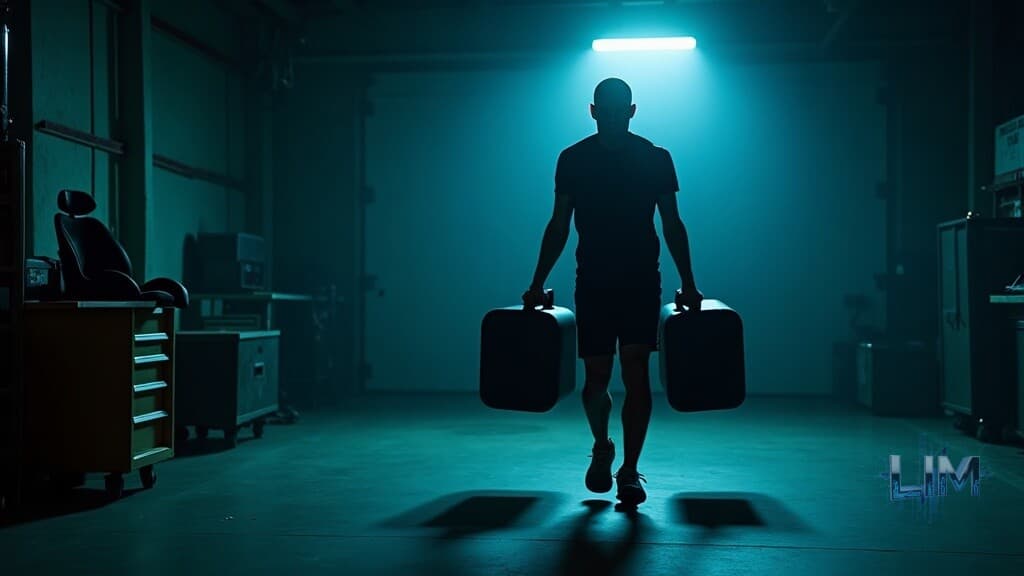
Marcus is 43. Tuesday, 6:40 p.m. He unhooks the car seat with one arm, laptop bag on the other shoulder, and feels his low back light up like a cheap string of Christmas lights — not gym sore. The I just lived like a human suitcase kind.
He still opens the training app. It wants 3×15 cable crunches and a plank for time. He closes it. The ab circuit is the first thing that dies when the school run runs long. By Friday his grip fails on row three and he tells himself he is "getting old."
A static plan does not know he skipped core three nights and slept five hours. Chiron would — if he logged the workout and the meal that turned into drive-through. That is the gap: not more motivation. A coach that rewrites the day he actually lived.
He is not aging out of strength. He is under-training the pattern he already lives: pick something up, walk, do not fold.
Related Read
Silent Atherosclerosis in 57% of Healthy AdultsBundgaard 2026 found silent atherosclerosis in 57.1% of 16,808 adults with no known disease. This Saturday, feeling fine was the entry rule, not a clearance.
If that scene is yours — busy parent, desk worker, over-40 restart — stop shopping for another ab video. Start loaded carries.
The walk is the point. The shrug is the leak. You already carry kids, bags, and backpacks. Train the pattern on purpose. Skipping core for three weeks is not recovery. It is a softer torso under the same life load. A quiet spine under load beats a loud crunch you never finish. Cable crunches do not pick up a car seat. Loaded carries do.
Quick take - Loaded carries = walk under load with a tall torso. Farmer walk (two hands) and suitcase carry (one hand) cover most needs. - Stuart McGill has spent years teaching the suitcase carry as a high-value drill for lateral core stiffness — anti-side-bend capacity when life is one-sided (car seat, grocery bag, airport roller). - Distinct from grip strength mortality (the health marker), HILIT (impact filter), MRT (density circuits), and squat alternatives (knee pattern swaps). This is locomotion under load. - Default dose: 2–4 carries of 20–40 meters (or 20–40 seconds), 2–3 days a week. Progress load or distance — not both in one jump. - Chiron should insert carries when your meal log and workout log show skipped planks, hotel weeks, and one-arm life — not leave you staring at a frozen PDF of crunches.
The Tuesday Marcus actually lives
Desk workers live in flexion. Ribs drop. Shoulders round. Then they stand up, grab a laptop bag, and act shocked when the back complains.
Busy parents live in asymmetric load: kid on one hip, diaper bag on the other shoulder, suitcase through security. Marcus's body is already doing suitcase carries. The only question is whether he ever loads them with intent — or only under chaos at 6:40 p.m.
Over-40 adults lose postural endurance and grip ceiling faster than they lose motivation slogans. Carries train brace + walk + breathe without a 45-minute "core class" he will cancel.
2026 fitness culture will sell him micro-workouts, ab finishers, and another standing-desk lecture. Fine. What it rarely sells: the simplest full-body pattern that shows up on his actual Tuesday.
Marcus does not need motivation. He needs a finisher that transfers to the car seat — and a system that inserts it when the ab circuit gets deleted. In Legacy In Motion, that is the job: log the skipped plank, log the short window, let the daily AI program update rebuild a 12-minute carry block instead of shaming him for missing cable day.
Why McGill keeps pointing at the suitcase
Stuart McGill (spine biomechanics; clinical teaching via Backfitpro) has long framed the core as a stiffness system for transferring force and protecting the spine — not a crunch factory. In that teaching line, the suitcase carry is repeatedly prioritized as a unilateral loaded walk that trains the lateral chain to resist side-bend. Quality and modest volume beat high-rep trash form with a banana spine.
Practical translation for Marcus:
Two-handed farmer walks bias grip, traps, and bilateral postural endurance. One-handed suitcase carries bias anti-lateral-flexion — the exact demand of a car seat on one hip. Both require him to stack ribs over pelvis, own the load, and walk without leaning like a sinking ship.
He is not "working abs." He is teaching the torso to stay quiet while the legs move.
The core is a brace, not a sit-up contest. One-sided life needs one-sided training sometimes. If the load makes you lean, the load is too heavy — not "intense." Train the walk before life bills you for the walk. Your ab circuit is optional. Your spine under a car seat is not.
Grip is a bonus here, not the whole article. Carries hammer grip, and we already covered why grip strength tracks hard outcomes in midlife (grip window post). This piece is not a rehash of that mortality literature. Here grip is the honest limiter. If his hands open before his torso fails, he still got a useful session — and he knows what to train next.
Progressive overload still applies. If he walks the same 40 feet with the same 25 lb dumbbells for six months, he did not program carries. He did a warm-up forever. Same rule as the 6–8 week fail post: stimulus must progress. Load, distance, or cleaner posture under the same load. Pick one lever per block.
Pain rules are adult rules. Sharp low-back pain, leg symptoms, or neck spikes under load → put the weight down and get clinical eyes if it persists. Mild grip burn and postural fatigue that settle after are normal. Leaning hard away from a suitcase load is form collapse, not heroism. This is coaching, not diagnosis.
The night he stops deleting the finisher
Next Tuesday the main lifts get cut to nothing. Marcus has a hallway and two dumbbells. He opens the iOS app, tags short window + home only, and Forge returns carries instead of the cable crunches he was never going to do. HERMES had already surfaced the stiffness framing in the research layer — so the coaching copy does not sell him a six-pack circuit again.
Twelve minutes. That is the whole bet.
He picks loads he can hold about thirty seconds without turning purple. Three farmer-walk trips of twenty to forty meters — or twenty to forty seconds if the hallway is short — with forty-five to sixty seconds between. Then suitcase carries: two trips each side, same distance rule, rest as needed to keep posture tall. He puts the weights down, shakes the hands out, notes which side leaned more, and logs the distance and the load. Progressive overload needs a memory, not a vibe. In-app meal logging still happens after the drive-through apology dinner — because the coach that rewrites needs the day he actually lived, not the day he planned.
No cable machine. No ab mat. No "I'll do core tomorrow."
By trip four his back is working — not panicking. The car seat still happens at 6:40. The difference is he trained the pattern before life demanded it. Apple Health / HealthKit had already flagged two bad sleep nights; HealthKit-driven deloads keep the load honest instead of matching last month's PR ego. When recovery is trash, Chiron downshifts the carry load the same way it downshifts a squat day — without a human coach texting him at midnight.
If he only has one dumbbell, he lives in suitcase-carry land. If he has two matching loads, farmer walks first, suitcase second. Front-rack or bear-hug carries exist when a shoulder hates side loads. Straps that erase grip on day one are a later tool, not a first habit. Racing the clock with shopping-cart form is not intensity — it is a different exercise with a worse ending.
> Mid-article path if your program never rewrites when life is one-armed and short: $29.99/mo, cancel anytime → pricing
Who finishes this (and who does not)
Busy parents already own the pattern. Hallway farmer walks. Suitcase carries while the pasta water boils. Grocery bags carried with intent for the last forty feet — tall torso, no lean — count as practice. Life is already a carry program. Make it progressive instead of accidental. Log it in the meal + workout flow so Chiron can see the pattern and stop prescribing planks that die at bedtime. A voice-note check-in on a chaotic night still counts as data: "short window, back felt soft, did hallway carries" is more useful than silence.
Desk workers invent "my back just went" picking up a laptop bag after eight hours of sitting and zero postural endurance. Slot carries at the end of lunch training. Travel week: hotel dumbbells or a packed suitcase for timed hallway walks still count. Tag the trip — Forge should already have a hotel carry template ready, not a commercial-gym AI program PDF that assumes a cable stack.
Over-40 restarts do not need a thirty-minute core class. They need brace + walk + breathe under a load that challenges grip and posture. Start lighter than ego. Progress weekly. The goal is a torso that stays quiet when life is loud.
Where Jake's story fits (without the fairy tale)
I did not get from 308 to 196 on cable-crunch finishers after hospital security overnights. I got there by keeping full-body work alive when the schedule was ugly — including walking under load when the "real" workout got cut to twelve minutes. Long nights, gear, standing posts: the body already knew the pattern. Training made the pattern honest. Shift-aware programming is not a marketing phrase to me. It is the reason a static plan failed me and a system that rewrites still works.
If your program cannot add a carry the week your back feels soft and your time is short, you do not have a coach. You have a PDF with a logo.
How the coaching stack actually uses this
When Marcus logs "skipped core," "travel day," or "only 15 minutes," Chiron does not moralize about planks. It inserts a carry finisher: farmer or suitcase, load matched to grip, distance progressive, sides balanced over the week.
Forge rebuilds the block for hotel dumbbells, a single kettlebell, a driveway with two bags — and keeps progressive overload on the substitute so carries do not freeze at the same 25s forever. When Apple Health / HealthKit shows a wrecked recovery night, Forge downshifts load instead of pretending he is still on a perfect Monday program.
HERMES keeps the coaching layer honest: core as stiffness and transfer, not crunch-volume theater; suitcase carries for anti-side-bend; progression via load or distance. Log the meal, log the workout, flag the back — the daily AI program update should move the same day.
That is the product promise, not a brochure paragraph: you log, we adapt. Static plans age out the day your kid gets sick or your desk week explodes.
The research and the coaching line up. Walk under load. Stay tall. Progress something.
Join the people who train the patterns their life already demands: https://discord.gg/8QBuFFA5Pf
The carry is not a gimmick. It is how you still have a usable torso next month — and still want to pick your kid up with it. A coach that rewrites beats a plan that judges. Soft torso, hard calendar — pick one problem to solve first.
Marcus puts the dumbbells down. Logs the session. The car seat still exists. The PDF of cable crunches does not. Next Tuesday, when the school run runs long again, the finisher is already waiting — not because he got more disciplined, but because the program stopped pretending his life was a cable-machine floor plan. That is the whole arc: same chaos, better pattern, coach that rewrites.
---
Coaching that works the same shifts you do
This is what Chiron, our AI head coach, does on every meal and workout you log: catches the small wrong detail before it costs you years. HERMES — our research engine — surfaces new science the morning it publishes, so your coaching moves with the literature instead of trailing it by quarters. You log; we adapt your plan that day. No PDF reprints, no static plan that ages out the day your shift changes or you have a kid.
$29.99/month · $249.99/year · 7-day free trial · cancel anytime · no enrollment fee · no contract
Start coaching → · See the full app →
Jake Long built it after losing 112 lbs working hospital overnights — when no human coach could keep up with his schedule. He wanted the system he wished he'd had at 308. Now you can use it too.
Frequently Asked Questions
What are loaded carries?
You pick up a weight (or two) and walk while keeping the torso tall and the ribs stacked over the pelvis. Farmer walks (two sides) and suitcase carries (one side) are the default versions. The load is the training — the walk is the delivery system.
Are farmer walks good for people over 40?
Yes when load, distance, and grip are progressive and the spine stays quiet. They train grip, postural endurance, and lateral core control without bouncing, jumping, or another plank circuit you will skip on a Tuesday.
Suitcase carry vs farmer walk — which should I start with?
Start with short farmer walks if both hands can hold matching loads. Use suitcase carries when you want more anti-side-bend demand, when one side is weaker, or when you only have one dumbbell. Both count as loaded carries.
Can busy parents do loaded carries at home?
Yes. Dumbbells, kettlebells, a heavy backpack, grocery bags held with intent, or a toddler carried on one hip with a tall torso are all legal. Distance can be hallway length. Quality beats a 40-yard walk of shrug and lean.
How does AI coaching use loaded carries?
Chiron slots a 6–12 minute carry finisher when your log shows skipped core work, travel days, or a short window. Forge keeps distance and load progressing. HealthKit recovery signals can downshift load the day your sleep tanks.
Comments (0)
Comments are reserved for Legacy In Motion members.
$29.99/month. No contracts. Cancel anytime.
Get StartedAlready a member? Sign in
You read this far. Now do this.
Close the tab.
Go train the plan that fits your life.
I went from 308 to 196 lbs working 12-hour overnight shifts with two kids and zero personal trainer. The system I used is now an app that plans your training and meals around YOUR schedule — overnight, day shift, all of it.
Cancel anytime · No setup fee · No long contract
Free Assessment
What's Blocking Your Results?
Take our 60-second quiz and get a personalized breakdown of what's stopping your progress — plus how AI coaching solves it.
Take the QuizFree PDF · No Credit Card
Your free Shift Worker AI Fitness Blueprint
If your training keeps dying by week two, start here: the 4-week shift-worker protocol behind Jake's 112 lb loss, with the sleep timing and post-shift macros that made it stick.
Built by someone who actually worked them. No fluff. Unsubscribe any time.
Keep Reading
2026-10-03
Silent Atherosclerosis in 57% of Healthy Adults
Bundgaard 2026 found silent atherosclerosis in 57.1% of 16,808 adults with no known disease. This Saturday, feeling fine was the entry rule, not a clearance.
2026-09-30
Supersets Cut Session Time 36% With Similar Muscle
Burke 2026 found supersets cut session time 36% with similar muscle changes. The clock moved. The trophy did not.
2026-09-25
Doubling Weekly Sets Did Not Grow More Muscle
Camargo 2026 found no extra quad growth from a 120 percent volume jump versus 20 percent. The protocol main effect is not a bigger change.
Join our free fitness community — get coaching tips, share wins, and stay accountable.
JOIN THE DISCORD →