


HILIT for Over 40: High Intensity Without Beating Up Your Joints
HIIT wrecked your knees. Steady cardio bored you out. HILIT is the 2026 middle path for busy parents, desk workers, and over-40 transformations who still want intensity without the impact tax.
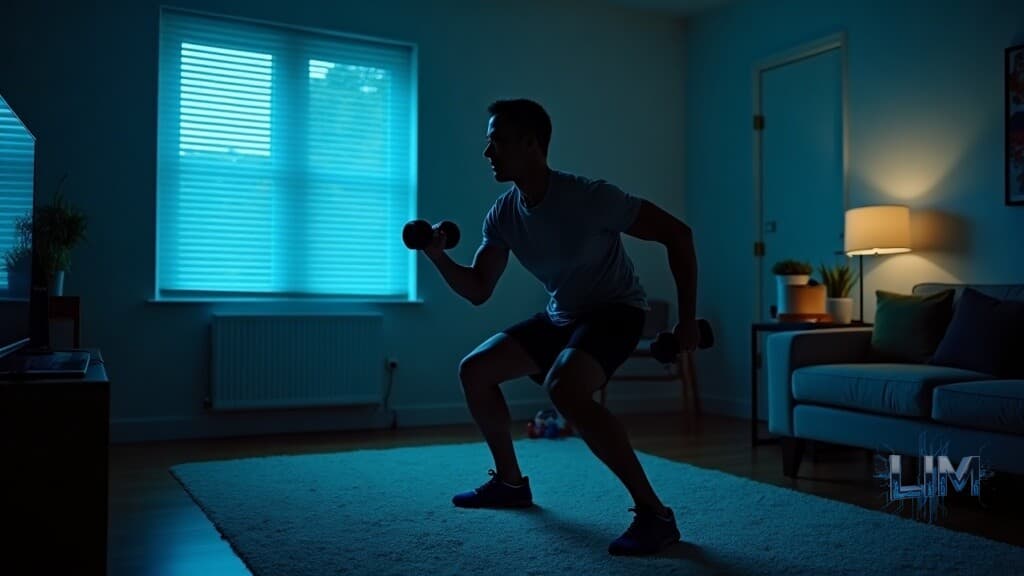
You did the HIIT class. You survived the burpees. You also spent the next three days icing a knee that was fine until someone yelled "explode!" at a 43-year-old body that sits eight hours a day and then tries to act twenty-eight for forty-five minutes.
That is not a motivation problem. That is a loading problem.
HILIT — high-intensity, low-impact training — is the 2026 answer people keep rediscovering after their third failed HIIT streak. Same hard effort. Far less joint tax. Perfect for busy parents, desk workers, and over-40 bodies that still want to train hard without limping into pickup.
TL;DR - HILIT = high effort (RPE ~7–9) with low ground-impact moves: bike, row, reverse lunges, swings, sleds, hard step-ups, strength circuits — not jump lunges and box jumps. - Intensity drives the VO2, insulin-sensitivity, and calorie-burn benefits people chase with HIIT. Impact is optional, not required. - After 40, compliance beats heroics. A joint-friendly hard session you can repeat 2–3×/week wins the year over a bounce-and-crash plan you abandon in week three. - Desk workers and parents win because HILIT fits a living room, a hotel bike, or a 20-minute lunch window. - This is the kind of swap Chiron (our AI head coach) makes when your knees, calendar, or recovery data say the jump version is dumb this week.
Related Read
MRT for Busy Parents Over 40: Strength + Burn in 25 MinutesMetabolic resistance training (MRT) is the 2026 busy-parent default: compound strength circuits with short rest that build muscle and raise the metabolic cost of a short session. How over-40 adults and desk workers run it without wrecking recovery.
HIIT is not the enemy. Impact is the tax.
HIIT works. Short hard efforts improve cardiorespiratory fitness and metabolic health in a time-efficient package — the line of research Martin Gibala and others popularized for a reason. The problem is not the intensity. The problem is that commercial HIIT got packaged as:
- jump lunges
- burpee broad jumps
- high-rep tuck jumps
- "just push through" on a desk-stiff knee
Impact means ground-reaction force. High-impact moves spike that force through ankles, knees, hips, and spine. High-impact is useful for bone loading. Too much of it on a body that sits all day is how programs die.
HILIT keeps the hard part — elevated heart rate, real effort, short rest — and strips the bounce. Think fast reverse lunges instead of jump lunges. Bike sprints instead of box jumps. Kettlebell swings instead of jump squats. Rowing intervals instead of burpee races.
As physical therapists and coaches have been saying for years: HILIT is just HIIT with less impact. That one sentence is the whole product.
Why this hits over-40, parent, and desk-worker bodies
1. Your tissue budget is different at 40+ Tendons and cartilage adapt slower than Instagram reels. You can still train hard. You cannot absorb unlimited impact volume on top of sleep debt, kids, and a laptop posture that already cooked your hips. HILIT spends the intensity budget on muscle and heart, not on grinding joint surfaces.
2. Busy parents need sessions that do not require a recovery day from the recovery day If a "quick HIIT" leaves you too sore to play on the floor Saturday, the plan failed the family test. A 22-minute HILIT bike or circuit that leaves you tired-but-functional is the correct intensity for a life that still needs you after the workout.
3. Desk workers already paid an impact tax they never chose Eight hours of hip flexion and glute sleep is not a warm-up for max jump volume. Starting intensity on a bike, rower, or controlled strength circuit is how you get the metabolic hit without asking a cold joint to act like a plyometrics athlete.
4. Adherence is the real VO2 protocol The best interval design on paper is worthless if you ghost it. Low-impact hard training is the version people actually keep when life is loud. That is the variable that compounds.
The science, without the hype
You do not need a paper that says "HILIT" in the title. You need papers that say hard intervals work and papers that say low-impact hard work is still hard work.
- Interval training literature shows vigorous intervals can match or beat longer moderate cardio for fitness gains in less total time (classic Gibala-line HIIT work; e.g. Gillen et al., PLOS ONE 2016 on sprint-interval vs endurance adaptations in sedentary men).
- Low-impact vehicles like cycling and rowing still drive VO2 and metabolic improvements when intensity is real — impact is not the active ingredient.
- Japanese interval walking training (Nemoto et al., Mayo Clinic Proceedings 2007) is the gentle cousin of the same idea: hard/easy intervals on a low-impact modality improved thigh strength, peak aerobic capacity, and blood pressure more than moderate continuous walking in middle-aged and older adults. Message: intensity + intervals + low impact is not a compromise. It is a design.
- For knees, high-intensity work on appropriate modalities has been studied in osteoarthritis populations with improvements in function and fitness when loading is managed (pilot and narrative work on HIT/HIIT for knee OA). Translation: hard is fine; stupid loading is not.
The brand take: intensity is the signal. Impact is a delivery method. Swap the delivery when the joint is the bottleneck.
The 22-minute HILIT session (living room or gym)
No fancy class. Two to three times a week. RPE 7–9 on the hard pieces. Talk only in short phrases.
Option A — Bike or rower (hotel-proof) 1. 3 min easy spin 2. 6–8 rounds: 40 sec hard / 50 sec easy 3. 2 min easy cool-down
Hard = you could not hold a conversation. Easy = nasal breathing if you want it.
Option B — Strength-circuit HILIT (kids on the floor nearby) 40 seconds work / 20 seconds transition, 3–4 rounds:
- Reverse lunges (alternating)
- Push-ups (elevated if needed)
- Kettlebell or dumbbell swings
- Farmer carry or suitcase march in place
- Hard step-ups (chair or low box — step, do not jump)
- Dead bugs or hollow hold
That is intensity without a single jump. Your heart will still file a complaint. Your knees usually will not.
Option C — Hybrid for the over-40 cut Two strength days (squat/hinge/push/pull pattern) + two HILIT sessions. Walk after meals on the other days. You do not need five hard days. You need repeatable hard days.
Programming rules that keep HILIT from becoming sneaky HIIT
- If both feet leave the ground together, it is not HILIT. Delete the jump.
- Pain that changes your gait is a stop signal, not a badge.
- 2–3 hard sessions max for most people juggling desk + family. Extra "intensity" on a bad sleep night is just cortisol cosplay.
- Progress load or density, not bounce. Heavier swings, harder bike gear, shorter rests — not higher jumps.
- Pair with protein and steps. Intensity does not excuse 40g of protein a day and 2,000 steps. Over-40 recomp still lives on resistance + protein + NEAT.
How this looks inside AI coaching (not a PDF)
Static "try HILIT" blog posts die the first week your kid gets sick or your knee flares.
What actually works:
- Chiron hears "left knee is angry" and swaps the jump day for bike intervals or reverse-lunge circuits without a 48-hour email chain.
- Forge tracks whether you actually completed the hard intervals or just logged "worked out" and quietly rewrites next week's density.
- HERMES keeps the protocol honest when the trend cycle invents a new acronym that is just burpees with better branding.
If you are a desk worker who only has lunch, or a parent who only has after bedtime, the system should build the 22-minute HILIT block into that window — not a fantasy 6 a.m. class you abandoned in February.
> Mid-article: when the plan has to change mid-week, that is the job. $29.99/mo, cancel anytime → pricing
Who should still do high-impact HIIT
Athletes who need elastic power. People with healthy joints, good landing mechanics, and a real reason to jump. Bone-density goals that specifically need impact, dosed intelligently.
If that is not you this season — if you are 41, live in a chair, raise humans, and just want to be leaner, stronger, and less winded on stairs — HILIT is the adult version of hard training.
Jake dropped 112 lbs (308 → 196) while life stayed loud. The win was never "more punishment." It was intensity you can still show up for when the week is ugly.
The one-sentence close
Train hard. Land soft. Repeat for years.
That is HILIT. That is the over-40, busy-parent, desk-worker path that still looks like training — not like physical therapy homework, and not like a bounce class that ends in ice packs.
---
Your plan should change the day your week does
This is what Chiron, our AI head coach, does on every meal and workout you log: catches the small wrong detail before it costs you years. HERMES — our research engine — surfaces new science the morning it publishes, so your coaching moves with the literature instead of trailing it by quarters. You log; we adapt your plan that day. No PDF reprints, no static plan that ages out the day your shift changes or you have a kid.
$29.99/month · $249.99/year · 7-day free trial · cancel anytime · no enrollment fee · no contract
Start coaching → · See the full app →
Jake Long built it after losing 112 lbs working hospital night shifts — when no human coach could keep up with his schedule. He wanted the system he wished he'd had at 308. Now you can use it too.
Questions Worth Asking
What is HILIT?
HILIT is high-intensity, low-impact training — hard effort (roughly RPE 7–9) using moves that keep both feet more grounded and reduce ground-reaction force: cycling, rowing, sled pushes, reverse lunges, kettlebell swings, hard step-ups, and controlled strength circuits instead of jump lunges and burpee jumps.
Is HILIT better than HIIT after 40?
Often yes for adherence. You still get the metabolic and VO2 stimulus of hard intervals, but you drop the joint-loading that ends programs for busy parents, desk workers, and anyone with cranky knees or hips. Intensity stays; the impact tax leaves.
How many HILIT sessions per week should I do?
Two to three hard sessions of 20–30 minutes, plus two strength sessions, is the sustainable floor for most over-40 adults. More is not better if sleep, kids, and desk hours are already taxing recovery.
Can desk workers do HILIT without a gym?
Yes. A bike, rower, or a living-room circuit of reverse lunges, push-ups, swings, farmer carries, and hard step-ups covers it. No jumping required. Twelve to twenty minutes between meetings still counts.
How does AI coaching help with HILIT?
Chiron and Forge can swap jump-based HIIT for low-impact equivalents when your knees, calendar, or HRV say the impact version is a bad bet — without you rewriting the whole plan every Monday.
Comments (0)
Comments are reserved for Legacy In Motion members.
$29.99/month. No contracts. Cancel anytime.
Get StartedAlready a member? Sign in
You read this far. Now do this.
Enough reading about it.
Time to train around the life you actually live.
I went from 308 to 196 lbs working 12-hour overnight shifts with two kids and zero personal trainer. The system I used is now an app that plans your training and meals around YOUR schedule — overnight, day shift, all of it.
Cancel anytime · No setup fee · No long contract
Free Assessment
What's Holding Your Fitness Back?
Take our 60-second quiz and get a personalized breakdown of what's stopping your progress — plus how AI coaching solves it.
Take the QuizFree PDF · No Credit Card
Your free Shift Worker AI Fitness Blueprint
The exact 4-week protocol Jake used to lose 112 lbs working hospital security overnights — sleep timing, the four-minute REHIT window, post-shift macros, and the AI deload trigger. Drops in your inbox in 30 seconds.
Built by someone who actually worked them. No fluff. Unsubscribe any time.
Keep Reading
2026-07-13
MRT for Busy Parents Over 40: Strength + Burn in 25 Minutes
Metabolic resistance training (MRT) is the 2026 busy-parent default: compound strength circuits with short rest that build muscle and raise the metabolic cost of a short session. How over-40 adults and desk workers run it without wrecking recovery.
2026-07-12
Hybrid Training After 40: Strength + Zone 2 Without Killing Either
Hybrid training is the 2026 default for capable humans — not just HYROX athletes. Here is how busy parents, desk workers, and over-40 transformations run strength and endurance in the same week without the interference effect eating the progress.
2026-07-05
The Over-40 Morning Ritual: 5 Minutes to Fight Joint Stiffness, Muscle Loss & Brain Fog Before Your First Meeting
Desk workers and busy parents over 40 don't need another gym plan. This simple 5-minute morning sequence (backed by longevity research) attacks overnight stiffness, preserves muscle, and sharpens cognition — all before coffee. Here's the exact protocol and how AI coaching locks it in.
Join our free fitness community — get coaching tips, share wins, and stay accountable.
JOIN THE DISCORD →