


Ultra-Processed Food Is Engineered Like Cigarettes: 5 Swaps for Busy Parents
A new American Journal of Public Health special edition (June 2026) and the STAT News coverage that broke today put it plainly: ultra-processed food was formulated to override the off-switch, using flavor science that the same companies once used to sell cigarettes. More than half of the calories US adults eat are now ultra-processed, and one survey found 71% of baby and toddler products on the shelf qualify. Here is the no-blame, run-it-in-the-aisle protocol: five category swaps a time-strapped parent can actually make, and why this is a formulation problem before it is a willpower problem.
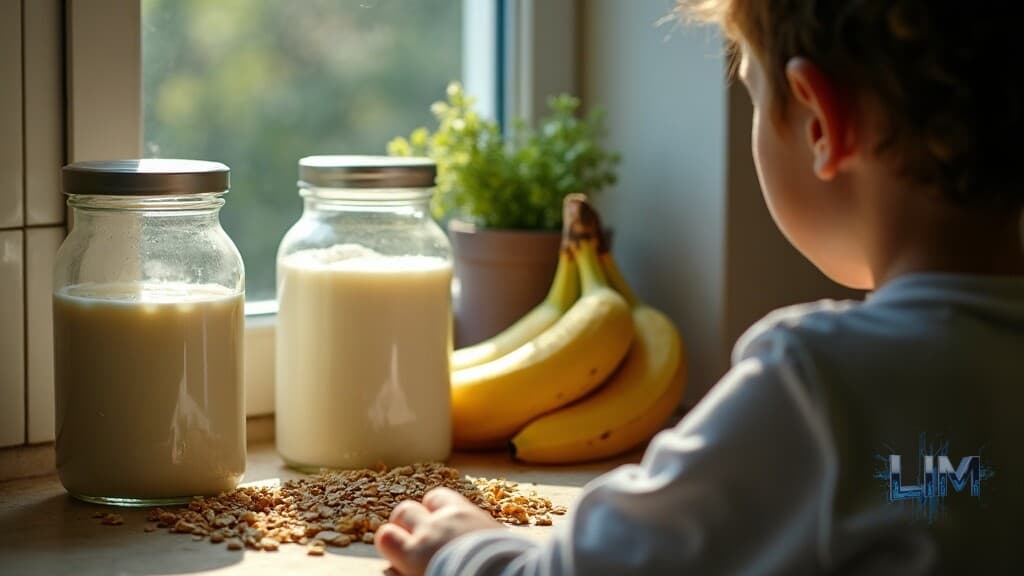
Dana has eleven minutes between the daycare pickup line and the start of the witching hour, and she spends most of them in the snack aisle making decisions she has been told are character flaws. The lunch kit her daughter will actually eat. The yogurt tubes that survive a backpack. The cereal with the cartoon on it, because the one without the cartoon comes home uneaten and uneaten food is wasted money. She knows the version of her that has it together would cook from scratch. That version of her does not have a job and two kids under seven.
What nobody tells Dana, standing there feeling like she is failing a test, is that the products in front of her were designed by people whose entire profession is making things hard to put down. That is not a guilt trip. It is the opposite. It is the single most useful fact she could be handed, because it moves the problem out of her willpower and into the formulation, where she can actually do something about it.
TL;DR (too long, didn't read)
- A June 2026 special edition of the American Journal of Public Health, covered by STAT News today, collected 17 articles from leading ultra-processed-food researchers calling for sweeping policy change. The recurring theme, in the words of NYU's Marion Nestle, is that the food environment is "rigged." A companion survey of roughly 2,000 US adults found bipartisan agreement that ultra-processed foods are effectively addictive.
- This is not new behavior from the food industry, it is inherited expertise. Through the 1980s and 1990s, tobacco companies (Philip Morris and R.J. Reynolds) owned the largest US food brands (Kraft, General Foods, Nabisco). A 2023 study in the journal Addiction (Fazzino et al.) found that the foods developed under tobacco ownership were significantly more likely to be "hyperpalatable," engineered with fat, salt, and sugar combinations the brain struggles to stop eating. The flavor-optimization muscle built to sell cigarettes got pointed at the grocery cart.
- The scale is the point. More than half of all calories US adults eat are now ultra-processed. One shelf audit of 651 baby and toddler products across a state's eight largest grocery chains found 71% were ultra-processed. The default is not the homemade meal. The default is the engineered one.
- The health signal is real and not subtle. Pooled 2024 to 2026 data link higher ultra-processed intake to meaningfully elevated cardiovascular risk, with one widely reported analysis putting the increase near 47% for heart attack and stroke at the highest intakes. The dose matters, which is the good news.
- The move is not "never feed your kid a packaged food," because that advice fails the same parent it scolds. The move is to swap the one highest-frequency ultra-processed item in each category for a minimally processed version that hits the same job (fast, portable, kid-approved). Five swaps, run in the aisle, no moralizing.
Why "just use willpower" was always the wrong frame
Ultra-processed is a specific thing, not a vibe. The NOVA classification, which most of this research uses, defines it as food made largely from industrial ingredients and additives you would not find in a home kitchen: protein isolates, modified starches, emulsifiers, flavor systems, color. The defining feature is that it has been formulated, not just cooked.
Related Read
Your muscle can get fatter while the scale stays flatA 2026 Radiology study used thigh MRI to show that the more ultra-processed food people ate, the more fat had infiltrated their muscle, independent of total calories, fat intake, activity, and even body weight. It lands hardest on over-40 desk workers who look fine on the scale. But it is observational, so it shows a strong association, not proof that cutting UPF reverses the marbling.
And formulation has a goal. The 2023 Addiction analysis is the cleanest piece of evidence that the goal was not always your health. When researchers looked at which products were "hyperpalatable," the ones engineered to deliver fat-and-sodium or carb-and-sodium combinations that blunt your natural fullness signal, the products tied to tobacco-company ownership were far more likely to qualify. These were companies with decades of in-house science on how to make a product chemically compelling. They applied it to food the way they had applied it to cigarettes. Lunchables, launched in 1988 under a Philip Morris-owned brand, is the artifact everyone remembers, but it is one example of a system.
So when Dana feels like she lacks discipline because the cheese-cracker snack disappears in ninety seconds, she is reacting exactly as designed. Hyperpalatable formulation works by overriding satiety. You eat past the point where real food would have told you to stop. That is not a personal weakness. It is a feature someone was paid to build.
We have written before about the downstream cost of this. A 2026 Radiology study used thigh MRI to show that the more ultra-processed food people ate, the more fat had infiltrated their muscle, independent of calories and body weight. And the stress side compounds it: parental cortisol turns out to be a hidden driver of how kids eat, which means a frazzled parent and an engineered snack are not two separate problems. They feed each other.
The leverage point is the cart, not the kitchen
Here is what the moralizing nutrition advice gets wrong about a busy parent's life. It treats every meal as a decision with equal weight, so the prescription becomes "cook everything from scratch," which is a full-time job nobody handed you funding for. The data says you do not need that. You need to change the defaults that repeat.
Your grocery cart is roughly the same every week. The same lunch kit, the same yogurt, the same cereal, the same after-school snack. That repetition is your advantage. If you swap one ultra-processed staple per category for a minimally processed one that does the same job, you change dozens of meals at once, permanently, with a decision you make once at the shelf instead of forty times at the table.
The principle behind every swap below is the same: replace formulation-driven palatability with protein and fiber, the two things that actually create fullness instead of overriding it. (This is the same mechanism behind why fiber acts like a natural appetite brake.) You are not trying to make food less enjoyable. You are trying to make it stop eating you.
The 5 swaps, run in the aisle
1. The lunch kit, to the two-minute build box. The packaged lunch kit is the flagship engineered product. Swap it for a reusable bento box you fill once: real cheese cubes, whole-grain crackers, and a protein (rotisserie chicken, deli turkey, a hard-boiled egg). It takes about two minutes the night before, costs less per serving, and the protein actually holds your kid until the bell. Buy the box once, win the lunch fight for a year.
2. The sweetened yogurt tube, to plain Greek yogurt plus frozen fruit. Flavored kid yogurts are often closer to dessert, with added sugar doing the palatability work. Swap to plain or low-sugar Greek yogurt (double the protein of regular) and let the kid stir in frozen berries. Same cold, sweet, spoonable format. You control the sugar instead of a formulator controlling it for you.
3. The cartoon cereal or toaster pastry, to eggs and fruit (or a short-ingredient cereal). Breakfast is where the day's blood sugar gets set. A refined-carb breakfast spikes and crashes by mid-morning. Eggs and fruit is the gold standard, but on a chaotic morning, a cereal with a short ingredient list and real fiber beats the toaster pastry every time. Front-load protein and you blunt the 10 a.m. meltdown before it starts.
4. The fruit snack or juice pouch, to whole fruit plus a string cheese. Fruit snacks and juice are sugar stripped of the fiber that was supposed to slow it down. Whole fruit keeps the fiber, and pairing it with a string cheese adds protein so the snack actually lands. Apple and cheese is not a hack. It is just the version that was not redesigned to disappear in seconds.
5. The chip or cracker snack, to nuts, air-popped popcorn, or roasted chickpeas. The crunchy-salty snack category is pure hyperpalatable engineering. You keep the crunch and salt, you drop the formulation: a small bag of nuts, air-popped popcorn, or roasted chickpeas delivers fiber and, in the case of nuts and chickpeas, protein. Crunch is not the enemy. The off-switch override is.
None of these require a new skill or a free Saturday. They require one different decision at the shelf, repeated automatically because the cart is automatic.
The caveats, because this is a brand that reads the methods
A few honest limits, because the headline version of this story gets overstated.
"Engineered like cigarettes" is a real historical link, not a claim that there is nicotine in your kid's lunch. The accurate version is that tobacco companies owned major food brands and the products developed under them were measurably more hyperpalatable. That is what the 2023 Addiction study showed. It is damning enough without exaggeration.
The cardiovascular numbers are mostly observational. People who eat the most ultra-processed food differ from people who eat the least in a dozen other ways (income, sleep, stress, activity), and good studies adjust for those but cannot eliminate them. The association is strong and consistent across large datasets, which is why public-health researchers are acting on it, but association is not the same as a controlled proof that swapping reverses the risk for any one family.
And "ultra-processed" is a broad bucket. Plain whole-grain bread and a soda both get classified as processed by some definitions, and they are not equivalent. This is exactly why blanket fear of "processed food" is useless and the targeted swap is not. You are not avoiding a category. You are upgrading the specific items that were built to be overconsumed.
The load-bearing claim is narrow: the food environment was engineered to make stopping hard, the dose of ultra-processed food in the average cart is high enough to matter, and the highest-leverage fix for a time-strapped parent is a one-time swap of repeating staples, not a kitchen overhaul or a guilt complex. Everything past that is sensible application.
What this looks like inside Legacy In Motion
This is the kind of problem our AI coaching was built to solve, because the failure point for busy parents is almost never knowledge. It is the gap between knowing better and having eleven minutes and two tired kids. Our founder, Jake, lost 112 pounds (from 308 to 196) while working overnight hospital shifts, and the thing that finally worked was not willpower. It was building an environment where the easy choice was the right one, so he did not have to win the same fight forty times a week.
So the coaching does that with food. It learns the handful of items that actually repeat in your week and helps you swap them one at a time, at a pace a real schedule allows, instead of handing you a meal plan that assumes a life you do not have. It anchors the swaps to protein and fiber targets that fit your family, and it adjusts when a swap does not stick, because the kid who will not touch plain yogurt is data, not a failure. The goal is not a perfect pantry. It is a cart that quietly stops working against you.
If that is the version of this you want, our AI coaching is built around exactly this kind of small, repeatable, no-blame change, and our Discord community is full of parents trading the swaps that actually held in their houses.
You are not failing the snack-aisle test. The test was rigged. Change the cart once, and you stop taking it every day.
Comments (0)
Comments are reserved for Legacy In Motion members.
$29.99/month. No contracts. Cancel anytime.
Get StartedAlready a member? Sign in
You read this far. Now do this.
Enough reading about it.
Time to train around the life you actually live.
I went from 308 to 196 lbs working 12-hour overnight shifts with two kids and zero personal trainer. The system I used is now an app that plans your training and meals around YOUR schedule — overnight, day shift, all of it.
Cancel anytime · No setup fee · No long contract
Free Assessment
What's Blocking Your Results?
Take our 60-second quiz and get a personalized breakdown of what's stopping your progress — plus how AI coaching solves it.
Take the QuizFree PDF · No Credit Card
Get the Shift Worker AI Fitness Blueprint
A 4-week plan that respects what shift work does to sleep: when to go down after a night, the four-minute REHIT window, post-shift macros, and when to back off. In your inbox in 30 seconds.
Built by someone who actually worked them. No fluff. Unsubscribe any time.
Keep Reading
2026-06-01
Your muscle can get fatter while the scale stays flat
A 2026 Radiology study used thigh MRI to show that the more ultra-processed food people ate, the more fat had infiltrated their muscle, independent of total calories, fat intake, activity, and even body weight. It lands hardest on over-40 desk workers who look fine on the scale. But it is observational, so it shows a strong association, not proof that cutting UPF reverses the marbling.
2026-06-02
Morning Exercise Nudged Their Blood Sugar Up. Afternoon Exercise Brought It Down.
In a Diabetologia crossover trial, morning HIIT actually pushed blood sugar up in men with type 2 diabetes, while the same session in the afternoon brought it down. A 29,836-person UK Biobank study found evening movement carried the lowest mortality risk in adults over 40 with obesity. Here is what exercise timing really means for your blood sugar if you are over 40, chained to a desk, or squeezing training around kids, and why the honest answer is not simply train whenever you can.
2026-06-01
Exercise barely dents the scale. The AHA just said move anyway.
A June 2026 American Heart Association scientific statement in Circulation lays out the uncomfortable math: exercise alone rarely produces more than 5% weight loss, and fewer than 15% of people reach a clinically meaningful drop through activity alone. Yet regular movement independently improves blood pressure, insulin sensitivity, cholesterol, and cardiorespiratory fitness, and it keeps adding benefit even on top of GLP-1 medication or surgery. It is a consensus statement summarizing the trials, not one new experiment, which is exactly why it carries weight.
Join our free fitness community — get coaching tips, share wins, and stay accountable.
JOIN THE DISCORD →