


Fibermaxxing: The Appetite Tool You Actually Control
Fibermaxxing is trending for a real reason: fiber stimulates your body's own GLP-1 and PYY. Here's the honest science, the fiber gap numbers, and a sane ramp protocol for over-40 adults, busy parents, and desk workers.
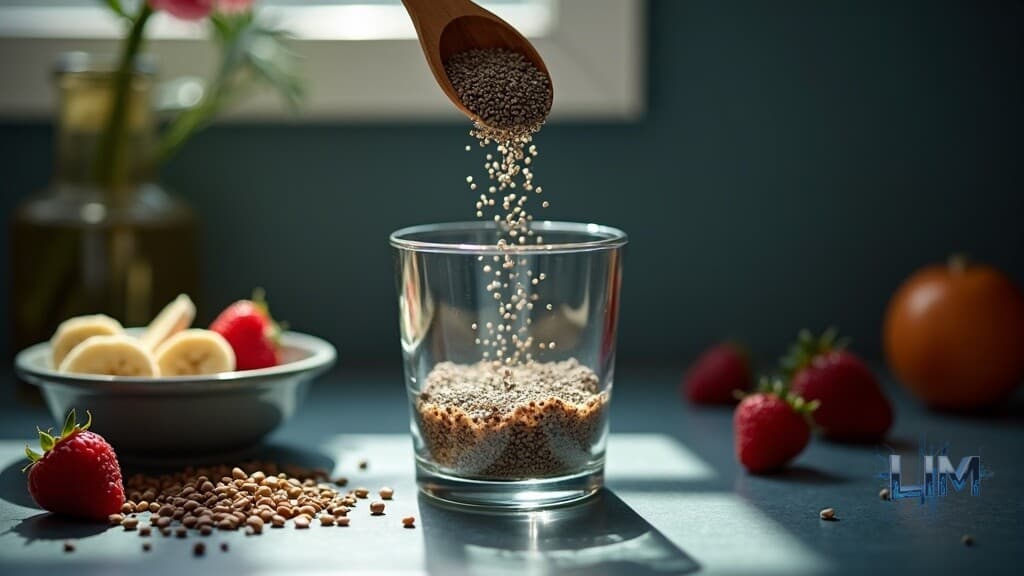
Marcy is 46, lives in Columbus, and runs the accounts-payable desk at a logistics company. She told us her hunger has a schedule, and the schedule is brutal. 10:30 a.m., a hollow ache an hour and a half after a "healthy" bowl of oatmeal and banana. 3:15 p.m., the vending machine call so loud she can hear the coins. By the time she's done with her daughter's volleyball practice and a drive-through dinner, she's eaten past full and she's mad at herself for it.
She does not have a willpower problem. She has a satiety problem. And like a lot of people this spring, she found herself watching TikTok videos of people stirring three tablespoons of chia into everything and talking about feeling full for the first time in years. The word kept coming up: fibermaxxing. The subtext kept coming up too: this is the thing you do instead of the injection.
Here is the honest version, because Marcy deserves the honest version. Fiber is not a drug. But the trend is built on a real mechanism, and used correctly it is one of the few appetite levers you fully control with a grocery cart. Let's separate the part that's true from the part that's hype.
TL;DR (too long, didn't read)
Related Read
Why Fitness Programs Fail at 6–8 Weeks (And How Busy Adults Fix It)Most people don't quit fitness in week one — they stall around week 6–8 when novelty dies, life interrupts, and the plan freezes. Here's the science of plateaus, adherence, and progressive overload for busy parents, desk workers, and over-40 restarts.
- Fibermaxxing means deliberately pushing fiber intake high (social content circulates 40-50g+/day, though the official adequate intake is 25g for women and 38g for men) for appetite control and gut health.
- The GLP-1 link is legitimate: fermentable fiber becomes short-chain fatty acids that bind GPR41/GPR43 receptors on colonic L-cells, triggering your own GLP-1 and PYY secretion. Same hormone pathway the drugs target, at a physiological (not pharmacological) level.
- The fiber gap is a public health crisis: only about 7.4% of US adults hit the adequate intake (NHANES 2013-2018, via Healio). The average American gets roughly 8.1g per 1,000 kcal, about 58% of target.
- A 2024 RCT (n=112, 180 days, double-blind) using 5g/day of glucomannan + inulin + psyllium found -7.3% body weight vs -2.4% placebo. But 74.6% of the treatment group reported at least one mild-to-moderate GI side effect (PMC10892568).
- Ramp slowly (+5g/week), hydrate (8-16 oz extra per 10g added), and pair fiber with protein at every meal to stack satiety signals.
- Fiber does not replace a GLP-1 drug. It activates the same pathway with a smaller effect. That's the accurate framing, and it's still useful.
What fibermaxxing actually is, and why it's everywhere right now
Fibermaxxing is the deliberate, tracked effort to eat far more fiber than the average person does, with appetite control as the headline benefit and gut health as the supporting act. NPR ran a dedicated piece on it May 18, 2026. Johns Hopkins Center for a Livable Future named it a top food trend for 2026. CNBC reported back in December 2025 that PepsiCo, Nestle, and Olipop are all chasing the category, with PepsiCo's CEO Ramon Laguarta telling an earnings call that "fiber will be the next protein" and McDonald's CEO Chris Kempczinski predicting fiber "is going to be big" in 2026.
The consumer demand is real, not manufactured. Datassential research cited across 2026 reporting found 60% of Gen Z consumers say they're interested in high-fiber food and drinks. When the food giants and the public radio desk and the gut-health side of TikTok all land on the same word in the same month, it's usually because a genuine gap met a genuine appetite for a fix.
And there is a gap. We'll get to exactly how big it is. But first, the part everyone's hand-waving at: why does eating more fiber make you less hungry?
The real satiety mechanism: two pathways, one outcome
Fiber suppresses appetite through two parallel systems, and understanding both is what separates a smart protocol from a TikTok stunt.
The first is mechanical and fast. Viscous soluble fibers, the ones in psyllium, oat beta-glucan, and glucomannan, form a gel in your stomach and small intestine. That gel increases the thickness of the contents of your gut, physically slows how fast your stomach empties, and blunts the post-meal glucose spike. Per the mechanistic review in PMC10498976, this prolongs the fullness signal coming from stretch receptors in your stomach and slows how quickly nutrients hit your bloodstream. That's the immediate "I feel full longer" effect.
The second is hormonal and slow-building, and it's the one driving the GLP-1 conversation. Fermentable fiber survives the trip to your colon mostly intact. There, your gut bacteria ferment it into short-chain fatty acids: acetate, propionate, and butyrate. Per the American Diabetes Association's Diabetes journal and PMC10498976, propionate and acetate bind two receptors, GPR41 (FFAR3) and GPR43 (FFAR2), on the enteroendocrine L-cells lining your colon. GPR43 activation kicks off a calcium-release cascade inside the cell that pushes those cells to secrete GLP-1 and PYY. Butyrate does its own work: it improves gut barrier integrity, lowers inflammatory signals, and nudges appetite down through the gut-brain circuit.
GLP-1 and PYY are the satiety hormones. They are, in fact, the same hormones that semaglutide and tirzepatide target pharmacologically. So when someone says fiber "works on the same system as the drugs," they are not wrong. Your body has a built-in GLP-1 button, and fermentable fiber is one of the ways you press it.
When you eat fiber, you're playing both pathways: the gel slows the meal down up top while the fermentation stimulates your own hormones lower down. That's why fiber outperforms most single-mechanism "appetite hacks."
The honest ceiling: fiber is not a GLP-1 drug
This is the part the trend skips, so we won't.
The GLP-1 and PYY response you get from fiber is real and reproducible in humans. It is also far smaller in magnitude than what a weekly injectable does. Per the crosstalk review in mBio and a 2026 paper in the British Journal of Clinical Pharmacology, the SCFA concentrations needed to meaningfully stimulate L-cell GLP-1 release in humans are substantially higher than what shows up in the rodent studies people love to cite. The effect is physiological, not pharmacological. No amount of chia replicates the sustained, high-level receptor activation of a prescription GLP-1 agonist.
So if you've been told fiber is "nature's Ozempic," delete that. The accurate sentence is narrower and more useful: fiber activates the same hormonal pathway at a level your body can produce on its own. That is a real tool. It is not a substitute for a drug, and anyone selling it as equivalent is overstating the data to sell you something.
What can fiber actually deliver on the weight side? The strongest single piece of evidence is that 2024 RCT in PMC10892568: 112 participants, 180 days, double-blind and placebo-controlled, using 5g/day of combined glucomannan, inulin, and psyllium. The treatment group lost 7.3% of body weight versus 2.4% on placebo, dropped 19.4% fat mass versus 6.4%, and scored more than three times higher on postprandial appetite suppression. Worth knowing the fine print: participants were pre-selected for obesity-related gene variants, and 74.6% of the treatment group reported at least one mild-to-moderate GI side effect. A 2025 systematic review of konjac glucomannan across 10 RCTs (Discover Food, Springer Nature) found ≥5g/day for ≥12 weeks tied to a mean weight reduction of 3.18 kg.
Notice the pattern: the wins are modest, they take months, and the best evidence is for viscous fibers like glucomannan, not every fiber equally. Psyllium's specific weight-loss evidence is weaker. A 2025 meta-analysis in the Journal of Health, Population and Nutrition even found non-significant BMI changes for psyllium across mixed populations. Fiber helps. It helps slowly. It helps most when it's part of a real diet shift, not a sprinkle-on add-on.
The fiber gap: how far behind you actually are
Here's why this trend hit a nerve. The official adequate intake, per the Institute of Medicine standard reaffirmed in the 2020-2025 Dietary Guidelines, is 25g/day for women, 38g/day for men, or 14g per 1,000 calories. Fiber is formally classified a "nutrient of public health concern."
And almost nobody hits it. Per NHANES 2013-2018 data reported by Healio, only about 7.4% of US adults meet the adequate intake. Framed another way using the same datasets in the Dietary Guidelines and PMC8621412: over 90% of women and 97% of men fall short, and the average American eats roughly 8.1g per 1,000 kcal, about 58% of target. Current daily intake sits around 15-17g against a 25-38g recommendation.
So Marcy isn't behind by a little. The average person is eating barely half the fiber their gut hormones need to do their job. That 10:30 a.m. hollow ache is, in part, a hormone signal that never got built because the substrate to build it never arrived.
The sensible ramp protocol (and the foods that fit a real schedule)
You cannot fix a 17g habit by eating 45g tomorrow. The 74.6% adverse-event rate in that RCT is your warning: gut bacteria ferment fiber into gas, and a sudden jump means bloating, cramping, and misery. The fix is patience, structured.
The ramp:
- Week 1-2: establish your baseline. Most over-40 adults start at 10-15g/day. Log three honest days before you add anything.
- Then add one high-fiber food per week, roughly +5g at a time. Suggested order by ease: chia stirred into yogurt or oatmeal, swap white rice for lentils at one meal, add raspberries, add half an avocado at lunch, replace the afternoon snack with edamame.
- Target your number (25g women, 38g men, or about 0.14g per pound of body weight) over 5-6 weeks, not 5-6 days.
- Hydration is non-negotiable: add one extra 12 oz glass of water for every +10g of fiber. Insoluble fiber pulls water into your gut. Without the fluid, you get constipation, not relief. Travelers, this is you: plane air is dehydrating and airport food courts are where fiber spikes.
The cheat sheet (grams that survive a reactive day):
- Chia seeds, 2 tbsp (1 oz): roughly 10g fiber, 4-5g protein
- Cooked lentils, 1 cup: roughly 15.6g fiber, 18g protein
- Cooked black beans, 1 cup: roughly 15g fiber, protein-dense
- Raspberries, 1 cup: roughly 8g fiber
- Whole avocado: roughly 10g fiber
- Dry rolled oats, 1/2 cup: roughly 4g fiber, 5g protein
- Edamame, cooked, 1 cup: roughly 8g fiber, 8g-plus protein
- Psyllium husk, 1 tbsp: roughly 7g fiber
- Chia pudding (1/4 cup chia plus almond milk): roughly 12-13g fiber, 8g protein
(Fiber values: Mayo Clinic and USDA fiber tables.) One rule for psyllium specifically: never take it dry. It swells, and dry powder can swell in your esophagus. Mix it into at least 8 oz of water or stir it into oatmeal or yogurt.
Two more honest caveats. If you have IBS, high-FODMAP fibers like inulin, onion, garlic, and some legumes can trigger real symptoms. Start with low-FODMAP options: chia, oats, kiwi, carrots. And lean on whole foods over supplements when you can. The microbiome and satiety benefits are strongest from vegetables, legumes, and whole grains, because they bring polyphenols and resistant starch along for the ride. Use supplements like psyllium to fill the gap, not to be the whole strategy.
Pair fiber with protein, every meal
This is the move that separates Marcy's failed oatmeal from a meal that actually holds.
Plain oatmeal and a banana is a fiber spike with almost no protein. It produces a GLP-1 bump that fades, and 90 minutes later the hunger is back. Protein independently triggers CCK release from the I-cells in your small intestine and amplifies GLP-1 and PYY while suppressing ghrelin, the hunger hormone (Barakat et al., Journal of Physiological Sciences 2024; Oxford Academic Endocrinology 2025). When protein and fiber arrive together, you fire CCK, GLP-1, and PYY at once, creating a wider, longer satiety window than either nutrient alone.
For over-40 readers this matters double, because soluble fiber also slows glucose absorption and blunts the insulin spike that drives the rebound hunger 90-120 minutes after a meal. Insulin sensitivity declines with age, so that buffer is worth more to you at 46 than it was at 26. If you're still working out your protein targets, start with our protein math guide, and if you're over 40, read why daily totals miss the leucine threshold. Per-meal distribution is the whole game.
So: black beans plus avocado for Marcy's lunch (about 12-13g fiber, 14g protein, five minutes from a can). Chia pudding made the night before for the reactive parent days (12g fiber, 8g protein, three minutes). Edamame at the gate instead of the pretzel cart for the traveler.
What we tell our over-40 and busy-parent clients
Here's the thing a fiber chart can't do.
"Eat 25 to 38 grams of fiber" is true and almost useless for a 46-year-old with a desk job, a volleyball pickup, and a Friday flight. The reason most people never close the fiber gap isn't a knowledge problem. The information has been on the side of cereal boxes for decades. It's a personalization problem. Your target depends on your body weight and your calorie needs. Your execution depends on your actual Tuesday, the one with the late meeting and the drive-through dinner.
That's what our coaching is built to do. You log your meals, and Chiron, our AI head coach, knows your weight, your real schedule pattern, and your food environment well enough to tell you the specific thing: on this travel day you're tracking toward 14g unless you grab edamame at the gate, so grab it before you board. Not a better chart. A coach that fills the right gap on the right day, and adapts the moment your week changes.
If you do want one supplement worth keeping in your bag, a clean single-ingredient psyllium husk is the most travel-proof fiber boost there is. We list the one we actually recommend on our recommended gear page. Buy it for the gap-filling, not as the plan.
And to be clear about where this sits next to the medication conversation: we coach plenty of clients on the muscle-sparing side of pharmacological weight loss too, which is its own protocol with its own rules (here's our muscle-sparing approach). Fiber isn't the competitor to that. It's the foundation everyone should be building regardless, because your own GLP-1 is free and you control it three times a day.
What Marcy changes Monday
She doesn't buy a fiber tub and dump 40 grams into her week. She makes one mason jar of chia pudding Sunday night, eats it Monday morning with a scoop of protein, and notices the 10:30 ache is quieter. The next week she swaps her lunch rice for lentils. The week after, edamame replaces the vending-machine run. She adds a glass of water for every step. By week six she's near her target, her afternoons are calmer, and she never once felt like she was white-knuckling it.
That's the whole play. A real mechanism, used at the dose your body actually responds to, ramped at the speed your gut can handle, on the schedule you actually live.
---
Your plan should change the day your week does
This is what Chiron, our AI head coach, does on every meal you log: catches the small wrong detail before it costs you. HERMES, our research engine, surfaces new science the morning it publishes, so your coaching moves with the literature instead of trailing it by quarters. You log; we adapt your plan that day. No PDF reprints, no static plan that ages out the week your kids' schedule or your travel changes.
$29.99/month · $249.99/year · 7-day free trial · cancel anytime · no enrollment fee · no contract
Start coaching → · See the full app →
Jake Long built it after losing 112 lbs working hospital night shifts, when no human coach could keep up with his schedule. He wanted the system he wished he'd had at 308. Now you can use it too.
Comments (0)
Comments are reserved for Legacy In Motion members.
$29.99/month. No contracts. Cancel anytime.
Get StartedAlready a member? Sign in
You read this far. Now do this.
Stop reading about it.
Start training around your real life.
I went from 308 to 196 lbs working 12-hour overnight shifts with two kids and zero personal trainer. The system I used is now an app that plans your training and meals around YOUR schedule — overnight, day shift, all of it.
Cancel anytime · No setup fee · No long contract
Free Assessment
What's Holding Your Fitness Back?
Take our 60-second quiz and get a personalized breakdown of what's stopping your progress — plus how AI coaching solves it.
Take the QuizFree PDF · No Credit Card
Download the Shift Worker AI Fitness Blueprint
If your training keeps dying by week two, start here: the 4-week shift-worker protocol behind Jake's 112 lb loss, with the sleep timing and post-shift macros that made it stick.
Built by someone who actually worked them. No fluff. Unsubscribe any time.
Keep Reading
2026-07-14
Why Fitness Programs Fail at 6–8 Weeks (And How Busy Adults Fix It)
Most people don't quit fitness in week one — they stall around week 6–8 when novelty dies, life interrupts, and the plan freezes. Here's the science of plateaus, adherence, and progressive overload for busy parents, desk workers, and over-40 restarts.
2026-07-13
MRT for Busy Parents Over 40: Strength + Burn in 25 Minutes
Metabolic resistance training (MRT) is the 2026 busy-parent default: compound strength circuits with short rest that build muscle and raise the metabolic cost of a short session. How over-40 adults and desk workers run it without wrecking recovery.
2026-07-12
Hybrid Training After 40: Strength + Zone 2 Without Killing Either
Hybrid training is the 2026 default for capable humans — not just HYROX athletes. Here is how busy parents, desk workers, and over-40 transformations run strength and endurance in the same week without the interference effect eating the progress.
Join our free fitness community — get coaching tips, share wins, and stay accountable.
JOIN THE DISCORD →