


How I Lost 112 Pounds Working Night Shift Before Turning 40
308 to 196 on a hospital security graveyard schedule. The protocol, the science, the part nobody talks about — at 40, on the record.
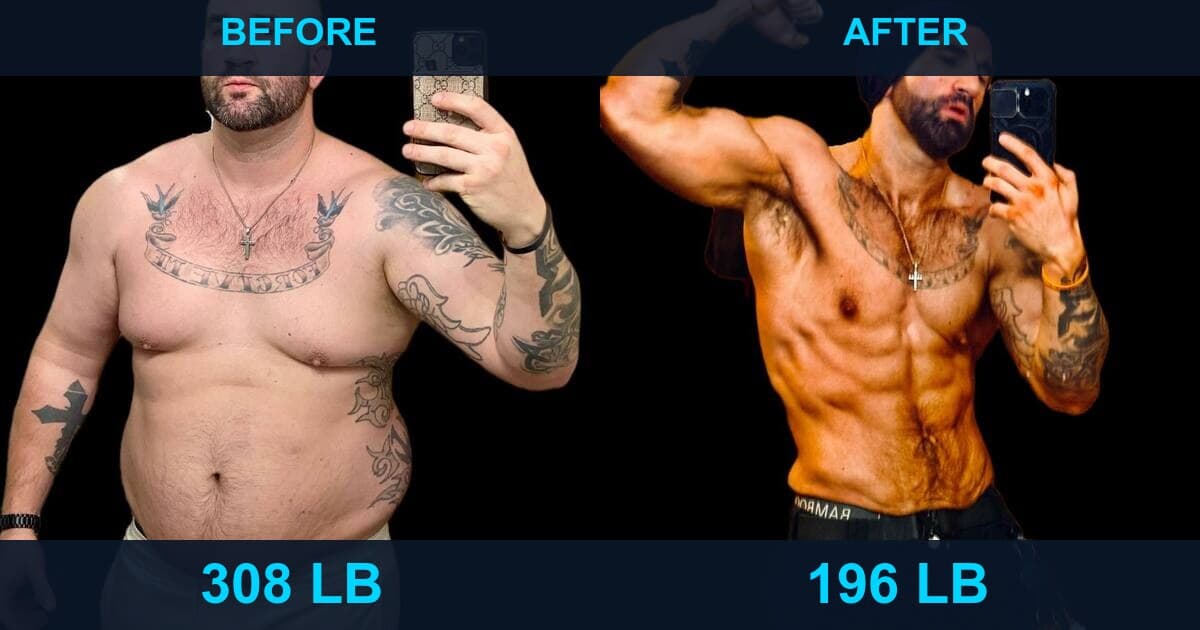
May 2025, 03:47. I am 308 pounds. I am sitting in a hospital security office staring at a vending-machine bag of pretzels and a Monster Energy, and I already know I am going to eat both.
I had told my wife on Sunday this was the week. I tell her that most Sundays. The badge on my chest weighs less than the shame I am about to pretend is not there.
April 16, 2026. I turn 40. I weigh 196. Abs visible for the first time in my life.
Nine and a half months. This is what actually happened between those two mornings.
Related Read
5 Minutes of Lowering Beats 45 Minutes of Lifting: ECU's 2026 Eccentric Protocol for Desk Workers, Busy Parents, and Anyone Over 40 Without Gym TimeEdith Cowan University's 2026 trial in the Journal of Sport and Health Science found four bodyweight eccentric exercises performed for five minutes a day produced measurable gains in strength, flexibility, strength-endurance, and mental health in sedentary adults. No gym, no equipment, no soreness. Here is the protocol, the mechanism, and how AI coaching wires it into a real week.
TL;DR
- 308 → 196 lbs in 9.5 months on a hospital security graveyard rotation, 147 consecutive training days through age 39.
- Locked protein at 2.2 g/kg per Cell Metabolism 2024 — the old 1.6 number is undershot.
- Night shift jacks cortisol roughly 38% (Sleep Medicine Reviews 2023) — standard plans fail on non-standard schedules.
- Walked 8,000–12,000 steps a day and ran three full-body lifts a week before adding anything fancy.
- Yes, I ran Retatrutide (triple agonist, not a GLP-1). Putting it on the table.
The Mistake That Kept Me at 308
For years I read posts like this one and assumed the writer had something I did not. A wife who cooked. A 9-to-5. A gym at the office. They did not.
The mistake I kept making was treating my schedule as the enemy instead of the environment. I would start a plan Sunday, run it hot for 11 days, get a shift swap, eat drive-through at 3 AM, and collapse back into "I'll start Monday." A lifetime of Mondays.
Night-shift work disrupts cortisol rhythm by roughly 38%. That is not a vibe. That is a measurable, body-wide shift in how the same diet and training hits you. Hunger up. Sleep fragmented. Insulin sensitivity down.
You can not run a day-shift plan on a night-shift body and expect day-shift results. The plan was always going to lose. I had to build around the schedule I had, not the one I wished I had.
This is the exact problem Chiron — our AI head coach — was built to solve. You log your shift, it builds the training and feeding windows around it. No coach meeting required.
Protein Wasn't a Number. It Was the Rule.
For most of the first 100 pounds I did not count calories. I counted protein.
The real sweet spot for preserving muscle in a deficit sits at 2.0 to 2.4 grams per kilo — substantially higher than the 1.6 number most blogs still quote. I locked to 2.2. Four meals, 40 to 50 grams each, spaced across my waking hours, which on shift days ran 5 PM to 9 AM.
That one rule did three things at once. The 3 AM vending machine lost most of its pull. Muscle stayed on while fat came off, which is why the after photo does not look skinny. And every food decision had a default — if there is no protein source on the plate, fix that first.
Protein first. Everything else second. That is the rule. The in-app barcode meal log handles the "I do not have time to track" problem in one tap, which is the only reason I kept doing it on 14-hour days.
Three Lifts a Week, Beaten By One Rep
I did not start with a bro split. I started with three days of compound lifts — squat, bench, deadlift, overhead press, row — tracked in a spiral notebook. One rule: each session had to beat the last by a single rep or five pounds on one exercise.
People who start training after the age-related decline has begun still gain 5 to 10% in physical capacity. The window does not close at 35. It just narrows every year you do not walk through it.
Around month six I added a fourth day. Not because the science demanded it. Because by then I wanted to be there. That is a tell you cannot fake your way into.
When the Apple Watch logs a flat HRV two days running, the daily AI program update worker pulls volume back and pivots the day to rep progression instead of weight progression. That is the adjustment I had to learn to make manually, and the learning cost me years.
Steps Did What Cardio Couldn't
I did not run. I did not HIIT. I walked.
Eight thousand to twelve thousand steps a day, baked into the shift. Park further out. Take the long hallway. Loop the hospital grounds on break. Low-intensity movement adds 300 to 500 calories of real deficit without requiring recovery, and it does not spike cortisol in a body that is already under-slept.
Walking is good. Walking does not rebuild mitochondria. The lifting does. You need both. One without the other is a plateau with extra steps.
Sleep Was the Training Variable I Almost Missed
Night-shift sleep is broken by definition. I could not fix that. I could stop making it worse.
Blackout curtains. Airplane mode. Magnesium glycinate before sleep, not after waking. Caffeine cutoff six hours before bed — which on graveyard means cutoff before most people clock in. I tracked HRV every morning. Two bad days in a row, I pulled volume back before my body pulled it for me.
Recovery is not a rest day. It is the thing that determines whether the work you did is going to show up.
The voice-note check-in catches the cortisol-tell in the voice before the scale moves. By the time the scale tells you, you are already two weeks behind.
The Peptide Piece I'm Not Going to Hide
Here is the part most transformation posts leave out.
I ran a peptide protocol. Specifically Retatrutide — a triple agonist hitting GLP-1, GIP, and glucagon receptors. Different class from the medications most people know by name. Mechanism, simplified: appetite regulation plus a small push on energy expenditure the GLP-1-only compounds do not produce.
I am not leading with this because the peptide was not the whole answer. The training, the 2.2 g/kg protein, the steps, the sleep work — that did most of the weight. What the peptide did was make the deficit survivable on a graveyard schedule where cortisol-driven hunger had beaten me four separate times before.
It lowered the floor on the hardest days. It did not replace the work.
If you are on a GLP-class drug and trying to figure out how to protect muscle while the scale moves, the protocol above is, pretty literally, what I ran alongside it. I am not selling a lifestyle-only story while quietly taking a compound that is part of the stack. Full picture on the table.
Month Three Almost Ended It
I had lost 30 pounds. Visible enough that strangers noticed. Not visible enough to silence the voice that said you still have 80 to go.
Lifts stalled for two weeks. My wife asked if I was okay because I was snapping at the kids. The scale started jumping the wrong direction on shift-change weeks even when everything was dialed.
What got me through was not inspiration. It was understanding that the body fights back. The literature says metabolic adaptations from a deficit can take years to fully resolve. That is not a linear graph. If you are measuring yourself against a linear graph, you will quit around month three every single time.
I stopped weighing daily. Waist measurement and photos every 14 days. The scale became weather. The four things I controlled — protein hit, three sessions trained, sleep when possible, daily steps — became the actual scoreboard.
What I'd Tell the 37-Year-Old at 308
You do not need more motivation. Motivation is the least reliable input you have. You need a protocol that survives a Tuesday where three things go wrong, and a system for figuring out which one to fix first.
There is no perfect week on night shift. There never was. The version of this I finally stuck with started on the worst possible Monday, inside a 60-hour work week, with a sinus infection. Everything I thought I needed in order to start was a lie I was telling myself to stay comfortable.
What We Built So The Next Guy Doesn't Have to Hand-Roll It
Legacy In Motion is the tool I wish I had at 308. Chiron reads the shift and builds the training around it. HERMES scrapes 12,000 fitness papers a week so the protocol updates the moment new evidence lands. Protein gets tracked per meal with alerts the meal before the leucine threshold gets missed. During high-cortisol stretches — a death in the family, a bad review, the week the baby is teething — the system notices through sleep and recovery markers and pulls volume for you, before "push through it" costs you the whole month after.
It is the protocol I spent 9.5 months hand-rolling, turned into software so you do not have to do it alone.
Forty feels different than I expected. Better. Month three, the right Monday that never comes, a graveyard rotation that does not survive standard plans — start at legacyinmotion.fit.
---
The data behind this
- Cell Metabolism 2024 — protein-per-kg sweet spot for muscle preservation in a deficit at 2.0–2.4 g/kg (substantially above the 1.6 g/kg figure most popular content still quotes).
- Sleep Medicine Reviews 2023 — night-shift work disrupts cortisol rhythm by roughly 38%; downstream effects on hunger, sleep architecture, insulin sensitivity.
- 2026 Swedish 47-year longitudinal study — lifters who started training after age-related decline had begun still gained 5–10% in physical capacity.
- Stanford Medicine 2026 longevity report — recovery as the single most underestimated variable in plateau-after-40 cohorts.
- JAMA 2024 analysis — sustained weight loss over ~3 years required for full resolution of deficit-driven metabolic adaptations.
---
Log tonight's shift. Wake up to an adjusted plan.
Start logging and Chiron, our AI head coach, starts adjusting: protein targets per meal, training volume after short sleep, a deload when your numbers call for it instead of when the calendar does. HERMES, our research engine, feeds new research into your coaching the morning it publishes.
$29.99/month · $249.99/year · 7-day free trial · cancel anytime · no enrollment fee · no contract
Start coaching → · See the full app →
Jake Long built it after losing 112 lbs working hospital night shifts — when no human coach could keep up with his schedule. He wanted the system he wished he'd had at 308. Now you can use it too.
Common Questions, Answered
How much protein for fat loss on night shift?
Lock to 2.2 g/kg bodyweight, split across four meals of 40-50 grams each. The 2024 Cell Metabolism paper pegged the real sweet spot at 2.0 to 2.4 g/kg, well above the 1.6 number most blogs still quote, and that single rule killed the 3 AM vending machine pull.
Can you still build muscle starting after 35?
Yes. A 2026 Swedish longitudinal study followed lifters for 47 years and found people who started training after the age-related decline had begun still gained 5 to 10 percent in physical capacity. The window narrows every year you wait, but it does not close at 35.
Why do day-shift diet plans fail on graveyard rotation?
Night shift disrupts cortisol rhythm by roughly 38 percent per a 2023 Sleep Medicine Reviews paper, which raises hunger, fragments sleep, and drops insulin sensitivity. The same diet and training hits a night-shift body differently, so the plan has to be built around the actual shift, not a wished-for 9-to-5.
Comments (0)
Comments are reserved for Legacy In Motion members.
$29.99/month. No contracts. Cancel anytime.
Get StartedAlready a member? Sign in
You read this far. Now do this.
Enough reading about it.
Time to train around the life you actually live.
I went from 308 to 196 lbs working 12-hour overnight shifts with two kids and zero personal trainer. The system I used is now an app that plans your training and meals around YOUR schedule — overnight, day shift, all of it.
Cancel anytime · No setup fee · No long contract
Free Assessment
Where's Your Training Stuck?
Take our 60-second quiz and get a personalized breakdown of what's stopping your progress — plus how AI coaching solves it.
Take the QuizFree PDF · No Credit Card
Get the Shift Worker AI Fitness Blueprint
If your training keeps dying by week two, start here: the 4-week shift-worker protocol behind Jake's 112 lb loss, with the sleep timing and post-shift macros that made it stick.
Built by someone who actually worked them. No fluff. Unsubscribe any time.
Keep Reading
2026-05-11
5 Minutes of Lowering Beats 45 Minutes of Lifting: ECU's 2026 Eccentric Protocol for Desk Workers, Busy Parents, and Anyone Over 40 Without Gym Time
Edith Cowan University's 2026 trial in the Journal of Sport and Health Science found four bodyweight eccentric exercises performed for five minutes a day produced measurable gains in strength, flexibility, strength-endurance, and mental health in sedentary adults. No gym, no equipment, no soreness. Here is the protocol, the mechanism, and how AI coaching wires it into a real week.
2026-04-14
Why Your Workout Plan Quits On You In Week Three
Generic plans collapse the second your real life shows up. Here's what genuinely adaptive programming looks like, and why it works.
2026-04-04
How to Set Up Garmin Connect for AI-Powered Fitness Coaching
Five-minute setup to stream Garmin sleep, HRV, and resting heart rate into your Legacy In Motion AI coach so training adapts daily.
Join our free fitness community — get coaching tips, share wins, and stay accountable.
JOIN THE DISCORD →