


The 'Sciatica' That Isn't: A 15-Second Hip Test Standing Workers Never Get
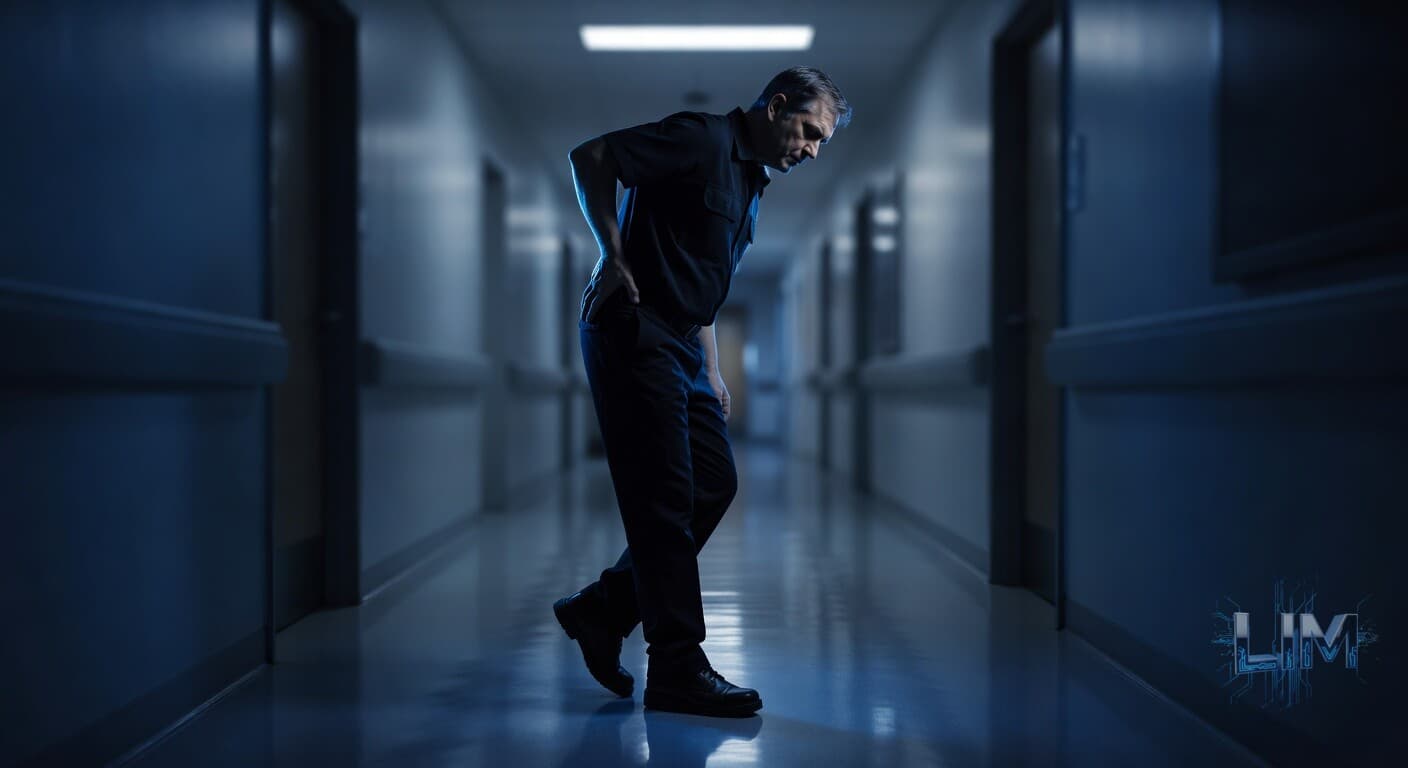
Mark is in his mid-fifties. Two knee replacements healed clean. A torn rotator cuff he is still working around. CIDP, which is the autoimmune nerve condition the neurologists have been managing for years.
He trains with his coach twice a week. Has for a decade. Same gym, same trainer, two-hour Saturday session that has carried him through every adaptive program rewrite the body has demanded.
Last Tuesday he tried to tie his left shoe with the foot up on the bench. Same posterior-thigh pull he had been blaming on "sciatica" for years. Except the location was wrong. Nothing traveled below the knee.
No burn. No electric crack. No numbness in the calf. Just a deep groin pinch that referred out the back of the leg the second he loaded hip flexion past 90 degrees with any adduction.
Related Read
Twice-Weekly Lifting Rebuilds Your Hippocampus After 502026 RCT: two resistance sessions a week protected the hippocampus in older adults with mild cognitive impairment. Beat cardio. Beat crosswords.
For a guy whose actual nerve disease is well-mapped and well-managed, this was different. Different mechanism. Different fix. The "disc problem" he had been told about for years resolved in eleven weeks. Two drills. It was never radicular. It was capsular.
TL;DR
- A fifteen-second self-test catches anterior hip impingement most standing-occupation workers never get screened for.
- A negative result rules it out cleanly. A positive refuses to dismiss it.
- The conservative-management gap measured in the literature is sixteen Hip Outcome Score points over twelve weeks versus standard care.
- The fix is two drills daily for twelve weeks: anterior capsule mobilization with posterior glide, plus loaded external-rotation progression.
- Capsular remodeling is B-vitamin, magnesium glycinate, and D3-with-K2 dependent.
Why standing all night drifts the femoral head forward
Security supervisors. Night-shift nurses. Bedside techs. Retail floor leads. Tradesmen at the bench. Anyone parked upright eight-plus hours produces the same hip-loading asymmetry.
Dominant leg sits in passive extension with slight internal rotation and mild adduction. Non-dominant leg unloads. Year over year, the anterior capsule and iliofemoral ligament shorten on the dominant side and the posterior capsule laxes.
The femoral head drifts forward in the socket. When you finally demand hip flexion — stairs, a squat, tying a shoe — the head impinges the labrum and anterior rim.
Nociception refers posteriorly. Gluteal fold, hamstring belly. Close enough to an L5 or S1 distribution that the average ten-minute primary-care visit calls it sciatica and moves on.
True radicular pain leaves fingerprints capsular pain does not share. Dermatomal sensory loss. Myotomal weakness. Reflex changes. A positive straight-leg raise that reproduces symptoms below the knee.
If none of those are firing, your "sciatica" diagnosis is leaning on a guess.
The fifteen-second self-test most clinicians skip
Reiman's BJSM diagnostic-accuracy meta-analysis on the flexion-adduction-internal-rotation test for femoroacetabular impingement landed in 2015. Pooled sensitivity ran 94 to 99 percent. Pooled specificity 5 to 25 percent.
Those numbers are not a contradiction. They tell you exactly how to use the test.
A negative FADIR meaningfully reduces the probability of anterior capsular pathology. A positive one refuses to dismiss it. That refusal is where the misdiagnosis chain usually breaks.
Run it on yourself. Lie supine. Flex the symptomatic hip to 90 degrees, knee bent.
Adduct the knee across midline toward the opposite shoulder. Internally rotate the tibia, driving the foot outward. Hold five seconds.
Reproduction of the "sciatica" pain in the anterior groin, deep buttock, or referred posterior thigh is a positive. Sharp lancinating pain traveling below the knee with true dermatomal distribution is a different conversation — real radicular workup, not this article. For Mark, with a long-managed nerve disease in the background, the differential mattered twice over. The CIDP path was already known. This was something else.
This is the kind of pattern Chiron, our AI head coach, flags in the daily program review the second a client logs "tight hamstrings" three sessions running. Pain that lives above the knee and gets reproduced by hip flexion is not a hamstring problem.
The twelve-week gap a conservative protocol can actually close
If FADIR points at the hip, the next question is what you do about it. Khan compared capsular mobilization plus progressive strengthening against standard care over twelve weeks.
The intervention arm gained twenty-one points on the Hip Outcome Score Activities of Daily Living. The control arm gained five. A sixteen-point net differential is not a within-noise effect.
It is one of the larger conservative-management signals in the hip literature. The driver is restoring anterior capsule extensibility and loading the deep external rotators that stabilize a properly-seated femoral head.
HERMES, our research agent, scrapes around twelve thousand fitness and rehab papers a week. Khan is the kind of study that keeps the LIM mobility protocols current — your program updates the moment something better lands.
The two drills, exactly as Khan loaded them
Drill one: half-kneeling anterior capsule mobilization with posterior glide.
Set up in a half-kneel, affected hip trailing. Square the pelvis. Brace the obliques so you do not compensate with lumbar extension.
Drive the pelvis forward over the front foot, hip extending on the trailing side. Simultaneously apply a posterior-directed manual pressure to the proximal femur — heel of hand just below the inguinal crease. Hold thirty seconds, five reps, once daily.
The posterior glide is the active ingredient. Hip-flexor stretches without it reinforce the anterior drift. That is why you have been stretching for years and getting nowhere.
Drill two: side-lying external rotation, clamshell progressing to loaded hip airplane. Start with a banded clamshell, three sets of twelve, focused on femoral-head centration rather than range. Week three, progress to a standing hip airplane holding a five to ten pound plate, three sets of eight per side.
Target: deep gluteal — obturator internus, the gemelli. The stabilizing counterpart to the mobilized capsule.
Twelve weeks is not a marketing window. It is the timeline Khan measured. Capsular tissue remodels on collagen-turnover timelines, not on training-program timelines.
Most people quit at week four because nothing feels different. Mark did not — he has been working around tissue that does not respond to hurry for a decade. His coach Paul knew the rhythm. Twelve-week tissue protocols are the shape of his entire training life.
The LIM daily AI program update worker is built for exactly this problem. It rewrites your week the moment the wearable logs an off-night, but it does not let you abandon a twelve-week tissue protocol because you got bored on day twenty-three.
What the connective tissue actually needs
Collagen remodeling is B-vitamin, magnesium, and vitamin D dependent. Methylfolate and methylcobalamin beat folic acid and cyanocobalamin for anyone with MTHFR variance, which is a material fraction of the population.
Magnesium glycinate, 300 to 400 mg nightly, supports neuromuscular recovery and sleep depth. Both cap your adaptation ceiling.
D3 paired with K2 keeps calcium routed toward bone and connective tissue rather than soft-tissue calcification. That matters if you are loading a previously dysfunctional hip for the first time in a decade.
What this actually buys you
If you have been carrying "sciatica" for years — stretched the hamstrings, foam-rolled the glute, gotten marginal relief — the highest-yield fifteen seconds you can spend tonight is a self-FADIR.
A positive finding moves the entire target. Neural to capsular. Posterior to anterior. Stretching to mobilizing plus loading.
The sixteen-point HOS-ADL gap is the gap between "managing chronic pain" and "forgetting which side used to hurt." Mark closed his in eleven weeks while still working around a healed knee replacement, a torn rotator cuff, and an autoimmune nerve condition that does not negotiate. Two drills. The body keeps what it is currently using.
Run the test tonight. If it is positive, run the protocol for twelve weeks.
If you want it programmed, progressed, and updated weekly off your own HealthKit data, that is what we built. legacyinmotion.fit
---
The data behind this
- Reiman MP et al. Diagnostic accuracy of clinical tests for the diagnosis of hip femoroacetabular impingement/labral tear: a systematic review with meta-analysis. British Journal of Sports Medicine, 2015. FADIR pooled sensitivity 94-99%, specificity 5-25%.
- Khan M et al. Bridging the gap between evidence and practice in patients with femoroacetabular impingement: capsular mobilization plus progressive strengthening vs standard care. Clinical Orthopaedics and Related Research, 2015. Twelve-week HOS-ADL gain 21 points (intervention) vs 5 points (control).
---
Log tonight's shift. Wake up to an adjusted plan.
Start logging and Chiron, our AI head coach, starts adjusting: protein targets per meal, training volume after short sleep, a deload when your numbers call for it instead of when the calendar does. HERMES, our research engine, feeds new research into your coaching the morning it publishes.
$29.99/month · $249.99/year · 7-day free trial · cancel anytime · no enrollment fee · no contract
Start coaching → · See the full app →
Jake Long built it after losing 112 lbs working hospital night shifts — when no human coach could keep up with his schedule. He wanted the system he wished he'd had at 308. Now you can use it too.
Frequently Asked Questions
How do I know if my sciatica is actually a hip problem?
True radicular pain leaves fingerprints capsular pain does not: dermatomal sensory loss, myotomal weakness, reflex changes, and a positive straight-leg raise that reproduces symptoms below the knee. If none of those are firing and the pain stays above the knee, the FADIR test (94 to 99 percent sensitive per Reiman BJSM 2015) is the next 15-second screen.
How long does it take to fix anterior hip impingement with daily drills?
Twelve weeks of two drills daily: anterior capsule mobilization with posterior glide, plus loaded external-rotation progression. Khan et al (Clinical Orthopaedics and Related Research, 2015) measured a 21-point HOS-ADL gain on this protocol versus 5 points in standard care, a 16-point net differential.
Why does standing all night cause groin pain that feels like sciatica?
The dominant leg parks in passive extension with slight internal rotation and mild adduction for 8-plus hours, shortening the anterior capsule and iliofemoral ligament while the posterior capsule laxes. The femoral head drifts forward in the acetabulum, and when you finally demand hip flexion the head impinges the labrum and anterior rim, referring nociception posteriorly into the gluteal fold and hamstring belly close enough to an L5 or S1 pattern to be misread as sciatica.
Comments (0)
Comments are reserved for Legacy In Motion members.
$29.99/month. No contracts. Cancel anytime.
Get StartedAlready a member? Sign in
You read this far. Now do this.
Close the tab.
Go train the plan that fits your life.
I went from 308 to 196 lbs working 12-hour overnight shifts with two kids and zero personal trainer. The system I used is now an app that plans your training and meals around YOUR schedule — overnight, day shift, all of it.
Cancel anytime · No setup fee · No long contract
Free Assessment
What's Blocking Your Results?
Take our 60-second quiz and get a personalized breakdown of what's stopping your progress — plus how AI coaching solves it.
Take the QuizFree PDF · No Credit Card
Download the Shift Worker AI Fitness Blueprint
If your training keeps dying by week two, start here: the 4-week shift-worker protocol behind Jake's 112 lb loss, with the sleep timing and post-shift macros that made it stick.
Built by someone who actually worked them. No fluff. Unsubscribe any time.
Keep Reading
2026-04-24
Twice-Weekly Lifting Rebuilds Your Hippocampus After 50
2026 RCT: two resistance sessions a week protected the hippocampus in older adults with mild cognitive impairment. Beat cardio. Beat crosswords.
2026-04-22
Plantar Fasciitis on Concrete: The Heel-Drop Protocol That Beats Stretching 4.8 to 1
2026-04-21
Pyridoxine Neuropathy
Join our free fitness community — get coaching tips, share wins, and stay accountable.
JOIN THE DISCORD →