


Your Morning Smoothie Lost 84% of Its Heart Benefit. A 2026 UC Davis Study Says the Banana Did It.
A new UC Davis and University of Reading crossover study found that adding a banana to a berry smoothie cuts flavanol absorption by 84%. The culprit is an enzyme, not the fruit. Here is the 10-second swap for busy parents and anyone over 40 who blends for their heart.
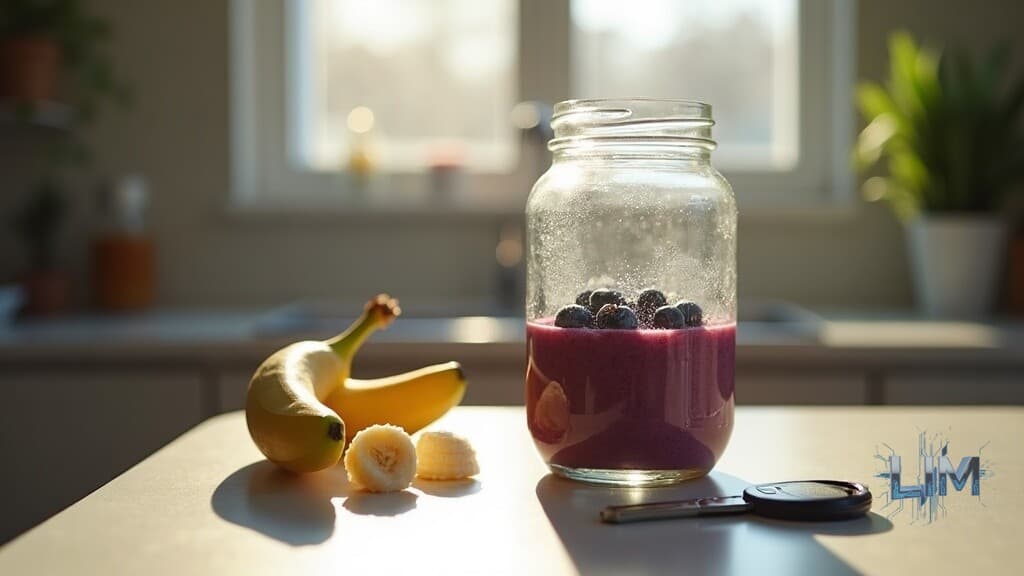
Rachel, 44, hits the blender every weekday at 6:47 a.m. before the kids wake. Berries, spinach, Greek yogurt, and the banana she adds for creaminess and potassium — the same move she's seen on every "heart-healthy breakfast" reel.
A May 2026 UC Davis study just proved that single banana is quietly erasing 84% of the flavanols from the berries before they ever reach her bloodstream. The polyphenol oxidase enzyme in the banana oxidizes them in the 30 seconds it takes to blend.
That is not a minor nutrient footnote. It is the difference between getting the 400–600 mg daily flavanol target cardiologists now recommend and getting almost none — every single morning she thinks she is protecting her heart.
TL;DR Your daily smoothie ritual can destroy most of the heart-protective compounds you are trying to consume. The fix is one ingredient swap, but only a real-time tracker catches these silent nutrient bugs before they compound. Legacy In Motion surfaces exactly these gaps for $29.99/mo so busy parents stop paying for protection they are accidentally throwing away.
Related Read
Silent Atherosclerosis in 57% of Healthy AdultsBundgaard 2026 found silent atherosclerosis in 57.1% of 16,808 adults with no known disease. This Saturday, feeling fine was the entry rule, not a clearance.
The Study That Just Reframed The Most Popular Breakfast In America
The paper landed in Food & Function, a Royal Society of Chemistry journal, and it is titled, in the dry way these things always are, "Impact of polyphenol oxidase on the bioavailability of flavan-3-ols in fruit smoothies." The lead author is Javier Ottaviani, who runs the core lab at Mars Edge and holds an adjunct post in the UC Davis Department of Nutrition. The University of Reading group co-ran it.
The design is the part that earns your attention. It was a controlled, single-blind, crossover trial. Small, on purpose: 8 healthy men in the first arm, 11 participants in the second. Crossover means each person drank both smoothie versions on different days and served as their own control, which is the cleanest way to ask a question like this. Then the researchers measured flavanol metabolites in the blood and urine afterward.
That last move is what separates this from the 2023 University of Reading finding that first flagged the banana problem. The earlier work showed banana lowered the flavanol content sitting in the glass. This one shows your body actually absorbs 84% less when the banana is in there. The damage is not theoretical. It happens inside you.
They did not measure the smoothie. They measured the person who drank it.
It Was Never The Banana. It Was The Enzyme.
Bananas are not unhealthy. Nobody is coming for your banana. The problem is a specific enzyme that bananas happen to carry in bulk: polyphenol oxidase, PPO for short.
PPO is the browning enzyme. It is why a sliced banana, a bruised apple, and a cut avocado all go brown on the counter. It grabs oxygen and oxidizes the polyphenols in the fruit. Flavanols, the heart-and-brain compounds you were chasing with the berries, are polyphenols. They are exactly what PPO destroys.
So the moment your blender wall breaks the banana open and whips air into it, the banana's PPO goes to work on every flavanol in the cup. The berries do not get a chance. By the time the smoothie hits the glass, the oxidation is already well underway, and what oxidizes does not get absorbed.
This is the cruel twist in Rachel's three years. The banana did not just add empty calories next to the good stuff. It actively dismantled the good stuff. The berries were premium fuel she was pouring through a hole in the tank.
The Fix Is A Swap, Not A Sacrifice
You do not have to give up smoothies. You do not even have to give up sweetness or creaminess. You have to move one ingredient off the high-PPO list and onto the low one.
High PPO, the ones that wreck flavanols: bananas are the headline offender for smoothie-makers.
Low PPO, safe to blend with your berries: pineapple, mango, oranges, and yes, yogurt. Dairy is low-PPO and adds the body that the banana was giving you.
Flavanol-rich, the stuff worth protecting: berries, grapes, and unsweetened cocoa.
So the new template is simple. Keep the berries. Keep the yogurt. Trade the banana for a few chunks of pineapple or mango for sweetness, or a peeled orange. You get the same thick, sweet, kid-approved drink, and the flavanols survive the trip from blender to bloodstream.
If you love banana enough that the swap feels like a loss, eat it on the side. A banana next to the smoothie does not pour PPO into the berries. A banana in the smoothie does. The damage is a blending problem, not an eating problem.
Why This Lands Harder After 40
Flavanols are not a vanity nutrient. The Academy of Nutrition and Dietetics put a number on the intake worth aiming for, 400 to 600 mg a day, specifically for cardiometabolic health. The research links flavanols to blood vessel function, blood pressure, and increasingly to cognition.
Those are the exact systems that start asking harder questions in your forties. Vascular flexibility, the number on the cuff, the word you reached for at dinner and could not find. If you are over 40 and you have built a heart-healthy habit around a daily smoothie, you have done something genuinely smart. The frustrating part is that an 84% leak in a smart habit is invisible. Rachel's bloodwork would not show "you are oxidizing your flavanols." She would just quietly get a fraction of the protection she thinks she is buying, for years, for no reason.
That is the whole danger of this one. It is not a flashy mistake. It is a careful person doing the right thing slightly wrong, and never finding out.
---
> 🔧 This is exactly what Chiron catches every time you log a meal. AI fitness coaching at $29.99/month or $249.99/year. Cancel anytime, no enrollment fee. → Start coaching at legacyinmotion.fit/pricing
---
Where The AI Earns Its Keep
This is the kind of detail a static meal plan will never catch. A PDF that says "drink a berry smoothie for heart health" is technically correct and quietly wrong, and it has no way to know it.
This is what Chiron, our AI head coach, is built to flag. When you log that morning smoothie in the app, the ingredient list is data, not just a calorie count. A banana sitting next to berries is a pattern worth a nudge: same smoothie, swap the banana for pineapple, keep your flavanols. No lecture, no PDF reprint, just the one sentence that fixes it tomorrow morning.
And the reason we knew about this on the day it broke is the other half of the system. HERMES, our research engine, reads the new nutrition literature as it publishes. This study went live and was flagged the same morning, which is why you are reading about it now instead of in a wellness listicle eight months from now. The science moves; your coaching is supposed to move with it. Most coaching does not.
The point is not that the banana is a crisis. The point is that the difference between a good habit and a great one is often a detail this small, and almost nobody has a system watching for it.
Rachel, Tomorrow Morning
Same blender. Same berries. Same yogurt. The banana goes back in the fruit bowl, and a handful of frozen pineapple goes in instead. The kids will not notice. Rachel will not feel a thing, which is exactly the problem with the old version, except this time the thing she does not feel is 84% of her flavanols finally making it into her blood.
Three years of berries, finally doing the job she hired them for.
If you want a coach that catches the small wrong detail inside your good habits, before it costs you three years, that is the whole idea behind Legacy In Motion.
---
Coaching that works the same shifts you do
This is what Chiron, our AI head coach, does on every meal you log: flags the small wrong detail before it costs you three years. HERMES surfaces the new research the morning it publishes. You log; we adapt your plan that day. No PDF reprints, no static plan that ages out the day you change shifts or have a kid.
$29.99/month · $249.99/year · 7-day free trial · cancel anytime · no enrollment fee · no contract
Start coaching → · See the full app →
Jake Long built it after losing 112 lbs working hospital night shifts — when no human coach could keep up with his schedule. He wanted the system he wished he'd had at 308. Now you can use it too.
Comments (0)
Comments are reserved for Legacy In Motion members.
$29.99/month. No contracts. Cancel anytime.
Get StartedAlready a member? Sign in
You read this far. Now do this.
You've read the theory.
Now put it to work in your real week.
I went from 308 to 196 lbs working 12-hour overnight shifts with two kids and zero personal trainer. The system I used is now an app that plans your training and meals around YOUR schedule — overnight, day shift, all of it.
Cancel anytime · No setup fee · No long contract
Free Assessment
What's Holding Your Fitness Back?
Take our 60-second quiz and get a personalized breakdown of what's stopping your progress — plus how AI coaching solves it.
Take the QuizFree PDF · No Credit Card
Download the Shift Worker AI Fitness Blueprint
A 4-week plan that respects what shift work does to sleep: when to go down after a night, the four-minute REHIT window, post-shift macros, and when to back off. In your inbox in 30 seconds.
Built by someone who actually worked them. No fluff. Unsubscribe any time.
Keep Reading
2026-10-03
Silent Atherosclerosis in 57% of Healthy Adults
Bundgaard 2026 found silent atherosclerosis in 57.1% of 16,808 adults with no known disease. This Saturday, feeling fine was the entry rule, not a clearance.
2026-08-22
Six Stair Flights a Day Cut Heart-Death Risk 39%
Paddock 2026: regular stair climbers had 39% lower heart-death risk. One cohort pointed at about six flights a day.
2026-08-12
150 Minutes Is the Floor Not the Heart Ceiling
Liang 2026 BJSM: device-tracked 150 min MVPA cut CVD risk ~8–9%. Substantial protection clustered near 560–610 min. How busy parents stack real minutes.
Join our free fitness community — get coaching tips, share wins, and stay accountable.
JOIN THE DISCORD →