


Exercise Led the Count. Not the Hospital Share.
Ogumsogutlu 2026 found exercise led the injury count. Cycling led the hospital share. A bigger count is not a worse injury.
# Exercise Led the Count. Not the Hospital Share.
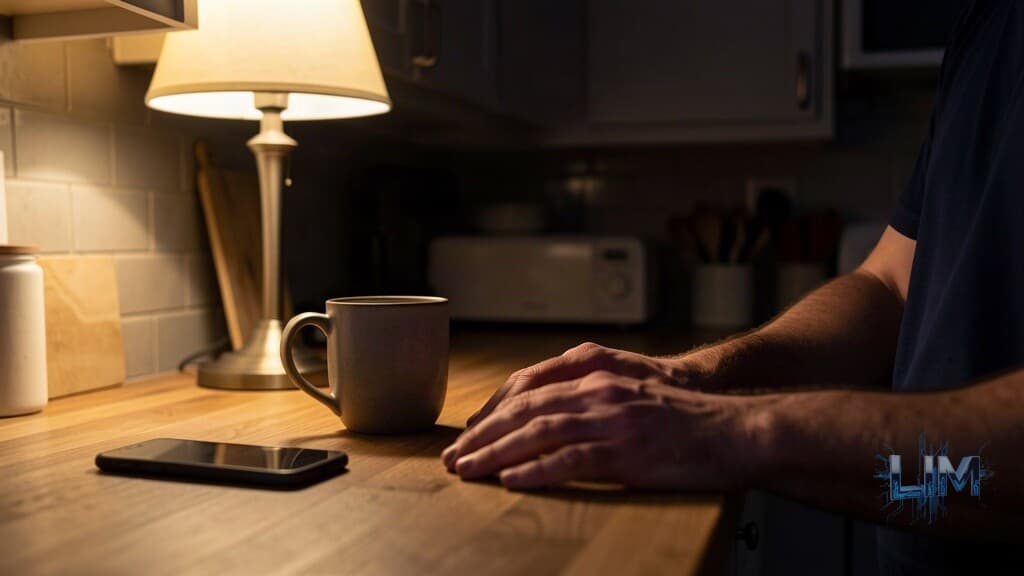
The kitchen was still dark. Coffee on. Phone face up. A headline had already decided my morning. Exercise injuries lead the country. Skip the session. Sit down. The game is later.
I am 40. I am a day-shift hospital security supervisor. I used to work overnight 12s. I went from 308 to 196 over 9.5 months, 112 pounds, starting mid-2025. The sessions I finished did that. A Sunday I donate to a chart will not.
Kickoff is this afternoon. Ravens at Cowboys, Maracanã Stadium, Rio de Janeiro, 4:25 p.m. Eastern. That is 3:25 p.m. Central. The preview had both clubs at 1-1. I am not calling a score. The ball has not moved.
Related Read
Supersets Cut Session Time 36% With Similar MuscleBurke 2026 found supersets cut session time 36% with similar muscle changes. The clock moved. The trophy did not.
A bigger count is not a worse injury.
These totals do not tell me my injury risk per session. Hospitalization describes patients who reached an emergency department, not everyone who trained.
Quick take
- Exercise led the visit count in a five-activity set. Cycling led the share of those visits that ended in a hospital bed.
- That paper is Ogumsogutlu and colleagues, in BioMed Central's Sports Science, Medicine and Rehabilitation, published 26 September 2026. Yesterday. The headline stole the biggest bar. I read the abstract it came from.
- The exercise bucket includes exercise equipment. It is not a barbell study. Ages 5 to 14 were the most affected group. I am not one of them.
- If the headline made you delete a session you can still finish before kickoff, put the session back. I put mine back twice. The second time was the save.
The app had already been careful. I tried to be dumber.
Last night I sent Chiron a voice note. Short list. Garage. Done before kickoff. This morning the daily update was already on the phone. HealthKit had the short night. One set was already gone. That was the cautious move. A machine that can see a bad night does not also need a headline to invent a rest day.
I typed "skip" into the notes app anyway. It looked responsible. It looked like a man who had read the news before the coffee cooled.
The reminder I had set myself buzzed. Session still on. I put the phone face down on the counter. When I picked it up, the skip was still sitting there, cursor blinking, like it had been waiting to be careful.
I deleted it. My thumb hovered. The headline was still the first thing on the screen. I almost put the skip back because an empty morning feels like quitting and a full couch feels like caution.
The headline counted visits. It did not count who stayed.
I went looking for permission to quit
The paper was already in my morning feed. I did not go hunting a journal at dawn so I could feel current. I opened it because I wanted the exercise bar to win, so the skip would be science.
The fridge hummed. The mug had gone cold. My thumb was on the share button before I had finished the first result line.
Ogumsogutlu, Bozgeyik, Yildiz, Tas, Agir, and Surucu used the National Electronic Injury Surveillance System, 2013 to 2024. Five activities only. Basketball. Bicycle and accessories. Exercise and exercise equipment. Football. Playground equipment. Weighted national estimates. Not every sport in the country. Received 13 June 2026. Accepted 25 August 2026. Published yesterday. The cite line has no volume, no issue, and no page numbers yet.
An estimated 21.8 million injuries sat in that five-activity set. Exercise and exercise equipment: 5.49 million. Cycling: 5.31 million. Males were 71.9 percent. Ages 5 to 14 were the most affected group. I almost sent the 5.49 to a group chat like it was a verdict.
The daily AI update pinged while my thumb was still there. Session still on. One set already cut. I swiped it away. I wanted the scare more than I wanted the plan.
Then I saw the column the headline had walked past, and I laughed once, ugly, in an empty kitchen.
Hospitalization is their indirect proxy for severity. It is not a severity score. Cycling's hospitalization proportion was 11.1 percent. Basketball's was 1.6 percent. The abstract does not give the exercise hospitalization percent. I had been one tap away from resting for a blank.
Cycling had higher odds of hospitalization than basketball, than football, and than the exercise bucket. Odds were comparable to playground injuries. The abstract does not print the odds. I am not going to pretend I have them. I deleted the share draft the same way I had deleted the skip. Both of them had been performing.
I put the mug down. My hand had been tight on it.
The ugly injuries sat somewhere else. Fractures were more common in playground injuries and in cycling. Head and neck injuries were more frequent there too. People 65 and older were the ones with higher odds of a hospital stay. Volumes dropped in 2020, then came back. I closed that tab.
The exercise bucket includes the equipment. I do not get to split a barbell from a treadmill and pretend the paper did it. I looked at my own hands. Forty. Not 5. Not 14. Ages 5 to 14 were the most affected group. That does not clear my session, and it does not make me one of them.
I am not in the age group this count hit hardest.
The voice-note check-in was still open. I sent the follow-up before the skip could sneak back in. "Do not cancel the session from this headline. The chart counted visits. The hospital share is a different column. The HealthKit-driven deload, the one that reads the night and cuts a set, already did that. Leave the rest." Chiron does not get to invent a rest day the chart did not earn. Neither do I.
The first set was boring. That was the point.
The reel did not invent the word injury. It stole the biggest bar and called it danger. Visit volume and hospital share are not the same question. If you only read the first bar, you will cancel a session a parent can still finish.
This is not the sitting paper. I already wrote that one here. Collagen and next-day soreness is a different file, here. A planned deload is not a fear-skip, and that one is here.
I went to the garage. I wanted a pop so the headline could be right. My shoulder declined to perform. The first set was ordinary. Ordinary is a rotten plot and a good morning.
This headline is not a reason to cancel a session I already had.
This is where I used to quit. See a big number, decide the normal work was reckless, eat the blame when the week died anyway. I am on days now. A parent who works a desk has the same Sunday with a different name.
A text came in while I was still breathing hard. "You seeing that injury thing? Maybe rest." I said no. I did not explain the hospital share. Explaining would have been the same performance, just with a percent.
Back in the kitchen the coffee was still cold. That felt right. I had spent the hot part of it trying to lose an argument with a table. The log showed one set cut from the night, and the session marked done. The headline had not gotten a vote. I put the phone face down, and this time I left it there.
The chart cannot see a log.
You are going to see the 5.49 and feel responsible for resting. I did. Responsibility is a costume the skip likes. Take it off. The paper counted visits in five activities. It did not clock your garage, and it did not measure your risk per session. If the night was short, cut a set. Then go. I am not your mother. I am the man who almost donated a Sunday to a blank cell.
The job I built because I lose to a chart
A paper cannot grab the phone out of my hand in the kitchen. Chiron can keep a session I tried to delete. The voice note is the check-in. The daily update reads it. HealthKit already spent the caution on one cut set. When I say the headline spooked me, he does not add a rest day to make a chart feel responsible. That is the protective part. The cocky part is I built the guardrail, because I know exactly how I quit.
I log the session I did. He cannot see a danger I fictionalized next to the coffee.
The offer is $29.99 a month or $249.99 a year after a 7-day free trial. Cancel anytime. The free community argues these papers in public at Discord.
The log is what I have when a chart gets loud.
If the same ugly week is the problem, start at Legacy In Motion.
Frequently Asked Questions
Did exercise cause more injuries than cycling?
It led the visit count in one five-activity set. It did not lead the hospital share. Ogumsogutlu, Bozgeyik, Yildiz, Tas, Agir, and Surucu, in BioMed Central's Sports Science, Medicine and Rehabilitation, published 26 September 2026 (doi:10.1186/s13102-026-02031-x), used the National Electronic Injury Surveillance System from 2013 to 2024. Exercise and exercise equipment accounted for an estimated 5.49 million injuries. Cycling accounted for 5.31 million. Cycling had the highest hospitalization proportion, 11.1 percent. Basketball had the lowest, 1.6 percent. The abstract does not give the exercise hospitalization percent.
Does a bigger injury count mean the activity is more dangerous?
Not in this paper. Hospitalization is their indirect proxy for severity, not a severity score. Cycling had higher odds of hospitalization than basketball, football, and exercise-related injuries, and odds comparable to playground injuries. The abstract does not print a numeric odds ratio, so I cannot verify one from it.
Who got hurt most in that data set?
Ages 5 to 14 were the most affected group. Males were 71.9 percent of the injuries. The set is five activities only: basketball, bicycle and accessories, exercise and exercise equipment, football, and playground equipment. It is not every sport in the country. A 40-year-old is not in the age group this count hit hardest, and that fact does not clear his session.
Should I skip a session because exercise led an injury chart?
Not from this chart alone. It counted emergency-department visits in a bundled exercise-and-equipment bucket. It did not measure your risk per session, and it cannot tell you whether today's session is the right one. It is also not a reason to delete a session you already planned and can still finish.
Comments (0)
Comments are reserved for Legacy In Motion members.
$29.99/month. No contracts. Cancel anytime.
Get StartedAlready a member? Sign in
You read this far. Now do this.
Close the tab.
Go train the plan that fits your life.
I went from 308 to 196 lbs working 12-hour overnight shifts with two kids and zero personal trainer. The system I used is now an app that plans your training and meals around YOUR schedule — overnight, day shift, all of it.
Cancel anytime · No setup fee · No long contract
Free Assessment
Where's Your Training Stuck?
Take our 60-second quiz and get a personalized breakdown of what's stopping your progress — plus how AI coaching solves it.
Take the QuizFree PDF · No Credit Card
Grab the Shift Worker AI Fitness Blueprint
The exact 4-week protocol Jake used to lose 112 lbs working hospital security overnights — sleep timing, the four-minute REHIT window, post-shift macros, and the AI deload trigger. Drops in your inbox in 30 seconds.
Built by someone who actually worked them. No fluff. Unsubscribe any time.
Keep Reading
2026-09-30
Supersets Cut Session Time 36% With Similar Muscle
Burke 2026 found supersets cut session time 36% with similar muscle changes. The clock moved. The trophy did not.
2026-09-25
Doubling Weekly Sets Did Not Grow More Muscle
Camargo 2026 found no extra quad growth from a 120 percent volume jump versus 20 percent. The protocol main effect is not a bigger change.
2026-09-23
Cluster Sets Matched Straight Sets in Six Weeks
Qin 2026 found no group difference after six matched weeks. Nagatani 2026 found clusters keep the bar faster in the set. Do not mash the two papers.
Join our free fitness community — get coaching tips, share wins, and stay accountable.
JOIN THE DISCORD →