


400mg Caffeine 12 Hours Out Still Wrecks Sleep
Gardiner 2025: 400mg of caffeine 12 hours before bed still delays sleep. You often cannot feel it. 100mg did not.
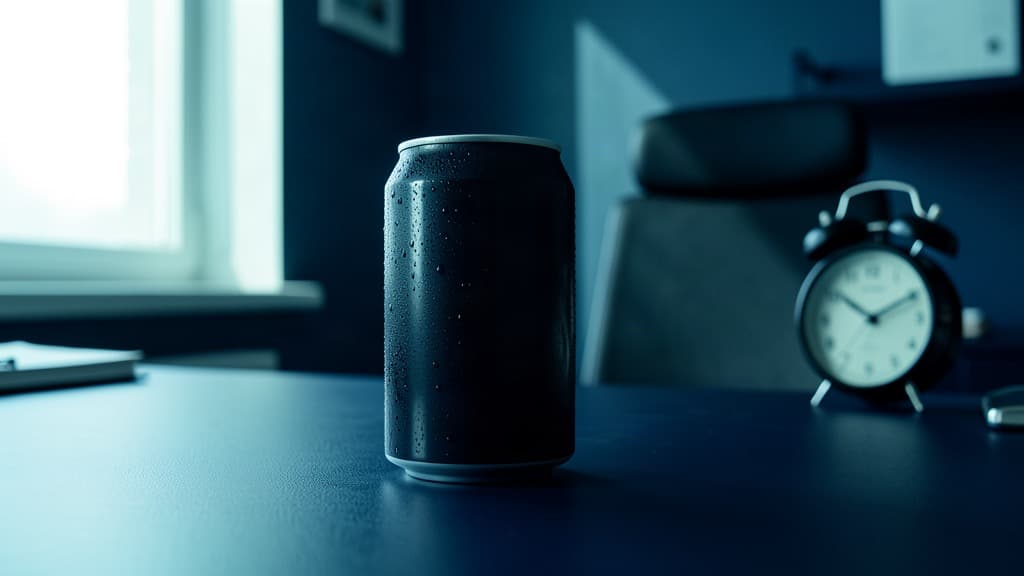
Nate is 43. Thursday, 9:06 a.m. First Friday night lights of the season tomorrow. His freshman is on the roster. The 16-ounce can is already sweating on the desk.
He tells the empty office the line every parent of a late-sleeping teenager learns.
"It is morning. This will be gone by ten."
Chiron pinged at 8:41: Yesterday's caffeine stack was 380 milligrams by 2 p.m. Last night's sleep was 41 minutes shorter than your 7-day mean. Cut the second can. He left it unread. Static apps never send that text. This one did.
Related Read
Sleeping In Past 8 Hours Did Not Slow Organ AgingWen 2026 Nature: 23 organ clocks in UK Biobank. Lowest aging at 6.4 to 7.8 hours. A Labor Day sleep-in sits on the long arm.
If that is your August — busy parent, desk spine, over-forty brain that treats a 2 p.m. energy drink like a harmless errand — sit with me. You do not need a new personality. You need a cutoff that matches the dose.
Quick take - Gardiner and colleagues, 2025, Sleep ran a placebo-controlled, double-blind, randomized crossover in 23 men (mean age 25.3, habitual caffeine under 300 milligrams a day). Seven conditions: placebo, then 100 milligrams and 400 milligrams taken 12, 8, and 4 hours before bed, with a 48-hour washout. Sleep was recorded at home plus diaries. - 100 milligrams — about one small coffee — did not change objective or subjective sleep versus placebo, even 4 hours out. - 400 milligrams as one dose still delayed sleep start and changed architecture when taken within 12 hours of bedtime. Fragmentation got worse inside 8 hours. People only felt worse sleep at 4 hours (quality down 34 percent). Not at 8. Not at 12. - Real-world 400 milligrams: about four standard coffees, three typical energy drinks, or two pre-workout scoops. Easy to hit without meaning to. A 9 a.m. can plus an 11 a.m. drip plus a 2 p.m. "one more" is the study dose. - Support, not the headline: Gardiner's 2023 Sleep Medicine Reviews meta (24 studies) found caffeine cut total sleep time 45 minutes and sleep efficiency 7 percent. Modeled coffee cutoff 8.8 hours; pre-workout 13.2 hours. Drake 2013, Journal of Clinical Sleep Medicine, already showed 400 milligrams 6 hours out could steal about an hour while diaries said fine. - Honesty: young men, moderate users, one-dose lab conditions. Not an over-forty parent trial. Translate the milligrams. Do not steal the sample.
The can that still owns 10 p.m.
Nate rotates the can. 160 milligrams on the label. "Natural caffeine." The Friday game is 7 p.m. He wants to be the dad who is awake in the bleachers, not the dad who is wired at midnight and useless at 6.
He mutters the line his old tracker trained him to say.
"If I fall asleep, it did not count."
Then he reads the methods. Same lab group that modeled the 8.8-hour coffee cutoff in 2023. This time they actually dosed 100 versus 400 at three clocks and put a recorder on the head.
The 100 milligram cup is boring. Nothing moves.
The 400 milligram hit still shows up 12 hours later on the recording. Sleep starts later. The architecture is noisier. The diary the next morning often shrugs.
Feeling fine is not a sleep score.
I learned this the ugly way. Jake. Hospital security. Night shifts. 308 to 196. The 10 p.m. gas-station can kept me vertical through a 12-hour tour. It also owned the day sleep I told myself I was "fine" with. The scale moved when the caffeine stopped writing the night.
What 400 milligrams actually did
Nate squints at the age column. Twenty-five. Twenty-three guys. Not the pickup line.
Fine. Read the blood-and-brain anyway.
They took capsules at 12, 8, and 4 hours before the planned bedtime. Placebo nights for a baseline. In-home sleep recording, not a hotel lab. Saliva to prove the caffeine was in them.
One hundred milligrams at any of those clocks: no significant change versus placebo. That is the permission slip for a real cup, not a license to stack.
Four hundred milligrams inside 12 hours: sleep onset stretched. The mix of light versus deep shifted. Inside 8 hours, the night broke into more pieces. At 4 hours, they finally noticed — quality down about a third. At 8 and 12 hours they often did not.
He writes that on a sticky note and slaps it on the second can in the fridge.
The night can change when the diary does not.
That is the line his old coffee math cannot see. It only counts "did I pass out." Passing out is not recovery.
The researchers have a name for the mismatch: objective versus subjective sleep quality. You do not need the journal phrase. You need the sequence: add the labels. Compare the sum to bedtime. Move the stack, not the pillow.
The 9 a.m. stack is a 10 p.m. problem
Here is the number that should bother you if your cutoff is "nothing after 2."
Four hundred milligrams at 9 a.m. is still inside a 9 p.m. bedtime. It is exactly the 12-hour condition.
Nate does the napkin math on a practice-schedule printout.
Morning can: 160. Office drip at 11: 110. "One more" at 2 because the 3 o'clock meeting is a meat grinder: 160.
That is 430 before the kid even puts on pads.
He says it in the parking lot after pickup.
"I thought the cutoff was the afternoon. The cutoff was the milligrams."
A sports-science group already told us the 6-hour version in 2013. Drake and colleagues gave 400 milligrams at bedtime, 3 hours out, and 6 hours out. Even the 6-hour cup stole measured sleep while people claimed they slept fine. Gardiner 2025 stretches that honesty to 12 hours when the dose is the big one.
Hold both. A cup is not a crime. A silent 400 is.
The 9 a.m. can still owns 10 p.m.
What Nate actually did before Friday lights
He does not quit coffee. That is how 43-year-old desk weeks write sad emails.
He keeps the 7:30 a.m. mug. About 100 milligrams. The study dose that did not move the night.
He kills the 2 p.m. can. The fridge sticky note stays. If a late meeting tries to sell him another 160, he walks the parking lot instead and eats the protein he already packed.
Thursday the plan dies anyway. A coworker moves "quick drinks" to 4:45. The freshman needs a ride. The January PDF still wants a 9 p.m. bedtime and a pre-workout at 6. Chiron does not. The live note is already no second stimulant after 10 a.m., 40 grams of protein, in bed by 10. Static programs cannot see a football-Friday ambush. This one can.
That is the whole product, if I am being blunt. Not a new identity. A rewrite the same day the milligrams stack.
How Legacy In Motion actually uses this
HERMES pulled the Sleep crossover the morning it sat in the feed. Chiron does not wait for a quarterly PDF reprint.
If you log a 9 a.m. energy drink plus two later coffees, the coach treats that as a 12-hour problem, not a willpower problem. The rewrite is a 100 milligram morning cap, a hard stop 12 hours before the pillow you actually use, and a lighter session the next day if last night's sleep ran short — see the 4-hour evening workout rule so you do not stack a late hard lift on a caffeinated brain. Alcohol is a separate thief; we already covered one extra drink. The overnight muscle work still wants protein before sleep, not another can.
Night-shift version is the same math on a flipped clock. Jake's 10 p.m. "just to finish the tour" can was this protocol with worse vending machines.
If three school nights keep stacking 400 milligrams by accident, the cutoff moves earlier, not "try harder." The diary can lie. The log of cans cannot.
The free version of this argument — parents comparing real Thursday nights — lives on Discord: https://discord.gg/8QBuFFA5Pf.
If you want a plan that kills the second can before it kills the week, start at https://legacyinmotion.fit.
Steal this before Friday lights
- Add the labels for one day. Coffee, tea, soda, energy drink, pre-workout. Write the milligrams. Most people are shocked past 300.
- Keep one ~100 milligram cup if you need it. That dose did not wreck the night in this trial.
- Treat 400 milligrams as a 12-hour object. If bedtime is 10 p.m., the last big stack belongs before 10 a.m. Earlier if you already sleep 6 hours.
- Do not use "I fell asleep" as the score. Watch next-day grogginess, 3 a.m. wake-ups, and training that feels heavier than it should.
- After a short-sleep night, drop volume. Do not chase it with another can. See the evening workout timing rule if you train late.
- Football Friday, travel day, double at work — log the change. The cutoff moves with bedtime, not with the slogan on the can.
Nate peels the 2 p.m. can off the meeting agenda and writes one mug, then water. The freshman still needs a ride. The second stimulant stays dead.
A hundred milligrams is a cup. Four hundred is a stack you stopped counting.
Your move. Not a later bedtime. The milligrams you can actually finish before noon.
---
Your plan should change the day your week does
Most programs die in the gap between the plan and your real week. Chiron, our AI head coach, reads what you log (meals, workouts, skipped sessions) and rewrites tomorrow instead of waiting for you to fall off. HERMES, our research engine, keeps the coaching current with new science the week it publishes.
$29.99/month · $249.99/year · 7-day free trial · cancel anytime · no enrollment fee · no contract
Start coaching → · See the full app →
Jake Long built it after losing 112 lbs working hospital night shifts — when no human coach could keep up with his schedule. He wanted the system he wished he'd had at 308. Now you can use it too.
Questions Worth Asking
Does a morning energy drink still affect sleep that night?
If the day's stack hits about 400 milligrams as one sitting, Gardiner 2025 found objective sleep still changed when that dose was taken 12 hours before bed. A single 100 milligram cup did not. Most people only noticed worse sleep when 400 milligrams was 4 hours out.
What is 400 milligrams of caffeine in real drinks?
About four standard coffees at 107 milligrams per 250 milliliters, about three typical energy drinks, or two scoops of a 217 milligram pre-workout. One small coffee is closer to 100 milligrams.
I fall asleep fine after afternoon caffeine. Am I in the clear?
Not necessarily. In this trial, perceived sleep quality only dropped at the 4-hour mark. At 8 and 12 hours the monitors moved and the diaries did not. Feeling fine is not a sleep score.
What cutoff should a busy parent over 40 use?
Count the day's milligrams against bedtime, not the clock on the can. Keep a true 100 milligram cup if you need it. Move the 400 milligram stack — energy drink plus coffee plus another can — at least 12 hours before the pillow. Earlier if you are a slow metabolizer or you already sleep short.
Does this replace the 4-hour evening workout rule?
No. That paper was exercise timing. This one is caffeine dose and clock. Keep both. Alcohol is a third lever we already covered.
Comments (0)
Comments are reserved for Legacy In Motion members.
$29.99/month. No contracts. Cancel anytime.
Get StartedAlready a member? Sign in
You read this far. Now do this.
Stop reading about it.
Start training around your real life.
I went from 308 to 196 lbs working 12-hour overnight shifts with two kids and zero personal trainer. The system I used is now an app that plans your training and meals around YOUR schedule — overnight, day shift, all of it.
Cancel anytime · No setup fee · No long contract
Free Assessment
What's Really Stopping Your Progress?
Take our 60-second quiz and get a personalized breakdown of what's stopping your progress — plus how AI coaching solves it.
Take the QuizFree PDF · No Credit Card
Download the Shift Worker AI Fitness Blueprint
The protocol Jake wishes he'd had at 308 lbs: sleep timing for rotating shifts, post-shift macros, and the AI deload trigger, from the run that took him to 196. Free, no card needed.
Built by someone who actually worked them. No fluff. Unsubscribe any time.
Keep Reading
2026-09-03
Sleeping In Past 8 Hours Did Not Slow Organ Aging
Wen 2026 Nature: 23 organ clocks in UK Biobank. Lowest aging at 6.4 to 7.8 hours. A Labor Day sleep-in sits on the long arm.
2026-08-15
The 4-Hour Rule for Evening Workouts
Leota 2025 Nature Communications: hard training within 4 hours of sleep delays bedtime and cuts duration. The Saturday protocol after NFL and kid chaos.
2026-09-18
Collagen Did Not Speed Workout Recovery
Ravindran 2026: 113 trials, 7,983 people. Skin and osteoarthritis moved. Next-day soreness did not.
Join our free fitness community — get coaching tips, share wins, and stay accountable.
JOIN THE DISCORD →