


Best AI Fitness Coach for Night Shift Nurses
Night-shift nurses need a coach that answers at 3 a.m. and rewrites the week after bad sleep. Three studies, five tests, and the real price.
# Best AI Fitness Coach for Night Shift Nurses: Pick the One That's Awake at 3 A.M.
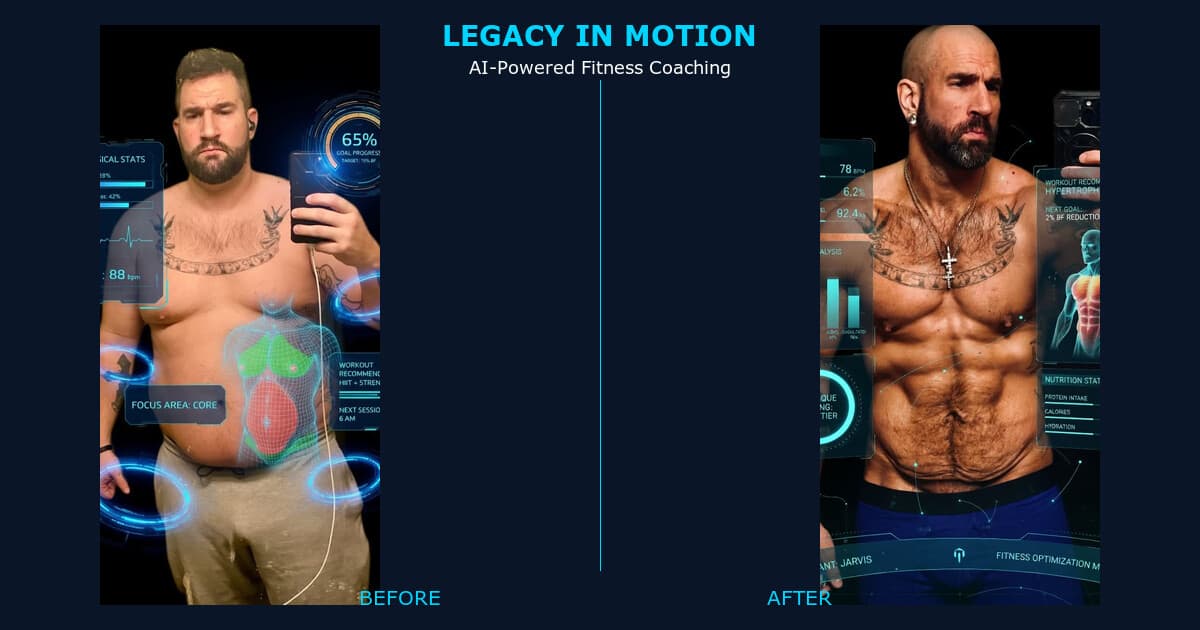
It was 3:40 a.m. on a graveyard shift, and Jake was standing at the hospital vending machine at 308 pounds. He was the security supervisor on a six-on rotation, four hours of sleep behind him. He wasn't hungry. He was running on fumes and a bad hormone hand.
Three floors up, an ICU nurse named Priya was doing the same thing. She typed "best AI fitness coach for night shift nurses" into her phone with one thumb. Her trainer wouldn't read a message until 9 a.m.
TL;DR
Related Read
7 Day Free Fitness Coach Trial vs the Labor Day Gym ContractGyms want a signature before Monday. A 7 day free fitness coach trial tests 24/7 coaching that remembers your night shift.
- Availability beats genius: a coach that answers at 3 a.m. helps you more than a perfect plan that answers at 9.
- Two nights of 4-hour sleep cut leptin about 18% and raised ghrelin about 28% (Spiegel 2004, n=12).
- Short sleep cut fat loss 55% on an identical calorie deficit (Nedeltcheva 2010, n=10).
- Circadian misalignment dropped leptin roughly 17% in a controlled lab study (Scheer 2009, n=10).
- Legacy In Motion costs $29.99 a month or $249.99 a year, after a 7-day free trial.
Why Priya's trainer wasn't the problem
Priya's trainer was good. The Week 6 leg-day PDF was beautiful. It also assumed she'd slept.
She hadn't. Her plan was built for a person on a day schedule, and her body was running a different clock.
That's the gap nobody prices in. A static plan can't see the 4-hour sleep. A human trainer can't see it until the next business day.
A perfect plan for the wrong night is a bad plan.
What four hours of sleep does to your appetite
Here's the part that changes how you judge yourself. Spiegel 2004 (Annals of Internal Medicine, n=12) restricted healthy young men to 4 hours of sleep for two nights. Leptin, the "I'm full" signal, fell about 18%.
Ghrelin, the "feed me" signal, rose about 28%. Hunger ratings climbed about 24%.
Jake lived that at the vending machine. It wasn't a character flaw. It was a hormone shift you can measure.
- Leptin down: your brain hears "not full" after a full meal.
- Ghrelin up: the hunger drive gets louder, not quieter.
- Willpower doesn't fix it: it's chemistry, not discipline.
You can't out-discipline a leptin drop.
Why extra cardio is the wrong repair
The instinct on night shift is to compensate. Ate badly at 3 a.m.? Add a run. That's the trap.
Nedeltcheva 2010 (Annals of Internal Medicine, n=10) put adults on the same calorie deficit for 14 days. One group spent 8.5 hours in bed. The other spent 5.5.
The short-sleep group lost about 55% less fat. They also lost more lean mass, roughly 60% more. Same deficit. Same diet. Different outcome, because the sleep differed.
So piling on conditioning after a short sleep tends to make the wrong problem bigger. Protecting the sleep you can get, and adjusting the load around it, works better.
Sleep is the lever. Cardio is the bandage.
The shift itself is the metabolic hit
Night work isn't just less sleep. It's eating and sleeping against your body clock. Scheer 2009 (PNAS, n=10) forced a circadian misalignment in a lab, mimicking night-shift life.
Leptin dropped roughly 17%. Post-meal glucose rose, and the cortisol rhythm shifted out of phase. Ten people is a small study, so treat it as mechanism, not gospel.
But the direction matches what Jake felt going from 308 to 196. Timing mattered as much as food.
That's why a generic macro calculator fails night-shift nurses. It has no idea what time your body thinks it is.
Five tests for the best AI fitness coach for night shift nurses
Most coaching pitches list features. Skip that. Run these five tests before you spend a dollar.
- The 3 a.m. test: send a message at 3 a.m. and time the reply. Under 60 seconds is the bar.
- The memory test: ask about last Tuesday. If it can't recall your rotation, it isn't coaching you.
- The bad-night test: log four hours of sleep. Does tomorrow's session change on its own?
- The evidence test: ask why. Does it name a study or hand you a slogan?
- The price test: can you find the real monthly cost in under a minute?
Most apps fail test three. They serve the same Week 6 PDF whether you slept or not.
If the plan doesn't change when your night changes, it isn't adaptive.
How Legacy In Motion runs those tests
This is where the system earns its keep. Legacy In Motion isn't one chatbot. It's a team of specialized AI agents that split the job.
Chiron, our AI head coach, answers your check-in in under 60 seconds, any hour, and remembers your rotation, your injuries, and what you said last week. That's the 3 a.m. test and the memory test, handled.
HERMES scrapes 12,000 fitness papers a week so your protocol updates the moment new evidence lands. That's the evidence test. You can ask it why, and it pulls the study.
Forge adapts your program every week without you asking. That's the bad-night test.
A human trainer sleeps. This team doesn't.
What a bad night actually triggers
Say Priya logs a 4-hour sleep after a rough set of shifts. Here's what a static PDF does: nothing. Here's what an adaptive system does.
The daily AI program update worker rewrites your week the moment your HealthKit logs an off-night. Apple Health sync brings in sleep, steps, and workouts, so you never re-type them. Chiron flags the short sleep in the daily program review.
Then the session gets cheaper, not harder.
- Volume trims: fewer hard sets when recovery is thin.
- Intensity holds: the weight stays honest, so strength doesn't drift.
- Conditioning drops: no penance cardio for a bad night.
- The next session waits: it moves to when you're actually rested.
That's cortisol-aware volume in practice. You don't earn your way back with suffering.
Meal timing that respects the clock
The second lever is when you eat, not just what. Night-shift nurses tend to graze from 2 to 5 a.m., precisely when leptin is lowest and ghrelin is loudest.
Jake fixed that by anchoring a real meal at the start of shift and a light protein hit mid-shift. He stopped treating 3 a.m. as a free-for-all. The system builds those shift-aware windows around your actual rotation.
When your Apple Watch and your logs show a rotation flip, the window shifts with it. Your eating schedule follows your work schedule, not the other way around.
- Anchor meal early in shift: protein and fiber before the low point.
- Protein-per-meal check: leucine alerts flag meals that undershoot.
- Light mid-shift option: something you'll actually eat at 3 a.m.
- Diet breaks when the data says so: not on a fixed calendar.
Jake didn't lose 112 pounds by eating like a day worker.
What the voice check-in catches
Some fatigue doesn't show up on a scale. It shows up in how you sound. The voice-note check-in catches the cortisol-tell in your voice before the scale moves.
That matters for nurses, because your logs are honest about steps but not about stress. A flat, short answer at the end of a seventh straight shift tells the system to pull back.
Jake ran this protocol himself, working six-on graveyard rotations. He didn't have a coach awake at 3 a.m. He wished he had.
You're not weak for needing a coach at 3 a.m. You're working at 3 a.m.
Implementation: what the agents do with this research
Here's how the research turns into your week. Chiron takes the daily read: sleep hours, HRV trend, shift schedule, last conversation. If the numbers say you're under-recovered, it triggers an HRV-driven auto-deload before you're on the floor.
HERMES supplies the evidence layer. When you ask "why did my session shrink?", it can point to the sleep-and-adiposity work above rather than a slogan. It keeps the protocol current as new papers appear.
Forge holds the weekly structure. It tracks progressive overload across the weeks you did train well, and it reschedules around your rotation. Schedule-adaptive training means a swap from nights to days doesn't reset your progress.
Together they do what one human, working days, can't: stay awake with you. The iOS app puts Apple Health sync, meal and workout logging that feeds the AI, and progress photos in one place.
The real price, no games
Here's the number, since most sites hide it. Legacy In Motion starts with a 7-day free trial. After that it's $29.99 a month or $249.99 a year.
The yearly plan works out to roughly $20.83 a month. Compare that to one human personal-training session in most cities, which often costs more than a full month here.
That's not a knock on trainers. A great one is worth it. But you're paying for availability, and a coach who's awake when you are is a different product.
If you're weighing the options, read our take on AI fitness coach vs personal trainer too.
Who this isn't for
Be honest with yourself. If you work days, sleep eight hours, and want someone to hold you accountable on Saturday morning, a local trainer may suit you fine.
If you like in-person cueing on a heavy squat, keep that. An AI doesn't spot you.
This is built for the person whose schedule breaks every other system. Nurses, security officers, first responders, anyone rotating through the dark.
Your next 24 hours
Don't overhaul your life tonight. Run the five tests on whatever you're using now. Time the 3 a.m. reply. Log a short sleep and see if anything changes.
Then protect the sleep you can get, anchor one real meal early in shift, and drop the penance cardio. Small, honest changes beat a heroic Week 6.
Jake went from 308 to 196 that way. Priya found her answer at the vending machine. iOS beta testers wanted → legacyinmotion.fit/app
Frequently Asked Questions
What is the best AI fitness coach for night shift nurses?
The one that replies in under 60 seconds at 3 a.m., remembers your rotation, and rewrites your week after a short sleep. Legacy In Motion runs that as a team of agents: Chiron on the check-in, HERMES on the research, Forge on the weekly adaptation. It's a 7-day free trial, then $29.99 a month or $249.99 a year.
Why am I so hungry on night shift even after a full meal?
Short sleep shifts your appetite hormones. Spiegel 2004 (Annals of Internal Medicine, n=12) found two nights of 4-hour sleep cut leptin about 18%, raised ghrelin about 28%, and raised hunger ratings about 24%. That's physiology, not weak willpower.
Should I add extra cardio to make up for bad night-shift eating?
Usually not. Nedeltcheva 2010 (Annals of Internal Medicine, n=10) found that on the same calorie deficit, 5.5 hours in bed cut fat loss by 55% versus 8.5 hours. Protecting sleep beats piling on conditioning.
Comments (0)
Comments are reserved for Legacy In Motion members.
$29.99/month. No contracts. Cancel anytime.
Get StartedAlready a member? Sign in
You read this far. Now do this.
You've read the theory.
Now put it to work in your real week.
I went from 308 to 196 lbs working 12-hour overnight shifts with two kids and zero personal trainer. The system I used is now an app that plans your training and meals around YOUR schedule — overnight, day shift, all of it.
Cancel anytime · No setup fee · No long contract
Free Assessment
What's Blocking Your Results?
Take our 60-second quiz and get a personalized breakdown of what's stopping your progress — plus how AI coaching solves it.
Take the QuizFree PDF · No Credit Card
Grab the Shift Worker AI Fitness Blueprint
The protocol Jake wishes he'd had at 308 lbs: sleep timing for rotating shifts, post-shift macros, and the AI deload trigger, from the run that took him to 196. Free, no card needed.
Built by someone who actually worked them. No fluff. Unsubscribe any time.
Keep Reading
2026-09-03
7 Day Free Fitness Coach Trial vs the Labor Day Gym Contract
Gyms want a signature before Monday. A 7 day free fitness coach trial tests 24/7 coaching that remembers your night shift.
2026-08-27
AI Fitness Coach Monthly Cost vs a Sioux Falls Trainer After a Six-On
AI fitness coach monthly cost vs a Sioux Falls trainer after nights. You pay for sessions that happen, not the 7 a.m. slot you sleep through.
2026-08-03
AI Fitness Coach vs In-Person Trainer Cost for Men Over 35
AI fitness coach monthly cost ($20–$50) vs $200–$400 trainers for shift-working men 35+ — memory, adaptation, and what you actually buy.
Join our free fitness community — get coaching tips, share wins, and stay accountable.
JOIN THE DISCORD →