


AI Fitness Coach vs In-Person Trainer Cost for Men Over 35
AI fitness coach monthly cost ($20–$50) vs $200–$400 trainers for shift-working men 35+ — memory, adaptation, and what you actually buy.
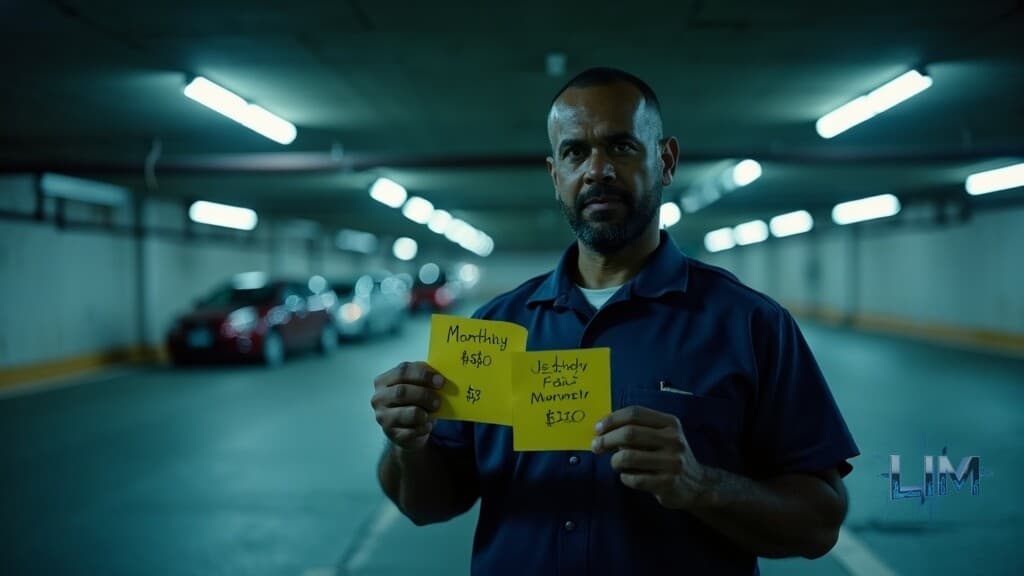
Marcus stood in the hospital parking garage at 06:40 with a crumpled sticky note in his hand. Two numbers. $280/month for the guy at the big-box gym who only had 5 a.m. and 7 p.m. slots. And $39/month, the AI fitness coach monthly cost his buddy on third shift kept texting him about.
He was 41. Hospital security. Six-on rotating graveyards. Two kids who needed him awake at soccer — not half-dead from a 5 a.m. appointment he already knew he’d cancel.
He’d tried the in-person route once. Three no-shows in five weeks. The trainer still charged him for two of them.
The sticky note wasn’t about AI hype. It was about AI fitness coach monthly cost versus what he actually got when his life looked nothing like a 9-to-5 client.
Related Read
AI Fitness Coach Monthly Cost vs a Sioux Falls Trainer After a Six-OnAI fitness coach monthly cost vs a Sioux Falls trainer after nights. You pay for sessions that happen, not the 7 a.m. slot you sleep through.
If you’ve run the same math on a break-room napkin, here’s the version without the marketing fog.
TL;DR - Credible AI fitness coach monthly cost lands at $20–$50; two sessions a week with a local trainer usually runs $200–$400. - You’re not buying workouts. You’re buying memory, 24/7 access, and weekly adaptation — or two 45-minute appointments and a lot of forgetting. - Shift workers lose the most value from trainers who can’t move when a double or a court date lands. - A system that rewrites your week from HealthKit sleep beats a sticky-note program that dies on Tuesday. - Hands-on post-surgery cueing still favors a human; schedule chaos favors the always-on stack.
The parking-garage math nobody puts on the sales page
I know that sticky note because I wrote one like it.
Jake. Hospital security supervisor. Night shifts. 308 to 196. Same concrete floors. Same 2 a.m. cafeteria light. Same problem: the trainer who was “great with form” had zero idea what my body did after four twelve-hour graves in a row.
Here’s the raw monthly frame for men over 35:
- Local in-person trainer (2x/week): $200–$400/month in most mid-size U.S. cities
- Mid-tier AI coaching system: $20–$50/month
- Annual gap at the midpoint: roughly $2,500–$4,200 you could spend on food quality, sleep gear, or not being broke
That gap only matters if the cheaper option still does the job your life requires. Most comparison posts stop at price. That’s lazy.
Price is not the product. Continuity is the product.
What you actually buy at $280/month
Marcus’s first session felt like hope. New shoes. Fresh program card. A guy who watched his squat and said, “chest up, king.”
By week three the hope had a receipt attached.
A good in-person trainer sells three things well:
- Live technique eyes on a barbell
- External accountability in a fixed room
- A human who can put hands on a scapula and say “there”
What they usually do not sell — especially to shift workers:
- Memory of your rotating roster across months
- A rewrite at 11 p.m. when you get held over
- Nutrition context from the meal you ate at 03:15
- A check-in when your voice sounds like cortisol soup
Two sessions a week is about 90 minutes of contact. The other 10,000+ minutes of your week are uncoached.
If your life is stable Monday–Friday daylight, that can work. If your life is hospital security, night nursing, or business travel, most of the failure happens in the uncoached minutes.
Adults need meaningful muscle-strengthening work at least two days a week plus regular aerobic activity — the CDC adult activity guidelines are clear on the floor. The guideline does not say those sessions have to happen at 5 a.m. with a human who bills no-shows. It says the work has to happen and keep happening.
What you actually buy at $20–$50/month
Marcus’s buddy didn’t sell him “an app.” He sold him a Tuesday that didn’t fall apart.
A serious AI coaching system is not a randomized workout generator with a chatbot skin. At Legacy In Motion the stack is a team:
- Chiron — the 24/7 head coach that DMs back in under a minute and remembers your schedule, injuries, and last conversation
- Forge — the COO bot that rewrites the weekly program without you begging for a deload
- HERMES — the research bot that pulls peer-reviewed answers for your question on demand
You are buying:
- Always-on access (not two appointment windows)
- Cross-conversation memory (your dog’s name, your shift pattern, the knee that barked in March)
- Real-time program adaptation when life punches the calendar
- Logging that feeds the coach, not a dead food diary nobody reads
- Often Apple Health / HealthKit sync so sleep, steps, and workouts flow into the next decision
You do not buy a cheaper trainer. You buy a different product: continuity.
The shift-work failure mode the $280 plan cannot see
Marcus’s trainer built a clean four-day upper/lower. On paper it was fine.
In week two Marcus drew a double, slept four hours, and still tried to hit heavy pulls because the card said so. Mid-back tightness. Skipped the next session. Ghosted for ten days.
Then came the text: “where you been, king?”
It helped nobody.
That’s not a discipline problem. That’s a system that cannot see the week you actually lived.
When HealthKit logs three sub-par sleeps and your steps fall off a cliff after nights, the daily AI program update worker and Forge already rewrite the week — volume down, zone-2 substituted, protein targets held, ego lifts benched. Chiron does not moralize. It adjusts.
The program that survives your roster beats the program that looks prettier on a whiteboard.
I ran that lesson the hard way on the way from 308 to 196. The plan that ignored graveyard recovery was the plan that stalled me. The plan that bent when the hospital bent is the plan that compounded.
Memory is the moat — and humans are bad at it under load
Your trainer sees eight to fifteen clients a day. You are not the villain in their story when they forget you started nights last month — or that overhead pressing aggravates your old AC joint (acromioclavicular joint) from a bad tackle in your twenties.
An AI coach that stores every constraint you have ever stated does not “try harder.” It does not forget.
That sounds small until you have explained your schedule for the fourth time to a new coach after a move. Or until you have been prescribed another burpee finisher the week your plantar fascia is screaming from concrete floors.
Chiron keeps the thread. You do not re-audition for your own coaching every Monday. This is the kind of pattern Chiron — our AI head coach — flags in the daily program review before you talk yourself into a hero set you will regret by Thursday.
The “what do you get for the money” ledger
Run this ledger honestly — not the Instagram version.
In-person trainer (~$200–$400/mo) - Pros: live cueing, hands-on adjustments, gym culture, forced show-up for some personalities - Cons: fixed slots, no-show fees, weak between-session coverage, memory decay, travel and shift friction, nutrition usually bolted on as a PDF
AI coaching system (~$20–$50/mo) - Pros: 24/7 access, schedule memory, weekly auto-adaptation, research on demand, lower annual cost, works in a hotel gym or a hospital stairwell - Cons: no hands on your barbell path, you must still do the work, form feedback depends on video and process cues rather than a palm on your back
For a man over 35 whose limiting factor is consistency under chaos, the second column wins more weeks per year. More weeks per year is the whole game after 35. Muscle and metabolic health respond to what you repeat, not what you peak for two perfect Tuesdays.
The NIA (National Institute on Aging) exercise and physical activity guidance keeps hammering the same theme for midlife adults: stay in the habit, train strength, protect mobility, do not wait for a perfect season. Perfect seasons do not visit night shift.
Where the in-person trainer still wins clean
Do not be ideological.
Keep a human in the room when:
- You are returning from surgery or a significant injury and need live spotting and tactile cueing
- You are peaking for a meet and want real-time attempt selection and arousal management
- You simply prefer face-to-face accountability and will pay for it without resentment
- You need a movement screen you cannot self-capture on video
Everything else is negotiable — especially nutrition memory, deload timing, shift-aware meal windows, and the Thursday rewrite after a bad HRV week.
Plenty of men use both: a short block of in-person technique work two or three times a year, and an AI system as the always-on spine. That hybrid still crushes the pure $300/month appointment model on annual cost.
The hidden cost line: cancelled sessions and stalled months
Marcus did not only pay $280 when he showed up. He paid $280 in months he half-showed-up. He paid in guilt. He paid in the restart tax every time he “got serious again.”
Cancelled sessions are a tax on rigid coaching.
AI does not refund itself because you had a court date. It also does not shame you. Forge just rebuilds the microcycle around the days you still own. That sounds soft until you count how many men over 35 exit training entirely because the plan could not bend.
Adherence is the multiplier. A “good enough” plan you run for 46 weeks beats a “perfect” plan you run for 11.
Jake himself ran a version of this protocol when he dropped 112 pounds working hospital-security graveyard shifts. The breakthrough wasn’t a magic split. It was a system that stopped punishing him for a roster he didn’t write.
How LIM’s agents actually spend your $20–$50
You tell Chiron you are on nights Sun–Wed, kids’ games on Saturday morning, left knee grumpy on deep flexion. That becomes durable memory, not a note buried in a trainer’s phone.
You train. You log meals by voice or tap. Sleep and steps flow from Apple Health. When the week tilts — short sleep, high stress, low steps — Forge cuts volume, swaps the hinge variation, and holds protein targets so the deficit does not eat lean mass.
When you ask whether afternoon training really hits glucose better for someone your age, HERMES scrapes the relevant literature instead of giving you gym-bro folklore — the same research engine that pulls from thousands of papers so your protocol updates when the evidence does. Progress photos stack over time so the transformation is visible when the scale stalls. Meal and workout logs feed the next decision.
Nothing ghosts you for three days.
That is what the monthly cost is for: a team of specialized agents that think like a strength coach, a nutritionist, and a tired night-shift veteran who has seen your pattern before.
Worked example: same human, two price tags, one ugly week
Week looks like this:
- Mon: night shift
- Tue: night shift + held over 90 minutes
- Wed: night shift
- Thu: off, wrecked
- Fri: day court appearance for a work case
- Sat: kid double-header
- Sun: back on nights
$280 trainer plan: heavy lower Tuesday at 5 a.m. (missed), make-up Thursday at 7 p.m. (family conflict), “we’ll get back on track next week.”
$39 AI plan: Tuesday session auto-moved, Thursday becomes a 25-minute zone-2 plus short posterior-chain work, protein alerts still fire, Saturday is optional mobility, Sunday restart is already written before you clock in.
Same man. Same chaotic week. Different number of sessions that actually occur.
Over a year, that is not a lifestyle preference. That is body-composition math.
Marcus ran both versions of that week in the same calendar year. Only one left him still training in December.
Pinterest-level truths worth pinning above your lock screen
You are not paying for workouts. You are paying for who still shows up when your roster breaks.
A trainer who forgets your graveyard block is more expensive than a $40 system that remembers your knee and your kids’ game.
The best program is the one that still exists on the Thursday after three nights.
If your trainer can’t remember your shift, you’re renting motivation. If your AI can’t rewrite your week, you’re renting a chatbot.
Who this is for (and who should close the tab)
Choose the AI monthly cost lane if you are:
- Male, 35+, lifting for healthspan and body comp — not a pro sport paycheck
- On rotating shifts, nights, or unpredictable overtime
- Tired of re-explaining your life to a new coach
- Willing to film a set occasionally and train without a hype man in your ear every rep
Stay heavier on in-person if you need hands-on rehab, love the gym social contract, or will not open an app when stressed.
Either way, stop pretending the only professional option is $300 and two fixed slots.
The decision in one paragraph
Back in that parking garage, Marcus didn’t need another sales page. He needed to know which number still worked after a double, a court date, and a kid who had to be at the field at 8 a.m.
If your limiting factor is technique under a barbell you have never seen, pay a human to watch you. If your limiting factor is life, pay for a system that never sleeps, never forgets your shift map, and rewrites the week when your watch says you are fried.
That is the real content of AI fitness coach monthly cost — not a race to the cheapest chatbot.
The stack that got Jake from 308 to 196 on hospital graveyards was never a twice-weekly appointment. It was continuity with teeth — and you can put that continuity to work at legacyinmotion.fit.
Frequently Asked Questions
What is a realistic AI fitness coach monthly cost in 2026?
Credible AI coaching systems typically run $20–$50 per month. In-person trainers in mid-size US cities usually cost $200–$400 per month for two sessions a week. That gap is the decision frame for men over 35 on rotating shifts.
Does a lower AI fitness coach monthly cost mean worse coaching than a $300 trainer?
Not on memory, 24/7 availability, or weekly adaptation. A twice-weekly trainer who forgets your graveyard block loses more practical value than a $40 system that rewrites your week when HealthKit logs three bad sleeps. Price is a weak quality proxy.
When should a man over 35 still hire an in-person trainer instead of AI?
Post-surgery return-to-lift with hands-on technique, competitive peaking that needs live cueing, or a hard preference for face-to-face accountability. For schedule chaos, nutrition memory, and real-time program rewrites, the AI stack usually wins on cost and fit.
What do you actually get inside a $20–$50 AI fitness coach subscription?
Always-on chat that remembers your schedule and injuries, weekly program adaptation, on-demand research pull, meal and workout logging that feeds the coach, and often HealthKit sync. You are buying continuity — not two 45-minute appointments.
Comments (0)
Comments are reserved for Legacy In Motion members.
$29.99/month. No contracts. Cancel anytime.
Get StartedAlready a member? Sign in
You read this far. Now do this.
You've read the theory.
Now put it to work in your real week.
I went from 308 to 196 lbs working 12-hour overnight shifts with two kids and zero personal trainer. The system I used is now an app that plans your training and meals around YOUR schedule — overnight, day shift, all of it.
Cancel anytime · No setup fee · No long contract
Free Assessment
What's Holding Your Fitness Back?
Take our 60-second quiz and get a personalized breakdown of what's stopping your progress — plus how AI coaching solves it.
Take the QuizFree PDF · No Credit Card
Grab the Shift Worker AI Fitness Blueprint
The exact 4-week protocol Jake used to lose 112 lbs working hospital security overnights — sleep timing, the four-minute REHIT window, post-shift macros, and the AI deload trigger. Drops in your inbox in 30 seconds.
Built by someone who actually worked them. No fluff. Unsubscribe any time.
Keep Reading
2026-08-27
AI Fitness Coach Monthly Cost vs a Sioux Falls Trainer After a Six-On
AI fitness coach monthly cost vs a Sioux Falls trainer after nights. You pay for sessions that happen, not the 7 a.m. slot you sleep through.
2026-09-03
7 Day Free Fitness Coach Trial vs the Labor Day Gym Contract
Gyms want a signature before Monday. A 7 day free fitness coach trial tests 24/7 coaching that remembers your night shift.
2026-08-06
Cortisol Belly Fat in Men Over 35: 14-Day Shift Protocol
Chronic sleep debt drives cortisol belly fat in men over 35. A shift-aware 14-day meal-window and lifting protocol that shrinks the waist without eight perfect hours.
Join our free fitness community — get coaching tips, share wins, and stay accountable.
JOIN THE DISCORD →