


Best AI Fitness Coach for Security Officers
Generic fitness apps collapse when your post runs long. The AI coaching system built for security officers on nights, concrete, and zero gym access.
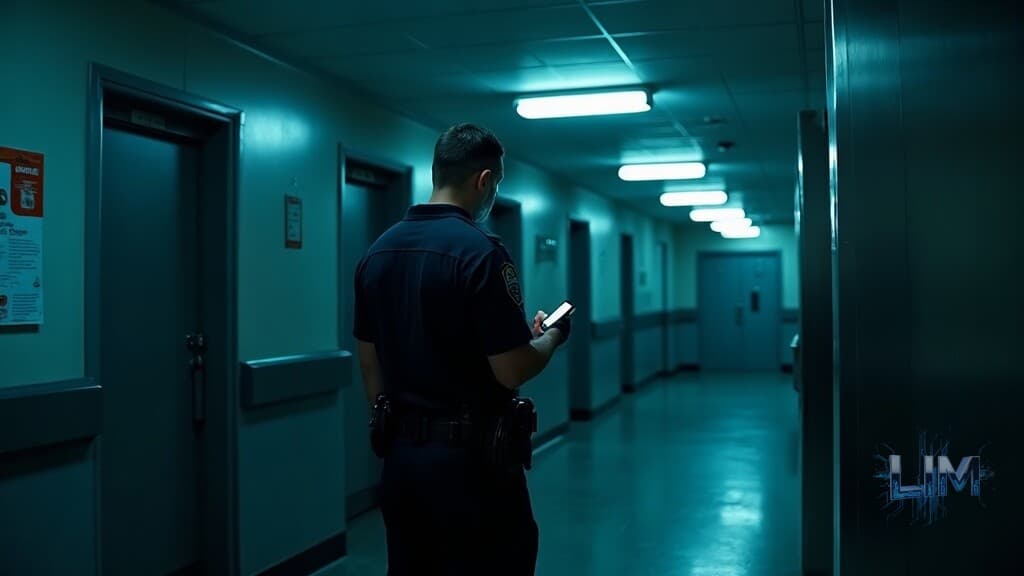
Marcus was on hour eleven of a hospital post when his fitness app lit up. “Missed workout. Streak broken.” He’d been standing a metal detector line since 1800. No break room free. No gym. Knees aching from concrete. The app wanted a 55-minute upper-body split he’d booked at 6 a.m. like a guy with a desk job.
He deleted it in the parking lot at 0700. Third app this year.
If you’re hunting for the best AI fitness coach for security officers, you’re not looking for another streak counter. You’re looking for a system that already knows the post runs long, the gym is a rumor, and “just get up earlier” is the dumbest advice in fitness.
TL;DR - Generic gym apps assume fixed windows, daytime meals, and a locker room — security posts break all three. - Shift work raises obesity and metabolic risk even when calories look “fine” on paper. - Training that works on post is short, equipment-light, and rewritten the moment HRV and sleep tank. - The best AI fitness coach for security officers is a team of agents with memory, not a chatbot glued to a static PDF. - Jake dropped 112 pounds on hospital-security nights with that model — not with 5 a.m. “discipline.”
Related Read
7 Day Free Fitness Coach Trial vs the Labor Day Gym ContractGyms want a signature before Monday. A 7 day free fitness coach trial tests 24/7 coaching that remembers your night shift.
The lie every trainer still sells you
Mainstream fitness peddles the same line: consistency beats everything; protect the gym hour. Cute. Useless on a double when the ER locks down and your relief calls out.
You don’t fail the program. The program was never built for a 12-hour post.
Willpower is not the bottleneck. Architecture is. A plan that can’t survive hour fourteen is not a plan. It’s a guilt machine with better marketing.
Marcus wasn’t lazy. He was running a schedule no 9-to-5 template understands. Same trap Jake hit at 308 pounds on rotating graveyard hospital security — six-on stretches, concrete floors, meals at 0200 out of a vending machine, and every “coach” telling him to meal-prep Sunday like he owned his evenings.
What the research actually says about your shift
Shift work is not a lifestyle quirk. It’s a metabolic insult.
Proper 2016 (American Journal of Preventive Medicine, systematic review): night and rotating shift work associate with higher risk of overweight and obesity, with stronger signals when nights are chronic. The mechanism isn’t “you ate more donuts.” It’s circadian misalignment — insulin sensitivity, appetite hormones, and fat storage timing all drift when your clock and your post disagree.
CDC/NIOSH has been blunt for years: nonstandard schedules disrupt sleep and raise chronic-disease risk. Employers still design posts like bodies run on banker’s hours (NIOSH work schedules).
Nea 2015 (Nutrition Research Reviews): altered meal timing, lower diet quality, and fragmented activity patterns stack the deck toward weight gain — even in people who “try.”
Read that again. Trying harder inside a daytime template does not fix a night-shift physiology problem.
So when an app assigns you a 60-minute hypertrophy block at 5:30 a.m. after you slept from 0900–1400, it isn’t coaching. It’s cosplay.
Why “just use a normal AI coach” still fails guards
Most AI fitness tools are wrappers around the same assumptions:
- You control your evening
- You have a gym three times a week
- Sleep is a boring constant
- If you skip, shame will motivate you
Security officers blow up every line.
Post snaps from 12 to 14.5 hours. You’re stuck at a loading dock. Your “workout window” becomes eight minutes between rounds. Your sleep debt is structural. HRV is in the dirt by Wednesday. Cortisol is doing night-shift math your macro app can’t see.
A chatbot that forgets your last message is not a coach. A program that doesn’t rewrite when Apple Watch logs a 3-hour sleep is not adaptive. It’s a PDF with a text box.
What “best” actually has to mean on a post
Score any tool on these — not on influencer lighting.
Must-haves: - Shift-aware calendar — nights, doubles, relief no-shows - Sub-15-minute protocols that work in a break room, stairwell, or parking lot - Real-time rewrite when the post runs long (not a guilt notification) - Memory — knees, prior injuries, the fact you hate lunges after standing eight hours - Recovery linked to physiology — HRV, sleep, steps from HealthKit - Always-on response — answers in under a minute at 0315
Miss two of those and you’re back in Marcus’s parking lot, thumb hovering over delete.
The on-post training that doesn’t need a gym
You don’t need a rack. You need stimulus that respects the boots.
Workable levers for officers: - Isometrics: wall sits, mid-shin splits, long-lever planks — joints stay quiet, tension is real - Unilateral lower work: split squats to a bench, step-ups on a curb - Loaded carries: ammo can, water jug, backpack — grip and trunk without eccentric beatdowns - Eccentric-biased slow lowers: 5-second descents on push-up or row variations when time is six minutes - Walking protocols with cadence targets: post rounds become Zone 2 if someone is actually watching the data
Volume has to flex with sleep. Hammer legs after two 4-hour days and you’re not hardcore. You’re inflaming the thing that has to stand tomorrow’s metal line.
Walking is good. Walking does not rebuild the strength your post steals.
You still need progressive tension. You just need it in packages that fit a radio on your hip.
How Jake actually lost 112 on nights
Jake ran hospital security at 308. Rotating graveyards. Same concrete. Same “no gym tonight” reality. The turn wasn’t a motivational quote. It was a system that stopped pretending he had civilian hours.
When a shift blew up, the plan didn’t scold. Forge rewrote the week. When sleep tanked, volume dropped before the knee did. When he could train, sessions were short enough to finish before the next call-out. Nutrition timed to the post, not to Instagram breakfast culture.
308 to 196 wasn’t discipline cosplay. It was architecture that survived the job.
That’s the bar. Anything softer is content, not coaching.
Where generic apps ghost you — and agents don’t
Here’s the conversion moment Marcus never got from streak apps.
You finish a 13-hour post. You voice-note: “Knees hot, slept four hours, ate at 2 a.m., zero desire to lift.”
Chiron, our AI head coach, flags this in the daily program review and answers in under 60 seconds — not with a lecture, with a rewritten micro-session or a full deload day. HERMES scrapes peer-reviewed shift-work and recovery literature so the prescription isn’t bro-science. Forge, the COO agent, adapts the entire week from that single check-in plus whatever HealthKit already logged.
Memory is the moat. The system already knows you’re on the north entrance rotation, that your left knee complains after long static stands, and that you told it last Thursday you only have a backpack and a stairwell. Human trainers can’t hold that graph across months of nights. A wrapper chatbot doesn’t try.
Side-by-side: what fails vs. what holds
| What the app assumes | What the post actually does | What a real system does | |---|---|---| | 60-minute gym block at 6 p.m. | Relief is late; gym is closed | Shrinks session to 15 minutes on-site | | Sleep 11 p.m.–7 a.m. | Sleep 9 a.m.–2 p.m. fragmented | Shifts training stress and protein timing | | Dinner at 7 | Main meal at 03:30 or 08:00 | Rebuilds meal template around your clock | | Progressive overload every Mon | Three nights + overtime | HRV/sleep-gated volume, not ego loading | | “You missed a workout” guilt | You did your job | Logs the constraint and rewrites the week |
Guilt is not programming. Adaptation is.
The protocol stack that survives a long post
Run this mental model before you trust any coach — human or AI.
1. Schedule first, program second Log actual post times, not ideal ones. If the tool can’t eat a rotating roster, leave.
2. Recovery gates volume Sub-par sleep + crushed HRV = automatic pullback. No hero sets on empty.
3. Protein per meal, not just per day Night eaters blow past the leucine threshold at 2 a.m. with chips and miss it at the meals that matter.
4. Equipment reality check Break-room kit only? Then the plan is isometrics, unilateral work, carries, and tempo. Not “find a cable stack.”
5. Cortisol-aware timing Hard intervals at the wrong clock time after nights dig the hole deeper. Strength and easy aerobic usually tax the system less when you’re inverted.
The hormonal recovery curve does not care about your streak counter.
What the agents do when the week gets ugly
This is where theory becomes a week that survives contact with the job.
You tell Chiron your rotation, known issues (left knee, duty-belt hip), and equipment reality. That memory sticks. You don’t re-explain it every Monday.
Forge builds the microcycle around the nights. Heavy lower work lands on the freshest off-day. On-post days get isometrics, carries, and zone-2 walking targets. Protein-per-meal alerts fire against your eating windows — so leucine thresholds still get hit when “lunch” is 02:00.
When your Apple Watch dumps a week of sub-90-cadence walking and three short sleeps, the daily AI program update worker rewrites the resistance calendar before you ask. Voice-note check-ins catch the cortisol-tell in your voice — the tight, flat “I’m fine” — before the scale moves sideways for three weeks.
HERMES sits underneath for the weird questions officers actually ask: deep gluteal irritation from standing concrete, meal timing across a string of nights, how to keep muscle when the scale is moving fast. The agents collaborate — coach, research, operations — so you get one coherent plan instead of three conflicting apps.
iOS beta brings that loop tighter: Apple Health sync, meal + workout logging that actually coaches, and an AI that remembers you. If you want in while we expand: iOS beta testers wanted → legacyinmotion.fit/app.
How to evaluate any coach in ten minutes
Ask these out loud. Watch what breaks.
- “My post just went 14 hours. What changes tomorrow?”
- “I only have a backpack and eight minutes. Prescribe it.”
- “I slept 3.5 hours. Do we still squat?”
- “What do you remember about my last knee flare?”
- “Show me how last week’s HRV changed this week’s volume.”
If the answers are generic PDFs, motivational sludge, or “try to stay consistent,” you’re not talking to the best AI fitness coach for security officers. You’re talking to a toy.
Consistency is what happens after the system fits the job. Not before.
The parking-lot decision
Marcus didn’t need more shame. He needed a coach that already knew the metal line, the concrete, and the 0700 crash.
You might be in that same lot tonight — radio off, app badge glowing, wondering why every plan dies on contact with the job. The answer isn’t that security officers can’t get fit. It’s that almost nothing in the fitness industry was designed for the post.
Jake’s hospital nights proved the other path: always-on agents, real-time rewrites, memory across the ugly weeks, training that fits the boots you already wear. The science on shift work is not subtle. The fix is architecture.
When you’re ready for the system built around the roster — not in spite of it — start at https://legacyinmotion.fit.
Frequently Asked Questions
What makes an AI fitness coach actually work for security officers?
It has to know your post rotation, rewrite the plan when a shift runs long, and prescribe training that fits a break room or parking lot — not a fixed 60-minute gym block. Memory across conversations and real-time program adaptation are non-negotiable.
Can you train effectively with zero gym access on a 12-hour security post?
Yes. Short resistance sessions, isometric work, loaded carries with what you have, and walking protocols produce measurable results when volume and recovery track your actual sleep and HRV instead of a 9-to-5 calendar.
Why do most fitness apps fail night-shift security officers?
They assume daytime meals, fixed workout windows, and consistent sleep. When your post snaps to 14 hours or you sleep 0900–1500, the plan ghosts you. An always-on system that rewrites the week from your schedule is the fix.
How is LIM different from Future, Fitbod, or a generic AI trainer for guards?
LIM runs specialized agents — Chiron answers in under 60 seconds, HERMES pulls peer-reviewed research on demand, Forge rewrites your program from shift logs and HealthKit. It remembers your post, your knees, and your last voice note. Generic apps do not.
Comments (0)
Comments are reserved for Legacy In Motion members.
$29.99/month. No contracts. Cancel anytime.
Get StartedAlready a member? Sign in
You read this far. Now do this.
You've read the theory.
Now put it to work in your real week.
I went from 308 to 196 lbs working 12-hour overnight shifts with two kids and zero personal trainer. The system I used is now an app that plans your training and meals around YOUR schedule — overnight, day shift, all of it.
Cancel anytime · No setup fee · No long contract
Free Assessment
What's Really Stopping Your Progress?
Take our 60-second quiz and get a personalized breakdown of what's stopping your progress — plus how AI coaching solves it.
Take the QuizFree PDF · No Credit Card
Download the Shift Worker AI Fitness Blueprint
The protocol Jake wishes he'd had at 308 lbs: sleep timing for rotating shifts, post-shift macros, and the AI deload trigger, from the run that took him to 196. Free, no card needed.
Built by someone who actually worked them. No fluff. Unsubscribe any time.
Keep Reading
2026-09-03
7 Day Free Fitness Coach Trial vs the Labor Day Gym Contract
Gyms want a signature before Monday. A 7 day free fitness coach trial tests 24/7 coaching that remembers your night shift.
2026-08-27
AI Fitness Coach Monthly Cost vs a Sioux Falls Trainer After a Six-On
AI fitness coach monthly cost vs a Sioux Falls trainer after nights. You pay for sessions that happen, not the 7 a.m. slot you sleep through.
2026-08-03
AI Fitness Coach vs In-Person Trainer Cost for Men Over 35
AI fitness coach monthly cost ($20–$50) vs $200–$400 trainers for shift-working men 35+ — memory, adaptation, and what you actually buy.
Join our free fitness community — get coaching tips, share wins, and stay accountable.
JOIN THE DISCORD →