


You're Up 4 Pounds the Tuesday After Memorial Day. Here's Why It's Almost Certainly Not Fat.
The scale jumps 3 to 5 pounds the morning after a long holiday weekend and it wrecks people who were doing everything right. Here is the honest math on water, sodium, and glycogen, why GLP-1 users spiral hardest, and the 5-day protocol to ride it out without torching your progress.
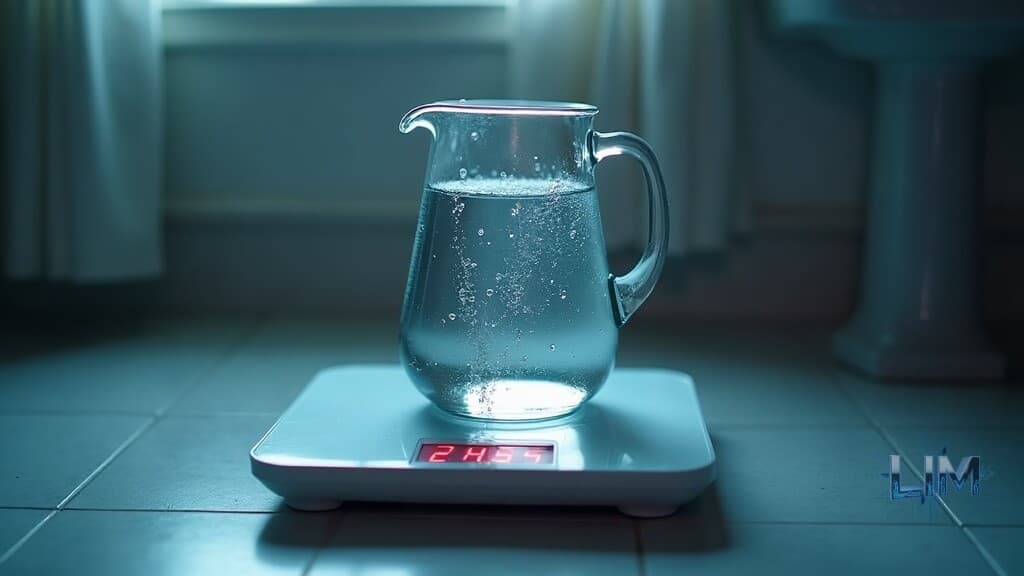
It is Tuesday morning. The cooler is back in the garage, the kids are back in school, and you step on the scale for the first time since Friday. It reads four pounds heavier.
If you spent the long weekend genuinely off the rails, fine, you saw it coming. But that is not who this is for. This is for the person who was good. You brought a veggie tray to the cookout. You had two beers instead of six. You walked the neighborhood loop Saturday and Sunday. You did the work, and the scale handed you four pounds anyway, and now you are standing on a bath mat doing the kind of math that ends with the words "what is even the point."
Put the math down. You did not undo a month in three days. That is not how fat works, and the number staring back at you is mostly water.
TL;DR (too long, didn't read) - A long holiday weekend can add 3 to 5 pounds of scale weight in a few days, and for most people only 1 to 2 pounds of that is actual fat, if any. The rest is water. - Two things drive it: sodium (restaurant and cookout food is loaded with it, and sodium pulls water out into the tissues) and glycogen (every gram of stored carbohydrate binds roughly 3 to 4 grams of water, so when the chips and cocktails refill your glycogen, water comes with it). - Alcohol stacks the deck by spiking inflammation and disrupting the hormones that regulate fluid, which is why the morning after often feels puffy on top of heavy. - It clears on its own. The scale starts trending back down within 3 to 5 days with zero heroics. - GLP-1 users spiral the hardest on a Tuesday like this, and ironically they are often the ones with the least to worry about. More on why below.
Related Read
Exercise barely dents the scale. The AHA just said move anyway.A June 2026 American Heart Association scientific statement in Circulation lays out the uncomfortable math: exercise alone rarely produces more than 5% weight loss, and fewer than 15% of people reach a clinically meaningful drop through activity alone. Yet regular movement independently improves blood pressure, insulin sensitivity, cholesterol, and cardiorespiratory fitness, and it keeps adding benefit even on top of GLP-1 medication or surgery. It is a consensus statement summarizing the trials, not one new experiment, which is exactly why it carries weight.
The Honest Math, One Number at a Time
Fat gain is slow and expensive. To put on a single real pound of body fat you have to eat roughly 3,500 calories beyond what you burn. Four pounds of fat would mean a 14,000-calorie surplus across the weekend, on top of everything you already needed just to exist. That is not a cookout. That is a documented eating challenge.
So if the scale says four and the math says fat can only explain one, where did the other three come from? Water. Held in two different places, for two different reasons.
Sodium pulls water outside your cells. Cookout food, restaurant food, anything off a grill or out of a bag is engineered to be salty. Your body's job is to keep the salt concentration in your blood steady, so when sodium goes up, it holds onto water to dilute it back to normal. That water sits in the space around your cells. It is why your rings feel tight and your face looks a little fuller Tuesday morning. It is also why you were up twice in the night.
Glycogen pulls water inside your muscles. Carbohydrate gets stored in your muscles and liver as glycogen, and glycogen is thirsty. Each gram drags 3 to 4 grams of water in with it. When you eat low-carb during the week and then spend a weekend on burger buns, tortilla chips, potato salad, and a few drinks, you top those glycogen tanks back off, and the water rushes in to join them. That is weight on the scale. It is not weight on your body in any way that matters.
Add the two together. A few days of higher sodium and higher carbs can easily account for three to five pounds of pure water, fast. Welltech and the strength-coaching world have been saying this for years: a week of holiday-style eating adds 5 to 10 pounds of scale weight for some people, and the genuine fat portion is a rounding error inside it.
Why GLP-1 Users Take This One the Hardest
If you are on semaglutide, tirzepatide, or one of the newer agonists, a Tuesday scale jump can feel like a personal betrayal. You are paying for the medication, you are eating less than you have in years, and the number went up. That combination produces a specific kind of panic, and it is almost always misplaced.
Here is the part nobody warns you about. When your calories drop very low, which happens easily and often by accident on a GLP-1 because the hunger just is not there, your body can read it as a stress signal and start holding water as a protective reflex. So you can have a weekend where you barely ate, drank more water than usual, and still woke up heavier. That is your body bracing, not your fat cells filling.
Layer the holiday sodium on top of an appetite-suppressed week and you get a scale reading that has almost nothing to do with fat and everything to do with fluid. Weekly swings of 1 to 3 pounds are completely normal on these medications. The fix is not to eat less. You are probably already under-eating, and cutting further tells your body to hold even tighter. The fix is to stop reading the daily number like it is a verdict.
The 5-Day Protocol: Ride It Out, Don't Fight It
You do not need a cleanse, a detox tea, or a punishment week of 1,200 calories. Water weight leaves on its own when you stop giving it reasons to stay. Here is the entire protocol.
- Drink more water, not less. This feels backward and it is the single most common mistake. When you are holding water from sodium, drinking more helps your kidneys flush the excess. Restricting water makes your body cling harder. Aim for steady intake across the day, not a single gallon chugged in a panic.
- Get potassium back in the mix. Sodium and potassium balance each other. The weekend was heavy on one and probably light on the other. A few servings of potato, banana, leafy greens, beans, or yogurt nudges the ratio back and helps the water move. If you lean on an electrolyte product to do it, that is a reasonable shortcut. We keep the ones worth buying on the recommended gear page so you are not guessing in a sea of marketing.
- Walk. Not a brutal sweat-it-off session. A normal walk. Light movement helps your lymphatic system move fluid and starts drawing down the glycogen you topped off, which releases its bound water. Twenty to thirty minutes is plenty.
- Do not slash your calories. This is the trap. You see four pounds, you panic, you crater your intake, and three days later you feel terrible, you have lost no fat, and you are more likely to rebound-eat by Thursday. Eat normally. Hit your protein. Let the water leave on its schedule, not your fear's schedule.
- Weigh weekly, not daily, for the next stretch. The daily number is noise right now. If you must step on the scale, do it every morning and watch the trend line over the week, not any single reading. By Thursday or Friday you will almost certainly be back near where you started, and then below it. The trend is the truth. The morning-after number is a mood.
What This Has To Do With How We Coach
This is exactly the moment a coach earns their keep, and it is exactly the moment most people are alone on a bath mat with a bad number and no context.
The whole reason we built an AI coach instead of a static app is moments like this Tuesday. When your weight ticks up four pounds, the system is not just logging a data point and moving on. It already knows you logged a cookout. It knows your sodium spiked. It knows your weekly trend, so it can tell the difference between water and a real plateau the way a panicking human at 6 a.m. cannot. Instead of letting you spiral and crash-diet by Wednesday, it does what a good coach does: reframes the number, points at the trend, and keeps you on the plan that was already working.
A scale is a single sensor reporting a single number with zero context. You are not a single number. The four pounds will be gone by the weekend. The progress you actually built is still there underneath it, exactly where you left it Friday.
Step off the mat. Drink your water. Take your walk. You are fine.
---
Get Chiron in your pocket — $29.99/month
Chiron, our AI head coach, coaches the week you actually have: overnights, doubles, rotation flips, kid pickups. Log the change and tomorrow's plan already knows. No static program that assumes you sleep at 10pm and train at 6.
$29.99/month · $249.99/year · 7-day free trial · cancel anytime · no enrollment fee · no contract
Start coaching → · See the full app →
Jake Long built it after losing 112 lbs working hospital night shifts — when no human coach could keep up with his schedule. He wanted the system he wished he'd had at 308. Now you can use it too.
Comments (0)
Comments are reserved for Legacy In Motion members.
$29.99/month. No contracts. Cancel anytime.
Get StartedAlready a member? Sign in
You read this far. Now do this.
Close the tab.
Go train the plan that fits your life.
I went from 308 to 196 lbs working 12-hour overnight shifts with two kids and zero personal trainer. The system I used is now an app that plans your training and meals around YOUR schedule — overnight, day shift, all of it.
Cancel anytime · No setup fee · No long contract
Free Assessment
What's Holding Your Fitness Back?
Take our 60-second quiz and get a personalized breakdown of what's stopping your progress — plus how AI coaching solves it.
Take the QuizFree PDF · No Credit Card
Download the Shift Worker AI Fitness Blueprint
The exact 4-week protocol Jake used to lose 112 lbs working hospital security overnights — sleep timing, the four-minute REHIT window, post-shift macros, and the AI deload trigger. Drops in your inbox in 30 seconds.
Built by someone who actually worked them. No fluff. Unsubscribe any time.
Keep Reading
2026-06-01
Exercise barely dents the scale. The AHA just said move anyway.
A June 2026 American Heart Association scientific statement in Circulation lays out the uncomfortable math: exercise alone rarely produces more than 5% weight loss, and fewer than 15% of people reach a clinically meaningful drop through activity alone. Yet regular movement independently improves blood pressure, insulin sensitivity, cholesterol, and cardiorespiratory fitness, and it keeps adding benefit even on top of GLP-1 medication or surgery. It is a consensus statement summarizing the trials, not one new experiment, which is exactly why it carries weight.
2026-09-19
The Weighted Vest Did Not Save Hip Bone During a Cut
INVEST: 150 people, 12 months. Vest did not save hip bone vs diet. Fanning 2026: more standing in diet-only tracked with more hip loss. Exploratory.
2026-10-03
Silent Atherosclerosis in 57% of Healthy Adults
Bundgaard 2026 found silent atherosclerosis in 57.1% of 16,808 adults with no known disease. This Saturday, feeling fine was the entry rule, not a clearance.
Join our free fitness community — get coaching tips, share wins, and stay accountable.
JOIN THE DISCORD →