```markdown --- title: "The Ausimmune 60% Finding: Why 2:1 EPA:DHA Beats the Grocery Store Softgel" date: "2026-04-19" category: "supplementation" tags: [omega-3, EPA, DHA, IFOS, ausimmune, resolvins, hs-CRP, shift-work, rTG, membrane-fluidity] excerpt: "Hoare 2016 tied the highest omega-3 quartile to a 60 percent lower MS conversion risk. The ratio, the form, and what IFOS actually verifies matter more than the milligram count on the label." ---
Hoare et al., Multiple Sclerosis Journal, 2016. The Ausimmune case-control cohort tracked individuals across four Australian latitudes following a first demyelinating event. Participants in the highest quartile of long-chain marine omega-3 intake showed a 60 percent lower risk of conversion to clinically definite MS over five years compared to the lowest quartile (HR 0.40, 95% CI 0.20 to 0.81). The effect was dose-dependent, specific to marine EPA and DHA (ALA from plant sources showed no signal), and held after adjustment for vitamin D, smoking, and UV exposure.
That is not a marketing number. It is a hazard ratio published in a peer-reviewed neurology journal from a prospective multi-site cohort. And the 300 mg daily threshold that produced the effect came from food frequency questionnaires tracking people who were not supplementing. Therapeutic dosing operates an order of magnitude above that, because the goal is not dietary sufficiency. It is membrane saturation.
The Ausimmune finding is not really about MS. It is about what EPA and DHA do at the membrane level when you deliver them in the right ratio, the right form, and at doses a generic 1000 mg softgel cannot reach. The mechanism generalizes across the chronic inflammation chart: cardiovascular disease (Bhatt et al., REDUCE-IT, NEJM 2019, 25 percent reduction in major adverse cardiovascular events at 4 grams EPA daily), major depression (Mocking et al., Translational Psychiatry 2016, standardized mean difference 0.61 for formulations above 60 percent EPA), rheumatoid synovitis, postprandial triglyceride clearance, and the low-grade inflammatory signature of shift and high-load occupational work.
Related Read
The Over-40 Per-Meal Protein Threshold: Why Daily Totals Miss the Muscle Preservation WindowAdults over 40 need roughly 0.40 g/kg of protein per meal to trigger muscle protein synthesis — nearly double the 0.24 g/kg younger adults need. Here is the research, the numbers, and the per-meal layout that actually preserves muscle.
Before the evidence, the mechanism. Here is what actually happens when a 2:1 EPA to DHA pharmaceutical-grade oil enters a human being.
Phospholipid incorporation and membrane behavior
Every cell in your body is wrapped in a lipid bilayer. The fatty acids you eat, over 30 to 120 days, get physically built into those membranes. Red blood cells turn over on a 120-day cycle. Platelets move faster. Neural membranes move slower.
When EPA and DHA are incorporated into phospholipids at the sn-2 position, three things shift. Membrane fluidity increases, which improves receptor docking for insulin, leptin, and GLP-1 agonists. Eicosanoid precursor pools reorganize. And lipid raft composition changes in ways that blunt TLR4-mediated inflammatory signaling (Chapkin, Progress in Lipid Research 2008, roughly 40 percent reduction in NF-kB activation at physiologic membrane concentrations).
Eicosanoid competition
Arachidonic acid, the dominant pro-inflammatory omega-6, shares enzymes with EPA. Cyclooxygenase and lipoxygenase cannot tell them apart at the active site. The downstream products are radically different.
AA produces prostaglandin E2, thromboxane A2, and leukotriene B4. These are the molecules of pain, fever, platelet aggregation, and neutrophil chemotaxis. EPA produces PGE3, TXA3, and LTB5, which are 10 to 100 fold less inflammatory at the receptor level. A 2:1 EPA to DHA ratio loads the enzymatic pipeline with EPA. You are not blocking inflammation. You are competitively displacing the substrate that generates it.
The resolvin pathway
This is the part most supplement marketing misses entirely. Inflammation is not supposed to be shut off. It is supposed to be actively resolved. For decades the field assumed resolution was passive dilution. Serhan's lab at Harvard established in the early 2000s that resolution is an active enzymatic process driven by a family of molecules called specialized pro-resolving mediators (SPMs).
EPA is the substrate for the E-series resolvins (RvE1, RvE2, RvE3). DHA is the substrate for D-series resolvins, protectins, and maresins. They do different jobs. E-series resolvins clear neutrophils from tissue and stimulate macrophage efferocytosis. D-series resolvins and maresins drive tissue repair and dampen microglial activation in the brain.
You need both. The 2:1 ratio is not arbitrary. It matches the relative enzymatic demand of the two parallel resolution pathways in peripheral tissue, with EPA weighted higher because cardiovascular and metabolic tissues express more of the EPA-preferring enzymes (5-LOX and the CYP450 isoforms that generate 18-HEPE, the RvE1 precursor).
Three variables decide whether your fish oil ever gets this far.
The Ratio
The grocery store softgel is typically 180 mg EPA and 120 mg DHA per 1000 mg capsule. That is a 1.5:1 ratio, and 70 percent of the capsule is filler oleic and palmitic acid you already get from food. Two capsules deliver 600 mg combined EPA plus DHA. REDUCE-IT ran 4000 mg. The math does not work without changing bottles.
Reference serving for a pharmaceutical-grade 2:1 product: 1000 mg EPA with 500 mg DHA per dose, with the active fraction above 75 percent of capsule weight.
The Form
Most inexpensive fish oil is sold as ethyl ester (EE), a synthetic form created during molecular distillation when the natural triglyceride backbone is cleaved and replaced with an ethanol group. It is cheaper to concentrate. It absorbs worse, and it oxidizes faster.
Dyerberg et al., Prostaglandins Leukotrienes and Essential Fatty Acids 2010, ran the head-to-head bioavailability trial: re-esterified triglyceride (rTG) delivered 70 percent higher EPA and DHA incorporation into red blood cell membranes over two weeks compared to EE at identical labeled dose, with plasma phospholipid EPA measuring 124 percent higher on rTG at 12 months. Neubronner et al., European Journal of Clinical Nutrition 2011, replicated it over six months. The rTG arm raised the omega-3 index faster and held it higher.
Translation: a 1000 mg ethyl ester softgel is delivering closer to 600 mg of functional EPA plus DHA after absorption losses. A 1000 mg rTG capsule delivers closer to what the label says. If the softgel smells fishy when you bite it, it is already rancid, and the lipid peroxides become a glutathione burden instead of a raw material.
The Certification
IFOS, the International Fish Oil Standards program run by Nutrasource, is the only consumer-facing omega-3 certification that publishes lot-specific test results. A 5-star IFOS rating requires all of the following in a single audited batch:
- Potency. Label claim accuracy within 5 to 10 percent of stated EPA and DHA content.
- Oxidation. Peroxide value below 5 meq/kg, anisidine value below 20, TOTOX below 19.5. Oxidized fish oil generates aldehydes and lipid peroxides that raise inflammation instead of lowering it. Albert et al., Scientific Reports 2015, tested 32 commercial fish oils and found 83 percent exceeded one or more oxidation limits.
- Heavy metals. Mercury below 0.1 ppm, with matched limits for lead, cadmium, and arsenic.
- Environmental contaminants. PCBs below 0.045 to 0.09 ppm, dioxins and furans below 2 pg/g WHO-TEQ.
"Pharmaceutical-grade," "molecularly distilled," and "ultra-pure" are unregulated marketing phrases. IFOS 5-star is an audited lab result tied to a specific production lot. The certification is doing one specific job: verifying that the molecule on your membrane is the molecule on the label, in the oxidation state required to function as a substrate rather than as oxidative stress.
The Shift-Work Dose
Rotating and night shift work elevates IL-6, TNF-alpha, and hs-CRP independently of sleep duration. Puttonen, Scandinavian Journal of Work and Environment Health 2011, measured 40 percent higher hs-CRP in permanent night-shift workers versus day-shift controls matched for age and BMI. Wirth et al., Chronobiology International 2014, reproduced the pattern in rotating-shift cohorts. The mechanism is circadian misalignment of cortisol and cytokine rhythms, which the liver cannot compensate for indefinitely.
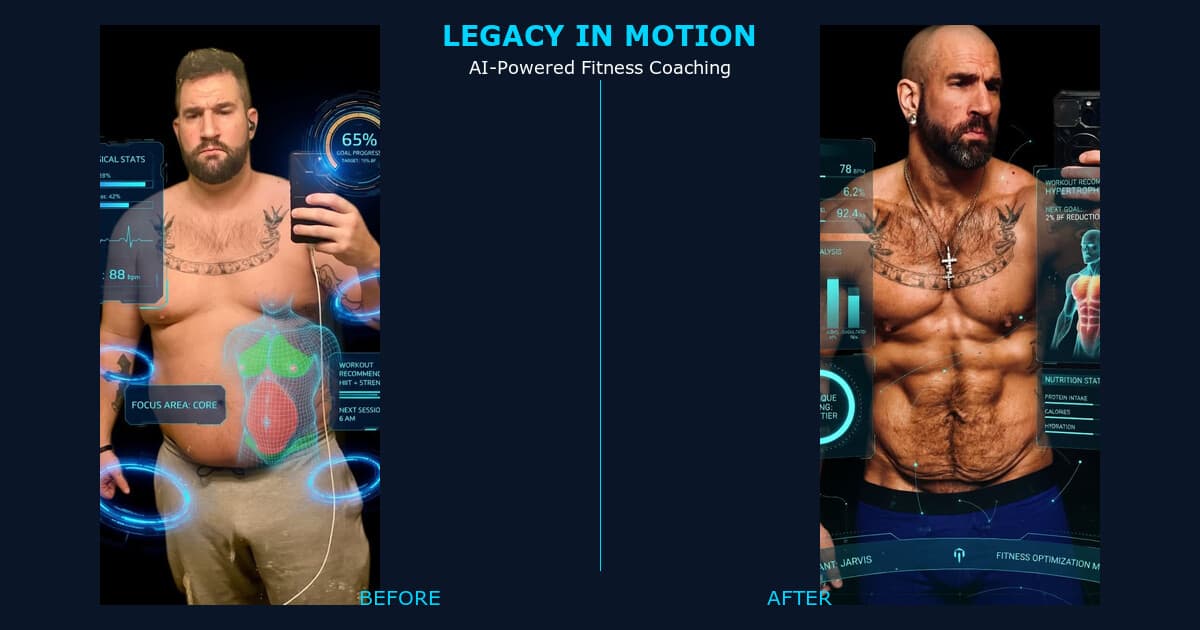
High-load day-shift work accumulates the same inflammatory signature through repetitive mechanical stress. Jake, 112 pounds down from 308 to 196 on retatrutide and training, runs twelve-hour day shifts as a hospital security supervisor covering ten to thirteen corridor miles per tour. Pre-protocol hs-CRP sat at 2.8 mg/L. Omega-3 index sat at 3.4 percent, a value Harris and Von Schacky (Preventive Medicine 2004) associated with all-cause mortality risk roughly equivalent to active smoking.
The standard 1 gram per day public health target was set for healthy sedentary adults. For anyone carrying rotating-shift inflammation, fixed-night work, or high-load day work with a sub-4 percent baseline index, the range that moves hs-CRP under 1.0 mg/L and the omega-3 index above 8 percent sits at 2 to 4 grams combined EPA plus DHA daily, split across two fat-containing meals to engage the lymphatic absorption pathway.
Jake runs 3 grams daily. Two grams with breakfast before the 0630 shift, one gram with dinner. At month five, omega-3 index read 9.2 percent and hs-CRP read 0.7 mg/L.
Implementation
The stack that produces these outcomes is narrow.
- Form: re-esterified triglyceride, confirmed on the certificate of analysis. Not ethyl ester.
- Ratio: 2:1 EPA to DHA minimum. Reference serving 1000 mg EPA with 500 mg DHA.
- Dose: 2 to 4 grams combined EPA plus DHA daily, split breakfast and dinner, with at least 10 grams of fat per meal.
- Certification: IFOS 5-star, batch-tested within the last 12 months. Pull the lot number off the bottle and verify it on the IFOS consumer portal. If the brand cannot produce the lot-specific report, it did not pass.
- Storage: refrigerated after opening, sealed, 90 days maximum in use.
- Pair with: vitamin D3 5000 IU and K2 MK-7 180 mcg (the VDR and resolvin synthesis pathways converge at SPM biosynthesis), methylfolate and methylcobalamin for one-carbon support, magnesium glycinate 400 mg nightly to hit NF-kB from a second angle.
Retest the omega-3 index at 12 and 24 weeks. Target above 8 percent. If baseline is under 4 percent, budget 16 to 20 weeks at 3 grams daily to cross the line. If the index is not moving, the form is wrong or the oil is oxidized. Replace the bottle before you raise the dose. The test runs about 50 dollars direct-to-consumer, and it is the only number that tells you whether what is on the label is actually reaching your membranes. ```
Comments (0)
Comments are reserved for Legacy In Motion members.
Free 30-day trial — first 100 customers only.
This won’t last.
Start Your Free TrialAlready a member? Sign in
Ready to Build a Plan That Fits Your Schedule?
I went from 308 to 196 lbs working 80-hour weeks. Our AI coaching adapts to your schedule, recovery data, and real-time progress — so every workout actually counts.
Start Your Free 30-Day TrialNo enrollment fee. No commitment.
Free Assessment
What's Holding Your Fitness Back?
Take our 60-second quiz and get a personalized breakdown of what's stopping your progress — plus how AI coaching solves it.
Take the QuizKeep Reading
2026-04-19
The Over-40 Per-Meal Protein Threshold: Why Daily Totals Miss the Muscle Preservation Window
Adults over 40 need roughly 0.40 g/kg of protein per meal to trigger muscle protein synthesis — nearly double the 0.24 g/kg younger adults need. Here is the research, the numbers, and the per-meal layout that actually preserves muscle.
2026-04-18
Zone 2 Cardio Isn't Broken, But the Way We Sold It Was: What the 2026 Meta-Analysis Actually Says
A new meta-analysis is forcing recreational athletes to rethink Zone 2. Here's the science, the nuance, and what actually builds mitochondria when you have 40 minutes, not four hours.
2026-04-18
Weekend Warrior Workouts: The 89,573-Person JAMA Study Every Busy Parent Should Read Before Saturday Morning
Two concentrated training sessions a week produced the same mortality and cardiovascular benefits as five spread-out sessions in a 89,573-person JAMA study. Here's exactly how to program your Saturday and Sunday to get the full effect.
Join our free fitness community — get coaching tips, share wins, and stay accountable.
JOIN THE DISCORD →