


ACSM 2026 RT Rules Busy Lifters Actually Need
ACSM's 2026 resistance training Position Stand (137 reviews, 30k+ adults): heavy loads for strength, weekly volume for size, power for function — and what busy parents should drop.
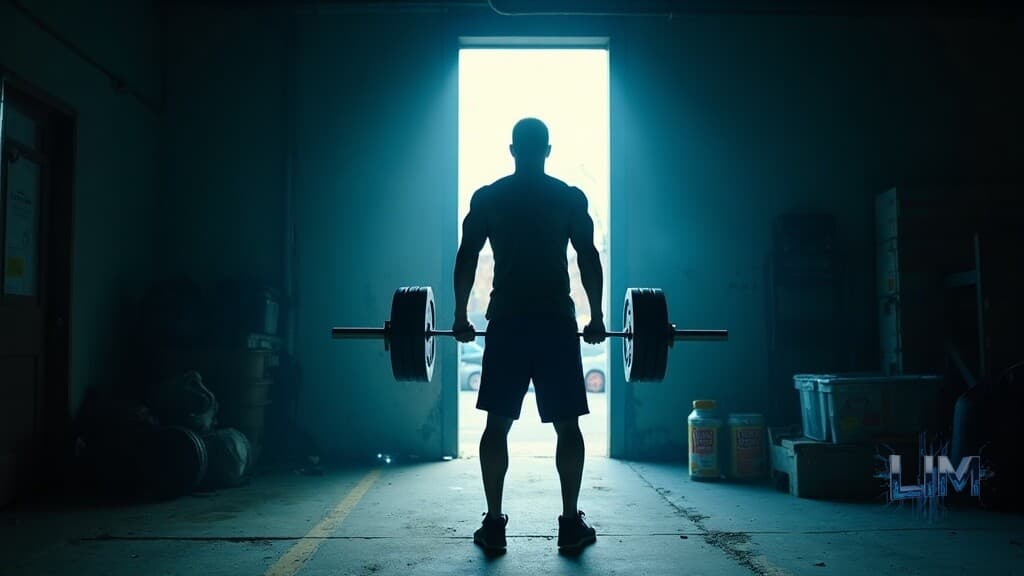
Marcus is 44. Tuesday, 6:40 a.m. The kids are already arguing about cereal brands like it is a Supreme Court case. His training app wants leg day: 7 exercises, 18 working sets, train every set to failure, periodized mesocycle week 3 of 12. He has 28 minutes before standup. He closes the app. Again.
Last Thursday he tried to obey it. He made it through exercise three, heard "Dad, where are my shoes," and called the rest of the session a "deload." His log looks like a crime scene of good intentions.
He is not lazy. He is under a program written for someone whose life is a brochure.
If that is your week — busy parent, desk worker, over-40 restart, schedule that refuses to stay put — stop collecting Instagram RPE charts. Start with what the ACSM 2026 resistance training guidelines actually say after the first major update in seventeen years.
Related Read
The 90-Minute Strength Dose That Cuts Death Risk 13%Zhang 2026 BJSM tracked ~147k adults for 30 years: 90–120 minutes of weekly strength training cut all-cause death risk 13%. How busy parents and shift workers hit the dose without a 5-day split.
Quick take - ACSM 2026 Position Stand (Currier et al., Med Sci Sports Exerc 2026; 137 systematic reviews, >30,000 adults) updates the 2009 resistance training (RT) stand with stronger evidence synthesis. - Strength: heavier loads (~≥80% one-rep max), 2–3 sets, full range of motion (ROM), early in the session, ≥2×/week. - Size: higher weekly set volume (~≥10 sets per muscle/week) + eccentric emphasis. - Power / function: moderate loads (~30–70% one-rep max) moved with intent — useful for walking speed, balance, and "not feeling old on stairs." - Consistency and progressive overload beat equipment theater, mandatory failure, and beginner-vs-elite program cosplay. - Longevity dose context: ~90–120 min strength/week + cardio (Zhang et al., Br J Sports Med 2026) — enough to matter without living in the gym.
What ACSM actually updated (not another trends list)
Do not confuse this with ACSM's Worldwide Fitness Trends survey (wearables, older-adult programming ranks). That is industry pulse. The 2026 Position Stand is a different animal: an overview of reviews on resistance training prescription — the load, sets, weekly dose, and intent variables that actually move muscle function, size, and performance in healthy adults.
Currier, Phillips, Schoenfeld, and colleagues synthesized systematic reviews of randomized controlled trials (RCTs; training blocks generally ≥6 weeks) against no-exercise or alternative RT programs. Headline: progressive RT improves strength, size, power, endurance, contraction velocity, gait speed, balance, and multiple function outcomes versus doing nothing. Few prescription variables swung every outcome — but the ones that did are the ones busy lifters should stop ignoring.
That is good news if you have been drowning in conflicting "science-based" threads. The field finally said out loud: you do not need a 47-variable spreadsheet to get stronger.
I know the other side of that spreadsheet. Jake. Hospital security. Night shifts. 308 to 196. I did not build a physique on perfect periodization software. I built it on sessions that survived overtime, bad sleep, and a life that would not pause for my split. The weeks I tried to run a bodybuilder's volume on a security officer's recovery, I got nothing but resentment and a tighter belt.
Marcus does not need my resume. He needs rules that fit 28 minutes and a noisy kitchen — and permission to stop apologizing for them.
Rule 1 — Strength wants heavy (and early)
For voluntary strength, the Position Stand points to:
- Loads around ≥80% of one-rep max (or a true hard effort in that neighborhood if you do not test maxes)
- Typically 2–3 hard sets per exercise
- Full range of motion you can own
- Heavy work early in the session before you turn into a pump tourist
- At least two sessions per week that actually train the pattern
Busy-parent translation: pick 3–5 big patterns (hinge, squat or split squat, push, pull, carry or brace). Load them honestly. Leave the 14-exercise "leg day" for people who do not have a carpool.
Marcus's old app buried the hard sets under warm-up circuits and "activation" fluff until the 28-minute window was already dead. Strength does not care about your foam roller biography. It cares whether the hard work happened while you still had a nervous system.
You are not "too old for heavy." You are too old to waste the only hard sets of the week on junk volume after you are already cooked.
Rule 2 — Size wants weekly volume + eccentrics
For hypertrophy, the synthesis highlights:
- Higher weekly set volume — about ≥10 sets per muscle group per week when growth is the goal
- Eccentric overload / emphasis on the lowering phase as a useful lever
Busy-parent translation: you do not need ten sets of quads in one heroic lunch break. You need the week to add up. Two upper / two lower, or three full-body days, with sets you can recover from after desk hours, is more honest than a bro-split that dies every Thursday.
Marcus stopped counting "how shredded the session felt" and started a stupid note on his phone: quads sets this week. When the note said four by Friday, he added one set Saturday while the pasta water boiled. That is hypertrophy accounting for adults. Chasing "perfect pump" without progressive load is cardio with dumbbells.
Rule 3 — Power is not only for athletes
For power and several physical function outcomes, the stand points toward:
- Moderate loads (~30–70% one-rep max)
- Low-to-moderate volume
- Intentional fast concentric intent (including power-oriented RT and, where appropriate, Olympic-style patterns for those who have the skill coaching)
Desk workers lose the ability to produce force quickly before they lose the ability to produce force at all. That shows up as slow first steps off the couch, hesitant stairs, and "I used to be athletic" stories at barbecues.
Marcus noticed it picking his kid up off the floor after a tantrum — not heavy, just slow, like his body had to file a permit. You do not need a platform and bumper plates. You need a few sets of crisp sit-to-stands, medicine-ball throws if available, kettlebell swings you have earned, or jump variations your knees already tolerate — loaded light enough to move fast, not ego heavy.
Three myths the 2026 stand quietly kills
Myth A: "If it is not to failure, it does not count." Failure is a tool, not a religion. The updated evidence base does not require grinding every set into form collapse. Hard, progressive sets with reps in reserve beat form-fail theater that wrecks the next day's parenting shift.
Myth B: "Beginners need a totally different program class than advanced lifters." Progressive RT principles scale. Load, volume, and recovery change. The need for a secret beginner curriculum written in crayon does not. Start simpler, progress honestly, stop collecting "novice specialization" PDFs.
Myth C: "I need the perfect gym and constant exercise variety." Bands, bodyweight, machines, and free weights all work when progressive overload is real. Variety for joint health and adherence is fine. Variety as procrastination is how Marcus closes the app at 6:41.
The 2009-era vibe treated prescription like a cockpit. 2026 treats it more like a few dials that matter for the goal you actually care about this quarter.
Longevity dose: you do not need a second job in the weight room
Separate from the ACSM prescription stand — but useful for the busy adult who asks "how much is enough?" — Zhang and colleagues (2026) in the British Journal of Sports Medicine examined long-term resistance training and mortality across large U.S. cohorts totaling about 147,000 adults with follow-up up to 30 years.
In that observational dose-response work, roughly 90–119 minutes of strength training per week associated with lower all-cause mortality risk (about 13% lower in the fully adjusted models they highlight for that bin), with notable signals for cardiovascular and neurological mortality categories, and joint benefits when strength work sat next to aerobic training. More than ~120 minutes of strength per week did not keep buying the same mortality dividend in their models.
Read that carefully: it is not a lab RCT proving causation, and it does not replace progressive loading for strength or hypertrophy goals. It does torch the story that you must live in a commercial gym to "do enough." Two serious sessions that add up near that weekly minute band — plus walking or other cardio you will actually do — is a serious adult protocol.
Marcus has 28 minutes. Twice that is already in the game. Three times is luxury. Zero times is the real risk factor.
A 2×/week protocol that respects ACSM without cosplay
Marcus stopped waiting for a perfect 75-minute block. He put a kettlebell by the back door and a timer on the microwave. Ugly. Effective.
Session A (lower + brace) — ~30–35 min 1. Trap-bar or goblet squat pattern — 3×4–6 @ hard strength load 2. Romanian deadlift (RDL) hinge or single-leg RDL — 3×6–8 3. Split squat or step-up — 2–3×6–8/side 4. Loaded carry or side plank variation — 2–3 hard efforts 5. Optional: 2–3 crisp power efforts (medicine ball slam / jump variation) if joints allow
Session B (upper + pull) — ~30–35 min 1. Horizontal or vertical push — 3×4–6 heavy 2. Row or pull-up pattern — 3×6–8 3. Second push or press variation — 2×8–12 (hypertrophy volume) 4. Face-pull / band pull-apart / Y-raise — 2×12–15 5. Optional arms or core finisher — 1–2 sets if time remains
Weekly hygiene - Log sets per big muscle region. If chest/back/quads sit under ~10 when growth is the goal, add a set next week — do not invent a fourth training day you will skip. - Put the heaviest sets first. - Own the eccentric on size work (3-second lowers beat bouncing). - If sleep is trash, cut volume before you cut the session entirely. Showing up light beats a heroic did-not-finish.
That is not a bodybuilding bible. It is progressive RT that survives a real calendar.
How Legacy In Motion implements the 2026 stand
Static PDFs do not know Marcus's standup moved, his kid got sick, or his low back vetoed conventional pulls after eight desk hours. The ACSM levers only help if load, weekly volume, and session order can move when life does.
Chiron (head coach) treats those levers as live inputs. Log a shortened session, a skipped hinge, or two nights of garbage sleep and tomorrow is not still pretending you are on mesocycle week 3 of a brochure. Heavy strength work stays early when the session shrinks. Hypertrophy set tallies can migrate across the week instead of dying on the day you missed.
HERMES keeps the coaching stack current when prescription science updates — the whole point of reading Position Stands the week they matter, not three years later in a recycled carousel.
Forge handles the operational rewrite: swap trap bar for conventional when the lumbar veto shows up, drop a set when recovery markers and logs say so, keep progressive overload honest on hotel dumbbells instead of freezing you on "maintenance forever."
HealthKit recovery signals, session logs, and protein-per-meal tracking feed the same loop. You get goal-split RT (strength vs size vs power), weekly set accounting, eccentric emphasis when growth is the target, and same-day plan edits when the week mutates.
Marcus's brochure app never asked what time the kids woke up. Ours does — because that is the actual constraint, not his "discipline."
If you want that running on your actual calendar instead of another app that assumes 6 a.m. perfect weeks, the door is open at legacyinmotion.fit. Free community for people training around real jobs and real kids: Discord.
Pin these above the coffee maker
Heavy early. Volume across the week. Fast when power is the goal.
Failure is optional. Progressive overload is not.
Bands count. Bodyweight counts. Skipping because the bar path is not Instagram-pretty does not.
Ninety focused minutes beat zero heroic ones.
Your life is not a mesocycle. Stop training like it is.
At 7:08 Marcus did three heavy goblet squats, two hinge sets, a carry down the hallway while the oatmeal finished, and logged it before standup. Not aesthetic. Not periodized by a committee. Aligned with what the biggest RT evidence synthesis in a generation actually rewards.
His app still wants 18 sets to failure. His body keeps scoring the sets he owns.
Yours will too — if you stop negotiating with a brochure.
---
Log tonight's shift. Wake up to an adjusted plan.
Most programs die in the gap between the plan and your real week. Chiron, our AI head coach, reads what you log (meals, workouts, skipped sessions) and rewrites tomorrow instead of waiting for you to fall off. HERMES, our research engine, keeps the coaching current with new science the week it publishes.
$29.99/month · $249.99/year · 7-day free trial · cancel anytime · no enrollment fee · no contract
Start coaching → · See the full app →
Jake Long built it after losing 112 lbs working hospital night shifts — when no human coach could keep up with his schedule. He wanted the system he wished he'd had at 308. Now you can use it too.
The Questions Readers Ask Most
What changed in the ACSM 2026 resistance training guidelines?
The 2026 ACSM Position Stand (Currier et al., Medicine & Science in Sports & Exercise) is the first major RT guideline update since 2009. It synthesizes 137 systematic reviews (>30,000 participants) and stresses progressive resistance training with goal-specific levers: heavier loads (≥80% 1RM) for strength, higher weekly set volume (≥10 sets per muscle group) plus eccentric emphasis for hypertrophy, and moderate loads moved fast for power and function. Many rigid 2009-era rules (equipment fetish, mandatory failure, beginner-vs-advanced program theater) matter less than consistent progressive work.
How heavy should I lift for strength according to ACSM 2026?
For voluntary strength, the Position Stand highlights heavier loads (≥80% of one-repetition maximum), full range of motion, typically 2–3 sets, performed early in the session, at least twice per week. You do not need a powerlifting identity — you need loads you can own with honest technique and progressive overload.
How many sets per week build muscle per ACSM 2026?
Hypertrophy was enhanced by higher weekly volumes (about ≥10 sets per muscle group per week) and eccentric overload emphasis. Split those sets across the week so recovery and life still fit. Chasing endless pump work without progressive load is not the same as logging weekly volume.
Is 90–120 minutes of strength training enough each week?
A separate 2026 British Journal of Sports Medicine analysis (Zhang et al., ~147,000 adults, up to 30 years follow-up) linked roughly 90–119 minutes of strength training per week with lower all-cause mortality risk, with stronger joint benefits when combined with aerobic work. That is a longevity dose context — still pair it with progressive RT principles from ACSM for strength and size goals.
Do I need a gym for ACSM-style resistance training?
No. The 2026 synthesis supports progressive RT across tools — free weights, machines, bands, and bodyweight — when progressive overload is real. Busy parents and desk workers should pick the tool that survives the week they actually live.
Comments (0)
Comments are reserved for Legacy In Motion members.
$29.99/month. No contracts. Cancel anytime.
Get StartedAlready a member? Sign in
You read this far. Now do this.
Close the tab.
Go train the plan that fits your life.
I went from 308 to 196 lbs working 12-hour overnight shifts with two kids and zero personal trainer. The system I used is now an app that plans your training and meals around YOUR schedule — overnight, day shift, all of it.
Cancel anytime · No setup fee · No long contract
Free Assessment
Where's Your Training Stuck?
Take our 60-second quiz and get a personalized breakdown of what's stopping your progress — plus how AI coaching solves it.
Take the QuizFree PDF · No Credit Card
Download the Shift Worker AI Fitness Blueprint
The protocol Jake wishes he'd had at 308 lbs: sleep timing for rotating shifts, post-shift macros, and the AI deload trigger, from the run that took him to 196. Free, no card needed.
Built by someone who actually worked them. No fluff. Unsubscribe any time.
Keep Reading
2026-08-07
The 90-Minute Strength Dose That Cuts Death Risk 13%
Zhang 2026 BJSM tracked ~147k adults for 30 years: 90–120 minutes of weekly strength training cut all-cause death risk 13%. How busy parents and shift workers hit the dose without a 5-day split.
2026-08-26
Lifting Kept Diabetes Risk Down After Weight Came Back
Elshakankiry 2026: diet cut predicted diabetes risk, then regain bounced it. Only the lift arm kept a net drop at 1 year.
2026-08-24
Midlife Strength Cut Type 2 Diabetes Risk 42%
Zhang 2026: consistent midlife lifting cut type 2 risk 42%. Starting late still cut 21%. Walking alone did not do this job.
Join our free fitness community — get coaching tips, share wins, and stay accountable.
JOIN THE DISCORD →