


12-Hour Shift Nutrition Plan That Doesn't Crash at 3 AM
A practical 12 hour shift nutrition plan: protein-first mid-shift meals, caffeine cutoffs, cafeteria swaps, and why grazing all night wrecks glucose.
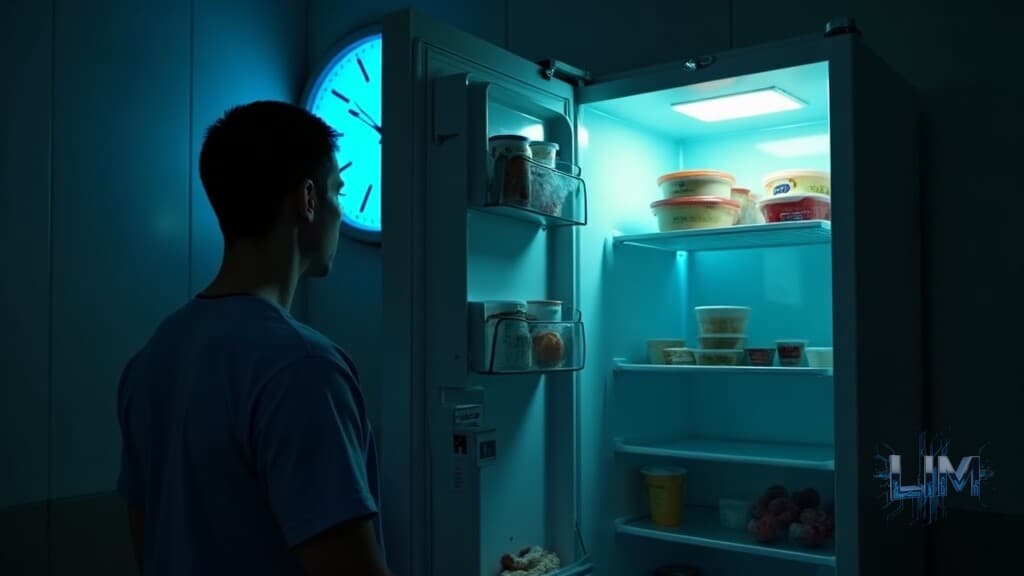
Marcus opened the break-room fridge at 02:47 and stared at three options: leftover pizza from the crew that left at 7 p.m., a sad yogurt cup with a June date, and somebody's unlabeled Tupperware that smelled like regret.
He was hour nine of a twelve. Hospital security. Forty-one. Belt already one notch past where he swore he'd stop last spring.
He did not need another "clean eating" lecture written by someone who clocks out at 5 p.m. He needed a 12 hour shift nutrition plan that survived a code, a locked cafeteria, and a brain that wanted sugar like oxygen.
Last Tuesday he had "winged it." By 03:10 he was three vending pulls deep and shaking on the drive home. Tonight he had a boot-bag kit and a rule sheet folded behind his badge. Same building. Different protocol.
Related Read
How to Lose 100 Pounds: The Real Strategy (308 to 196)What 308 to 196 actually took — the protocol, the math, and the system that survived a bad Wednesday on the security floor.
If that is your Tuesday — or your every Tuesday — this is the map.
Quick take - A usable 12 hour shift nutrition plan is three controlled meals, not twelve little grazes. - Protein-first mid-shift meals blunt glucose spikes better than carb bombs of equal calories (Cunha 2020, night workers). - Rotating shift workers eat differently and slightly more than daytime workers — more night snacking, fewer core foods (Clark 2023 meta-analysis). - Caffeine wall, pack-two emergency proteins, and a post-shift smaller meal protect sleep and the next day. - Static PDFs die when the shift runs long. Log the change; let the plan move.
Why most "shift worker meal plans" fail before clock-in
Marcus used to screenshot the pretty Sunday meal-prep grids. Twelve identical containers. Aesthetic greens. Zero plan for when the cafeteria closes early and your break gets cut to nine minutes.
Rotating and overnight schedules change what, when, and how often people eat — not just willpower. In a systematic review and meta-analysis in Advances in Nutrition, Clark and colleagues (2023) pooled 31 studies (about 18,000 participants). Rotating shift workers took in more energy over 24 hours than people on regular daytime schedules (weighted mean difference about 264 kJ, roughly 60–65 kcal, 95% confidence interval 70–458 kJ). More important than the calorie delta: irregular meals, more night snacking, fewer core foods, more discretionary foods.
That is not a character flaw. That is an environment problem with a food map.
I know because I lived the bad version. Jake. Hospital security supervisor. Overnight blocks. 308 to 196. Same fluorescent break room. Same 3 a.m. vending pull. The fix was never a detox. It was a boring, repeatable 12 hour shift nutrition plan I could run half-asleep.
Marcus's version of "half-asleep" was the Tuesday he finally stopped negotiating with pizza at hour nine. Here is the spine he ran.
The three-meal spine (steal this tonight)
Forget wall-clock breakfast/lunch/dinner labels. Anchor to shift start, not sunrise.
1. Pre-shift meal (60–90 minutes before clock-in) - Protein: 30–50 g (eggs, Greek yogurt, chicken, lean beef, cottage cheese, whey if that is what you have) - Slow carb optional: oats, rice, potato, fruit - Fluid: 500 ml water before you walk in - Goal: arrive fed so hour three is not a panic raid
Marcus used to skip this "to save calories." He always paid it back with interest at hour four.
2. Mid-shift meal (one solid plate — not a six-hour graze) - Same protein floor: 30–50 g - Lower-glycemic sides beat candy and fountain soda for staying sharp - Time it in your real break window, not when Instagram says "lunch" - If the shift goes long, one planned backup snack with protein — not open-ended grazing
3. Post-shift meal (after the 60–90 minute clock-out buffer when you can) - Smaller than mid-shift - Protein still present - Stop eating 60–90 minutes before actual sleep, not before a random clock time - This is where 9-to-5 advice — "just eat breakfast when you get home" — wrecks overnight workers. We covered that trap in depth in our night shift meal timing piece; tonight is about what is on the plate during the twelve
Three decisions. Not thirty.
The protein-first mid-shift play (with a real trial)
Here is the study worth putting above your locker — the one Marcus texted his partner after he stopped crashing at 3 a.m.
Cunha et al. (Nutrients, 2020) ran a randomized crossover in 14 male night workers (mean age about 41). At 01:00 they ate one of two isocaloric meals:
- Higher protein / moderate carb: about 35% protein, 45% carb, 20% fat
- Lower protein / high carb: about 15% protein, 65% carb, 20% fat
Capillary glucose for two hours after the night meal was lower on the higher-protein condition (area under the curve about 103 vs 119 mg/dL·min, p less than 0.001). The high-carb plate spiked harder and stayed elevated longer. The next morning's standard breakfast response did not differ much between conditions — so this is not magic metabolic therapy. It is a cleaner mid-shift glucose curve, which is exactly when most people feel the crash and negotiate with a donut.
Practical translation for a 12 hour shift nutrition plan:
- Build the mid-shift plate around protein first, then add carbs you tolerate
- If cafeteria only has pizza, pair two slices with a protein side or a shake — do not run pure refined carb alone at 1 a.m.
- If nothing is open, the shake in your bag is the meal, not a failure
Marcus's "pair it" night was two slices plus a Greek yogurt he almost left in the car. Not pretty. Still better than pizza alone and a sugar spiral.
Hour-by-hour decision tree (12s template)
Use this as a default. Move the blocks when your roster moves. Marcus keeps a photo of this table on his phone lock screen under the badge photo his kids drew.
| Window | Default action | Failure mode to block | |--------|----------------|------------------------| | T-90 to T-0 (pre-shift) | Full protein-forward meal + water | Skipping "to save calories" → hour-4 binge | | Hours 0–3 | Work. Sip fluids. Optional small protein if genuinely hungry | Espresso chain + zero food → jitter then crash | | Hours 4–7 | Main mid-shift meal (protein floor hit) | "I'll just graze" → 800 silent snack calories | | Hours 7–10 | One planned protein snack only if needed | Second wind candy + third energy drink | | Hours 10–12 | Fluids; caffeine off if sleep is within 6–8 hours | "One more energy drink for the drive" | | Clock-out + 60–90 min | Smaller recovery meal, then wind-down | Gas-station burrito + sunrise "breakfast" stack |
Caffeine is a tool, not a personality. Set a hard wall relative to when you will actually sleep. For many overnight workers that means last meaningful caffeine before the final third of the shift — adjust to your sensitivity, but write the wall down so 04:00-you cannot renegotiate.
Marcus wrote his wall in Sharpie on the inside of his lunch bag: last caffeine 03:00 if sleep is 09:30. Ugly. Effective.
Cafeteria, vending, and "the place is closed" rules
Marcus does not control the menu. Neither do you. Control the decision order.
Priority stack when options suck:
- Anything with a real protein count you can estimate
- Fruit / yogurt / milk / deli meat / leftovers that are not a science experiment
- Pack-from-home backup (see below)
- Least-bad hot bar combo (protein + veg + controlled starch)
- Vending only as a bridge, never as the plan
Two-item emergency kit (fits in a boot bag):
- Ready protein: jerky + string cheese, two Greek yogurts in a small cooler, or two whey singles + a shaker
- One carb you will actually eat: banana, rice cakes, instant oats cup
If the kit is not in the bag, the vending machine becomes the coach. Fire that coach.
The night the cafeteria locked early, Marcus's kit was the whole mid-shift meal — shake plus banana on a concrete bench near the loading dock. He still finished the twelve without the 03:00 crash. That is the whole point of a plan that assumes the building will fail you.
Macros without the spreadsheet religion
You do not need perfect tracking on night one. You need floors.
- Protein per meal: 30–50 g on the two bigger meals; 20–30 g on the smaller post-shift meal
- Daily protein: most adults chasing body composition land near 1.6–2.2 g/kg body mass — hit it across the day you actually live, including the shift
- Carbs: earn them around work and training; do not mainline them alone at the circadian low
- Fats: useful for satiety; not a free pass to deep-fry every break
- Water: thirst lags on overnights — schedule sips the way you schedule rounds
Clark 2023's pattern finding matters more than micromanaging 12 grams of fat: stop the all-night snack drip. Controlled meals beat continuous discretionary grazing even when total calories look "fine" on a bad app log.
Marcus stopped logging every almond and started logging whether he hit the protein floor on the two big meals. Adherence went up because the scoreboard finally matched the job.
What this looked like when Jake was 308
I did not start with perfect prep. I started with rules that survived a double.
- Protein shake in the car before walk-in when I slept through the pre-shift meal
- One real plate mid-shift even if it was chicken and rice from a gas station that still beat three candy runs
- Last caffeine timed to protect daytime sleep after overnights
- Post-shift meal at home, lights down, phone down — not a second breakfast at the bright drive-thru because the world called it morning
The scale moved when the pattern stopped depending on motivation at hour ten. Motivation is a luxury for people whose schedule never moves. Systems are a requirement when the roster owns your circadian clock.
Adults still need the basics the CDC activity guidelines spell out — muscle work, aerobic work, consistency. Food is the fuel layer that either makes those sessions happen after a twelve or turns them into "I'll start Monday."
How Legacy In Motion runs this without a static PDF
Marcus tried three apps before ours. Every one assumed he slept at 10 p.m. and ate "lunch" at noon. A 12 hour shift nutrition plan dies the week your roster flips, your kid gets sick, or the cafeteria changes contractors. That is the gap we built for.
Chiron (head coach) treats your shift map as a first-class input. Log "held over two hours" or "only vending open" and the next meals and training load are not pretending you had a normal day. Protein-per-meal targets stay visible when you are too cooked to do mental math.
HERMES keeps the coaching stack current when new shift-work nutrition and circadian data drops — so you are not running 2014 blog advice in 2026.
Forge handles the operational rewrite: if sleep tanks after three nights, volume and session length drop before you injure yourself trying to be a hero on four hours.
HealthKit and meal logs feed the loop. You are not re-explaining your schedule to a new human every Tuesday. You are not stuck with a Sunday PDF that assumes your life is a brochure.
That is the implementation: shift-aware meal windows, protein floors per eating occasion, caffeine walls tied to planned sleep, and same-day plan edits when the twelve turns into a fourteen.
If you want that running on your roster instead of white-knuckling the break room alone, the door is open at legacyinmotion.fit. Free community for shift workers lives at Discord — bring your real schedule, not the highlight reel.
Pin these above the time clock
Grazing is a plan. It is just a bad one.
Protein first at 1 a.m. is performance insurance, not bodybuilding cosplay.
Pack two proteins or you will buy seven regrets.
Your meal clock follows the roster. The sun is not your supervisor.
At 06:52 Marcus clocked out, ate the smaller plate he had staged in the fridge at home, and slept past noon without the gas-station burrito hangover. Boring. Repeatable. Available on your next twelve — if you stop asking a closed cafeteria to be your coach.
---
Log tonight's shift. Wake up to an adjusted plan.
Start logging and Chiron, our AI head coach, starts adjusting: protein targets per meal, training volume after short sleep, a deload when your numbers call for it instead of when the calendar does. HERMES, our research engine, feeds new research into your coaching the morning it publishes.
$29.99/month · $249.99/year · 7-day free trial · cancel anytime · no enrollment fee · no contract
Start coaching → · See the full app →
Jake Long built it after losing 112 lbs working hospital night shifts — when no human coach could keep up with his schedule. He wanted the system he wished he'd had at 308. Now you can use it too.
Questions Worth Asking
What is a realistic 12 hour shift nutrition plan?
Three controlled eating occasions tied to your roster: a pre-shift protein-forward meal, one solid mid-shift meal (not all-night grazing), and a smaller post-shift meal before sleep. Front-load protein at night, set a caffeine wall 6–8 hours before planned sleep, and pack two emergency protein options so the vending machine is not the default.
Should I meal prep for a 12-hour night shift?
Yes — but prep decisions, not Instagram trays. Batch 2–3 high-protein mains, portion fruit or slow carbs, and pre-bag snacks with a protein target. The win is removing 3 a.m. willpower, not perfect macros on a color-coded grid.
Is a high-protein meal better during a night shift?
In a randomized crossover of male night workers (Cunha et al., Nutrients 2020), a higher-protein / moderate-carb night meal produced a lower postprandial glucose area-under-the-curve than a low-protein / high-carb meal of equal calories. It did not magically fix the next breakfast, but it flattened the mid-shift spike that makes people crash and raid sugar.
How many calories should I eat on a 12-hour shift?
There is no universal number. Clark et al. (Advances in Nutrition 2023) found rotating shift workers average slightly higher 24-hour energy intake than daytime workers, with more night snacking and fewer core foods. Fix pattern first: controlled meals over grazing, protein floors per meal, then adjust total calories to body-composition goals with a coach who sees your real logs.
Comments (0)
Comments are reserved for Legacy In Motion members.
$29.99/month. No contracts. Cancel anytime.
Get StartedAlready a member? Sign in
You read this far. Now do this.
Close the tab.
Go train the plan that fits your life.
I went from 308 to 196 lbs working 12-hour overnight shifts with two kids and zero personal trainer. The system I used is now an app that plans your training and meals around YOUR schedule — overnight, day shift, all of it.
Cancel anytime · No setup fee · No long contract
Free Assessment
What's Blocking Your Results?
Take our 60-second quiz and get a personalized breakdown of what's stopping your progress — plus how AI coaching solves it.
Take the QuizFree PDF · No Credit Card
Your free Shift Worker AI Fitness Blueprint
If your training keeps dying by week two, start here: the 4-week shift-worker protocol behind Jake's 112 lb loss, with the sleep timing and post-shift macros that made it stick.
Built by someone who actually worked them. No fluff. Unsubscribe any time.
Keep Reading
2026-04-15
How to Lose 100 Pounds: The Real Strategy (308 to 196)
What 308 to 196 actually took — the protocol, the math, and the system that survived a bad Wednesday on the security floor.
2026-09-18
Collagen Did Not Speed Workout Recovery
Ravindran 2026: 113 trials, 7,983 people. Skin and osteoarthritis moved. Next-day soreness did not.
2026-09-17
Cortisol Belly Fat After Night Shifts: Stop Feeding It Extra Cardio
Cortisol belly fat after night shifts isn’t leftover pizza. It’s HPA-axis math. The 7-day reset that works on a six-on.
Join our free fitness community — get coaching tips, share wins, and stay accountable.
JOIN THE DISCORD →