2026-04-05
6 min readBy Jake LongVO2 Max: Why It's the #1 Fitness Trend for Longevity in 2026
Discover why VO2 max is the strongest predictor of how well you'll age and exactly how to improve it using proven training methods that actually fit into a busy life.
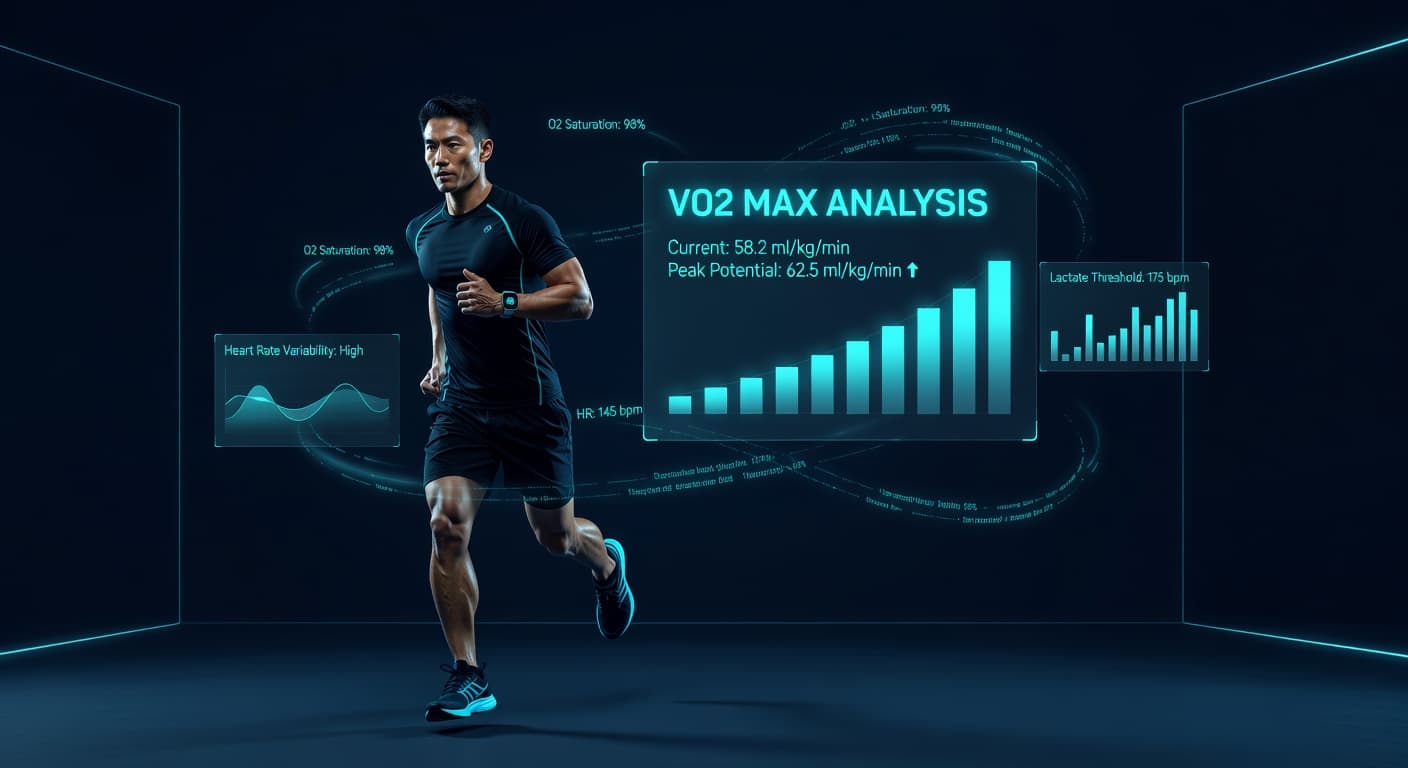
VO2 Max: Why It's the #1 Fitness Trend for Longevity in 2026
If you’ve been paying attention to the fitness conversation lately, one number keeps coming up again and again: VO2 max. It’s no longer just a metric for elite athletes. In 2026, everyday people chasing better energy, sustainable fat loss, and a long healthspan are obsessing over it.
And for good reason.
Your VO2 max measures how efficiently your body can use oxygen during exercise. It’s essentially a report card on your cardiovascular system’s engine size. The higher it is, the better your heart, lungs, blood vessels, and mitochondria are working together.
The science is impossible to ignore. Multiple large-scale studies have shown that VO2 max is one of the strongest predictors of all-cause mortality — stronger than smoking status, blood pressure, or even cholesterol in many cases. A 2018 study in JAMA Network Open following over 120,000 people found that individuals in the highest fitness category had an 80% lower risk of dying compared to those in the lowest category. That’s not marketing. That’s data.
What Actually Happens When You Improve Your VO2 Max
When you train to improve this metric, several powerful things occur:
- Your heart becomes stronger and more efficient, pumping more blood per beat (increased stroke volume)
- Your muscles develop more mitochondria — the power plants of your cells
- Your capillary density increases, delivering oxygen more effectively
- You become dramatically better at burning fat for fuel
- Systemic inflammation decreases
- Your body gets better at clearing metabolic waste
The best part? You don’t need to become a marathon runner. Research shows you can see meaningful improvements in 8–12 weeks with the right training approach.
The Training Protocol That Actually Works
The most effective method follows what’s commonly called the 80/20 rule:
80% of your training time should be spent in Zone 2 — that conversational pace where you can speak full sentences but wouldn’t want to sing. This is where you build your aerobic base and teach your body to burn fat efficiently.
20% of your training time should be high-intensity work that pushes you into Zone 4 and 5 — the kind of effort that leaves you gasping.
This isn’t guesswork. It’s been validated across multiple studies on both endurance athletes and regular people.
Practical ways to find your zones without a lab test:
1. Use the talk test (Zone 2 = can speak but not sing) 2. Use the formula 180 minus your age as a rough maximum aerobic heart rate (Maffetone method) 3. Most modern fitness watches now give remarkably accurate VO2 max estimates and zone calculations
Actionable Takeaways You Can Use Today
You don’t need fancy equipment to start improving your VO2 max this week:
- **Do three 45–60 minute Zone 2 sessions** per week. This could be brisk walking, cycling, rucking, or swimming. The key is consistency and keeping the intensity truly aerobic.
- **Add one high-intensity session** weekly. This could be 4x4 minute intervals (4 minutes hard, 3 minutes easy) or 8x30-second all-out sprints with full recovery.
- **Track your progress.** Many smartwatches will show your VO2 max trend over time. Aim for incremental improvements of 2–5 points over 3 months.
- **Combine with strength training.** Recent research shows that maintaining muscle mass while improving aerobic capacity gives you the best longevity outcomes.
The goal isn’t to become a cardio bunny. It’s to build a robust cardiovascular system that supports everything else you want to do in life — playing with your kids, crushing deadlines, or hiking mountains at 65.
When Life Gets in the Way: Jake’s Story
When our founder Jake Long was working 80-hour night shifts as a chef, he weighed 308 pounds and could barely make it up a flight of stairs. His doctor told him his heart was struggling.
Jake didn’t have time for perfect workouts. He started with what he could do — walking on his breaks while wearing a weighted vest, keeping his heart rate in that Zone 2 range. He tracked his numbers obsessively.
Over 18 months, he lost over 130 pounds and increased his estimated VO2 max by 19 points. The night shift didn’t change. His approach to training did. He learned to work with his body’s signals instead of against them.
That experience became the foundation for everything we built at Legacy In Motion.
How AI Changes the Game
Here’s where it gets interesting.
The biggest challenge with VO2 max training isn’t knowing what to do. It’s knowing how to adjust it day-to-day based on how you actually feel, how you slept, your stress levels, and how recovered you are.
This is exactly what our AI coaching system does.
Instead of following a static program that doesn’t know you had four hours of sleep and a stressful deadline, the AI looks at your recovery metrics, previous session data, and current physiological state to adjust your training in real time.
It might move your Zone 2 session to tomorrow if today’s readiness score is low. Or it might suggest a specific interval workout because it detects you’re primed for high-intensity work. The system learns your unique biology the same way a great human coach would — except it never sleeps and analyzes thousands of data points.
When Jake was transforming his health, he had to manually track everything in spreadsheets. Today’s technology lets us automate the pattern recognition while keeping the human element where it belongs: in the philosophy and the relationships.
Making This Sustainable
The dirty secret of the fitness industry is that most people already know what to do. They fail because their plan doesn’t adapt to real life.
Improving your VO2 max doesn’t require two hours at the gym daily. It requires smart decisions made consistently. A 45-minute Zone 2 walk while listening to a podcast counts. A 20-minute rucking session during your lunch break counts.
The magic happens when these sessions are intelligently placed within your actual schedule and adjusted based on how your body is responding.
Start here this week:
1. Get a VO2 max estimate from your watch or do a simple 12-minute run test (Cooper test) 2. Schedule three Zone 2 sessions in your calendar for next week 3. Pick one day for higher intensity work 4. Track how you feel during and after these sessions
Your future self at 60, 70, and 80 will thank you.
The conversation around fitness is finally shifting from aesthetics to function — from how we look to how well we live. VO2 max sits at the center of that shift.
Want this built into your daily plan with an AI system that adjusts based on your real life and real data? That’s what we do at Legacy In Motion.
Start Your Adaptive Training Journey
Your body is capable of remarkable things. Sometimes it just needs the right system to unlock them.
(Word count: 1,124)
Ready to Build a Plan That Fits Your Schedule?
I went from 308 to 196 lbs working night shifts. Our AI coaching adapts to your sleep schedule, recovery data, and real-time progress — so every workout actually counts.
Start Your TransformationUse code FIRST50 for 50% off enrollment