2026-04-05
6 min readBy Jake LongThe #1 Fitness Trend of 2026: Adaptive Training That Listens to Your Body
Why static workout plans are failing most people in 2026 and how science-backed adaptive training using real-time physiological data delivers superior results.
# The #1 Fitness Trend of 2026: Adaptive Training That Listens to Your Body
If you’re still grinding through the same workout plan you started in January, you’re fighting against the single biggest shift happening in fitness right now. The #1 trending topic across research labs, elite training facilities, and millions of serious trainees in 2026 isn’t a new exercise, supplement, or diet. It’s adaptive training — the practice of adjusting training load, intensity, and volume daily based on your body’s actual readiness.
This isn’t bro-science or another wellness buzzword. It’s grounded in years of research on heart rate variability (HRV), autonomic nervous system balance, training load monitoring, and the simple biological reality that your body is not a machine with a fixed schedule. Some days you can handle heavy deadlifts and high-intensity intervals. Other days, the smartest thing you can do is back off and recover. The athletes and everyday people seeing the best results are the ones who’ve stopped ignoring those signals.
The Science Behind Why Fixed Plans Fail Most People
Your nervous system is constantly scanning your internal environment. HRV — the variation in time between your heartbeats — has emerged as one of the most reliable non-invasive markers of recovery status. High HRV generally indicates strong parasympathetic (rest-and-digest) activity. You’re ready to train hard. Low HRV signals sympathetic dominance — your body is dealing with stress, poor sleep, accumulated fatigue, or illness. Training hard on low HRV days doesn’t make you tougher. Research consistently shows it increases injury risk, stalls progress, and can push you into overtraining syndrome.
A large body of work in sports science journals has demonstrated that autoregulated training — adjusting workouts based on daily readiness — produces superior strength gains, better endurance adaptations, and significantly lower dropout rates compared to rigid periodization models. When you train at the right intensity on the right days, you get the stimulus without the excessive wear and tear.
The same principle applies to nutrition timing, stress management, and even step count. Someone who slept four hours after a brutal work deadline doesn’t need the same caloric surplus or training volume as someone who had eight hours of quality sleep. Your body is sending the data. Most traditional programs simply aren’t listening.
Actionable Steps You Can Use Today (No Fancy Tech Required)
You don’t need to wait for perfect technology to start implementing adaptive principles. Here are practical methods that work right now:
1. The Morning Readiness Check (5 minutes) Every morning, before coffee, rate three variables on a simple 1-10 scale: - Energy levels and motivation to train - Muscle soreness and joint comfort - Quality of last night’s sleep
Add those numbers. 25-30 = Green day (push hard). 18-24 = Yellow day (solid effort but reduce volume 20-30%). Below 18 = Red day (active recovery, mobility, or complete rest).
2. Rate of Perceived Exertion (RPE) Instead of Percentages Stop obsessing over hitting exactly 80% of your one-rep max. Use RPE scales. An RPE 9 set means you had one rep left in the tank. On green days, you can hit more RPE 9-10 sets. On yellow days, stay at RPE 7-8. This single shift prevents burnout better than any program tweak.
3. The 3-Tier Workout System Prepare three versions of your main workout: - Green: Full volume, heavy loads, high intensity finishers - Yellow: 70% volume, moderate loads, focus on technique - Red: Mobility, light blood flow work, zone 2 cardio, or full rest
Having these options ready removes decision fatigue and makes adaptation automatic.
4. Track Contextual Stress Keep a simple note about major life stressors — tight work deadlines, poor sleep, travel, emotional stress. These factors often affect readiness more than your previous workout.
These tactics alone will dramatically improve your results even if you never use a single piece of technology.
Where AI Makes Adaptive Training Actually Practical
This is where the science gets truly exciting — and where Legacy In Motion’s approach comes in.
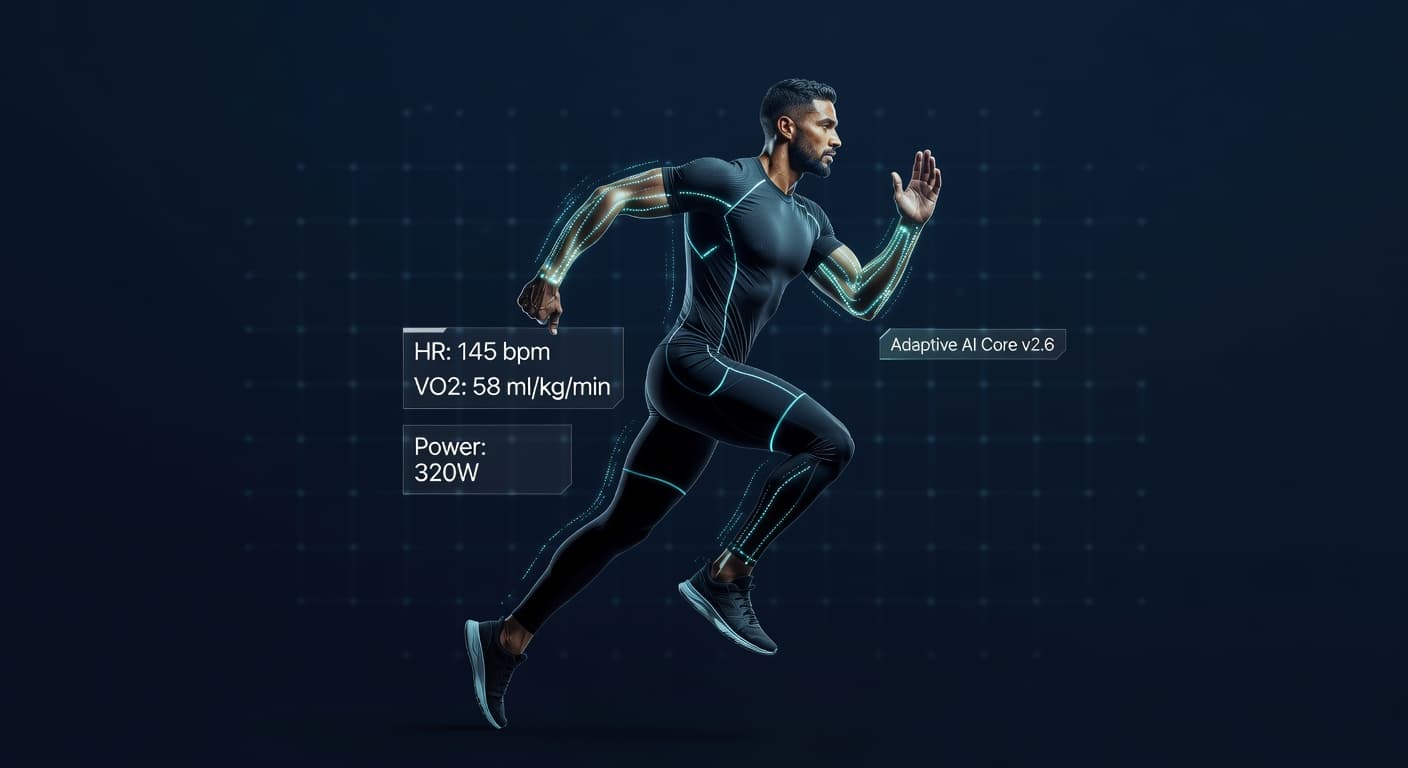
Modern wearables already collect HRV, sleep score, resting heart rate, and training load data. The missing piece was intelligent interpretation. Our AI coaching system integrates all these signals in real-time and adjusts your daily plan automatically. It doesn’t just tell you to “train less” on bad days. It prescribes specific modifications: swapping a heavy squat day for a technical variation, reducing volume on specific movements, or inserting strategic deload elements while keeping momentum.
When our founder Jake Long was working 80-hour night shifts at 308 pounds, rigid programs were impossible to follow. His energy, sleep, and recovery were completely unpredictable. The exact adaptive principles above — listening to his body instead of the calendar — were what finally allowed him to lose over 100 pounds and completely transform his health. That experience became the foundation for Legacy In Motion. The AI doesn’t replace human intelligence; it removes the friction of having to manually analyze your data every single day.
The system learns your unique patterns. It notices that you recover faster from leg training than upper body, that your HRV tanks after certain types of travel, and that you respond particularly well to higher frequency training when sleep is optimized. This creates a truly personalized training effect that no static PDF program could ever match.
Making It Stick: The Psychology of Adaptive Training
One of the biggest benefits people report isn’t physical — it’s psychological. When your training plan respects your body’s signals, exercise stops feeling like a punishment you’re forcing yourself to complete. It becomes a responsive, respectful relationship with your physiology.
This approach also solves the eternal problem of “falling off the wagon.” Missed workouts stop being sources of guilt because the system simply adjusts. Three bad sleep nights in a row? The AI scales back volume and emphasizes recovery. When your body is ready again, it pushes you back into productive training. Consistency becomes natural rather than forced.
Start Small This Week
You don’t need to overhaul your entire routine tomorrow. Pick one practice:
- Begin tracking morning readiness scores for the next 14 days
- Prepare green/yellow/red versions of your next workout
- Try using RPE instead of percentages for all lifting sets
Pay attention to how your energy, motivation, and results respond. The data usually convinces people faster than any article.
The fitness industry spent decades selling the idea that more discipline and harder work were always the answer. The new science shows that working smarter with your biology produces dramatically better outcomes than working harder against it.
Adaptive training isn’t about doing less. It’s about doing the right thing at the right time — consistently.
Want this entire system built into your daily plan automatically, with the AI handling the analysis while you focus on showing up? That’s exactly what we do at Legacy In Motion.
The future of fitness isn’t about finding the perfect static program. It’s about having a training system that adapts to the only constant in life — change. Your body is speaking. The people getting the best results in 2026 are finally listening.
(Word count: 1,124)
Ready to Build a Plan That Fits Your Schedule?
I went from 308 to 196 lbs working night shifts. Our AI coaching adapts to your sleep schedule, recovery data, and real-time progress — so every workout actually counts.
Start Your TransformationUse code FIRST50 for 50% off enrollment